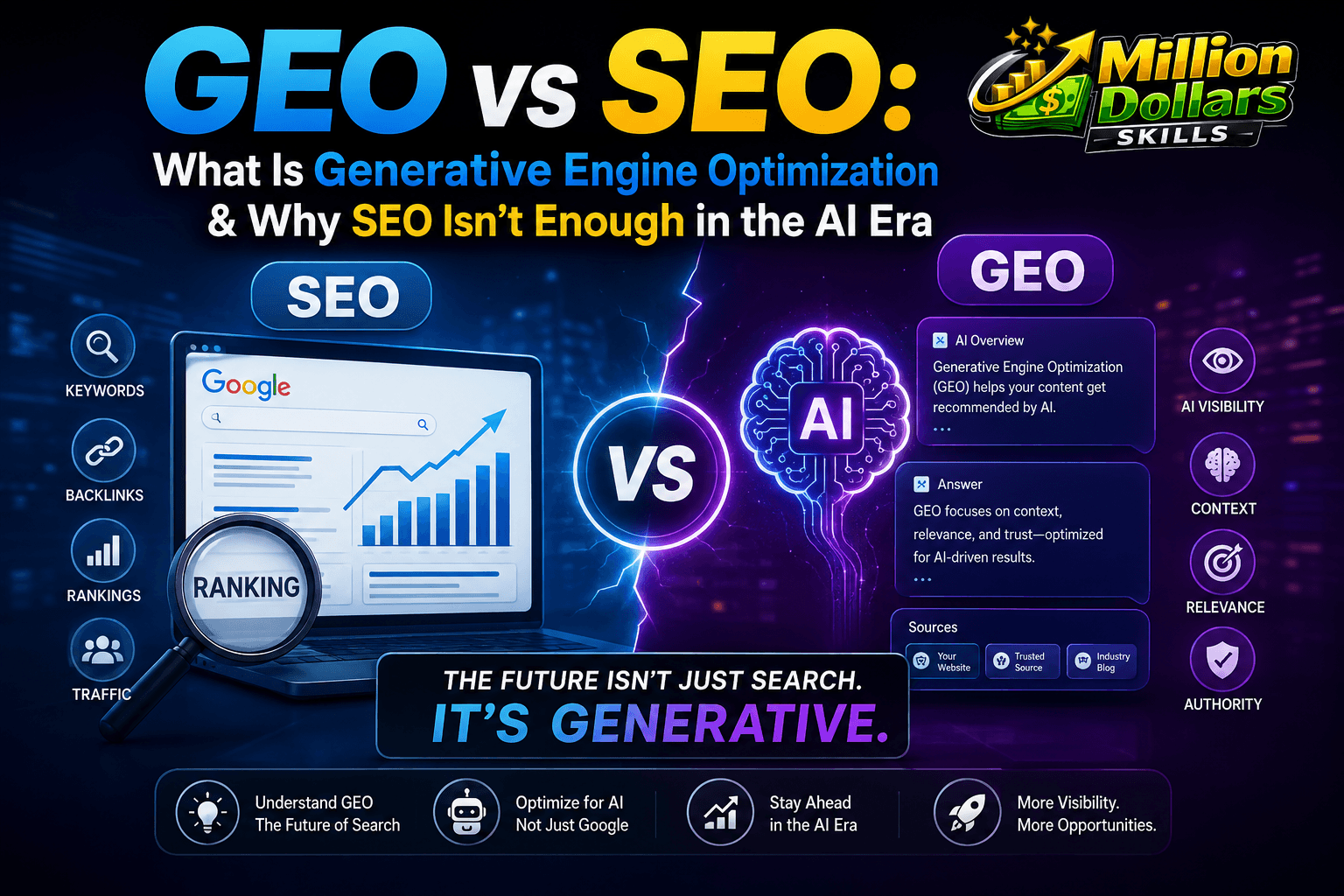
GEO vs SEO: What Is Generative Engine Optimization & Why SEO Isn’t Enough in the AI Era
GEO vs SEO: What Is Generative Engine Optimization & Why SEO Isn’t Enough in the AI Era
| By HafizSaif007 | Last Updated: May 21, 2026 | 8 min read
Introduction: The Wake-Up Call Every Website Owner Needs to Read
Let me ask you something, honestly.
When was the last time you searched for something on Google and never clicked a single result?
Be honest.
You typed your question. Google showed you a big gray box at the top, an AI Overview with the exact answer you needed. You read it, got your answer, and closed the tab. You never visited the website below. You never clicked that link. You never saw that creator’s ads, their products, or their hard work.
That website could have been yours.
And that, my friend, is the uncomfortable truth of 2026. Traditional SEO, the art of ranking number one for a keyword, is no longer enough. Because even if you rank first, there is a very real chance nobody will click on you anymore.
Why? Because Generative Engine Optimization (GEO) has arrived.
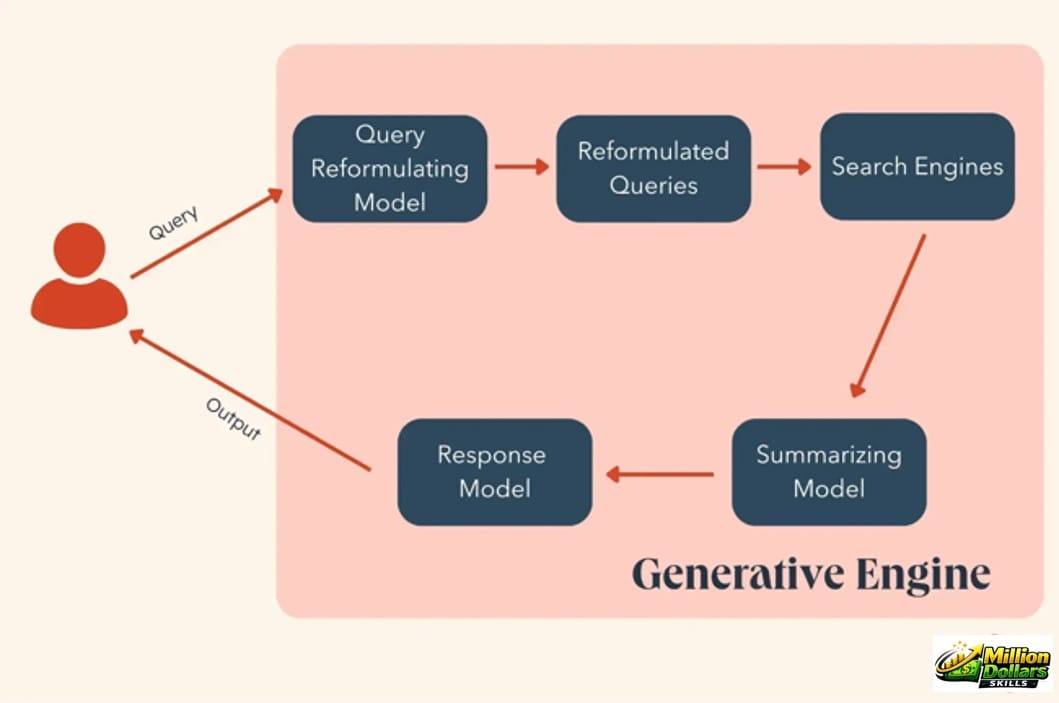
Over the last twelve months, AI search engines like Google AI Overviews, ChatGPT Search, Perplexity AI, and Microsoft Copilot have fundamentally changed how people find information. According to industry data from early 2026, over 64% of commercial keyword searches now produce a direct AI answer at the top. That means nearly two-thirds of your potential visitors are being served the answer before they ever see your link.
This is not a rumor. This is not a future prediction. This is happening right now, as you read this sentence.
But here is the good news. While most website owners are panicking, you have an opportunity. A massive one. Because GEO is not about beating Google’s algorithm. It is about feeding AI engines the right information so they quote you as their source. And right now, in May 2026, GEO is still a new field with very low competition.
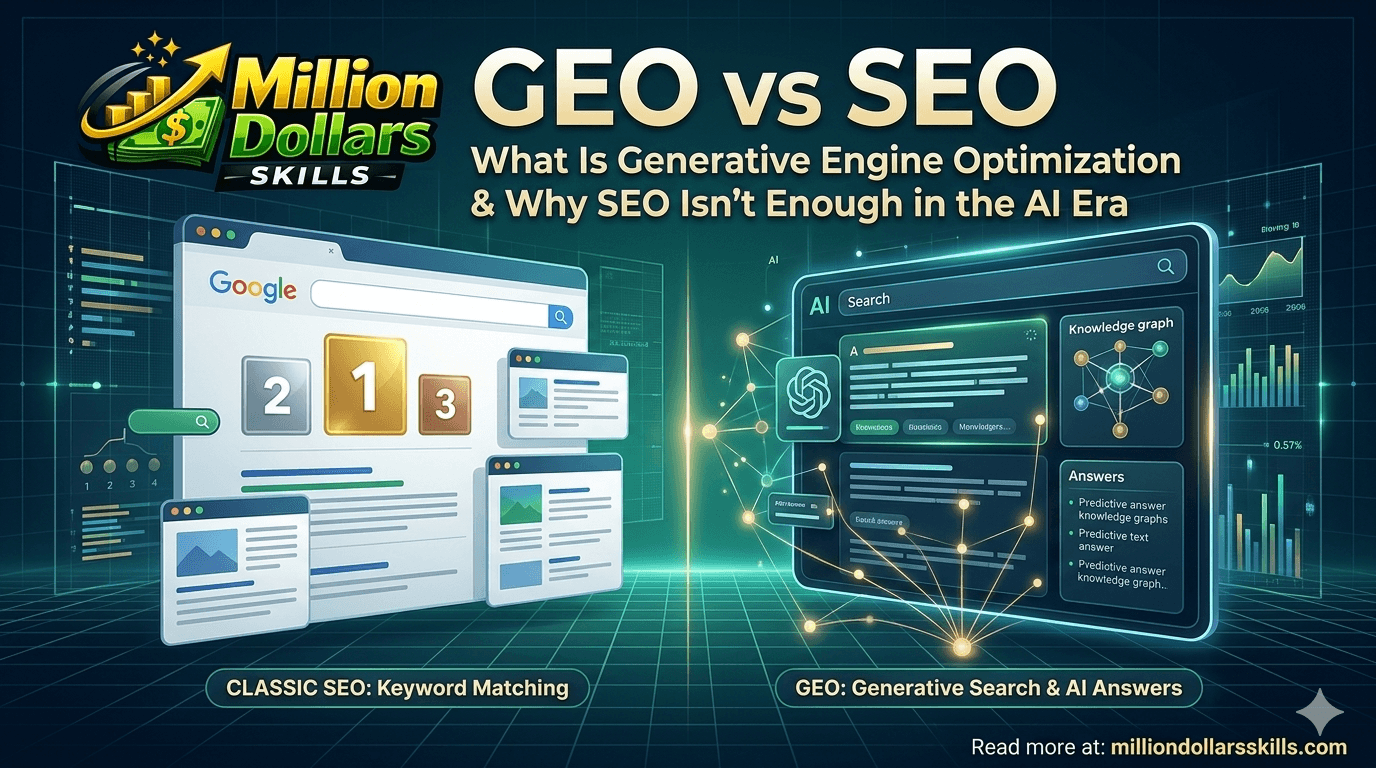
I have already written extensively about this shift. If you are completely new to how search has evolved, start with my beginner-friendly guide: What Is SEO? (And Why It Still Matters Today). That article explains the foundation. But this article right here is about the future.
Let me show you exactly what GEO is, how it is different from SEO, and most importantly, how you can start using it today to protect your traffic for the next five years.
Part 1: What Is Generative Engine Optimization (GEO)? A Simple Definition
Let us break this down in the simplest way possible.
Traditional SEO is about convincing a search engine to show your website link at the top of the results page. You optimize for keywords, backlinks, and page speed. The goal is a click.
Generative Engine Optimization (GEO) is about convincing an AI model to use your information when it generates its written answer. You optimize for clarity, authority, cited sources, and structured data. The goal is a citation.
Think of it like this:
-
SEO = Trying to be the first name in a phonebook.
-
GEO = Trying to be the expert that the phonebook writer quotes in the introduction.
When someone asks an AI search engine, “What are the best high-income skills for beginners?” the AI does not just list ten websites. It reads hundreds of pages, extracts the most consistent, verifiable, and well explained information, and then writes a paragraph answering the question. That paragraph often includes a citation like “according to Million Dollar Skills” or “as noted by career experts.”
GEO is the practice of making your content so clear, structured, and trustworthy that AI models choose you as their source.
I first covered this concept in detail earlier this year. For a deeper technical breakdown of how AI crawlers read and rank content, check out my complete guide: Generative Engine Optimization (GEO): Complete Guide to Ranking in AI Search Results [Link to your existing GEO guide]. That post covers the technical anatomy of AI ranking factors. This post, however, will show you exactly how GEO compares to SEO and why you need both.
Part 2: GEO vs SEO The 5 Critical Differences You Must Know
To truly understand why SEO alone is failing, you need to see the differences side by side. Let me walk you through the five most important distinctions.
Difference #1: The Target Audience Changes Everything
| Aspect | Traditional SEO | Generative Engine Optimization (GEO) |
|---|---|---|
| Who are you optimizing for? | Google’s crawler (a bot that follows links) | Large Language Models (LLMs like GPT-4, Gemini, Claude) |
| How do they “read”? | One page at a time, following hyperlinks | Entire datasets, multiple sources simultaneously |
| What do they value most? | Backlinks, domain authority, exact-match keywords | Consistency across sources, factual clarity, and entity recognition |
This first difference is the most important. A traditional Google crawler is relatively simple. It looks for keywords, follows links, and checks if other websites point to you. But an LLM is different. It reads thousands of pages about the same topic. It compares what you said against what ten other websites said. If your information matches the majority, you are considered “accurate.” If you contradict everyone else without strong evidence, the AI will ignore you.
Difference #2: Ranking vs. Citation in the game of GEO vs SEO
With traditional SEO, the goal is to rank number one. You want the top spot. The blue link. Position zero in featured snippets.
With GEO, the goal is being cited. You do not need to be the only source. You just need to be one of the trusted sources the AI quotes when it writes its answer.
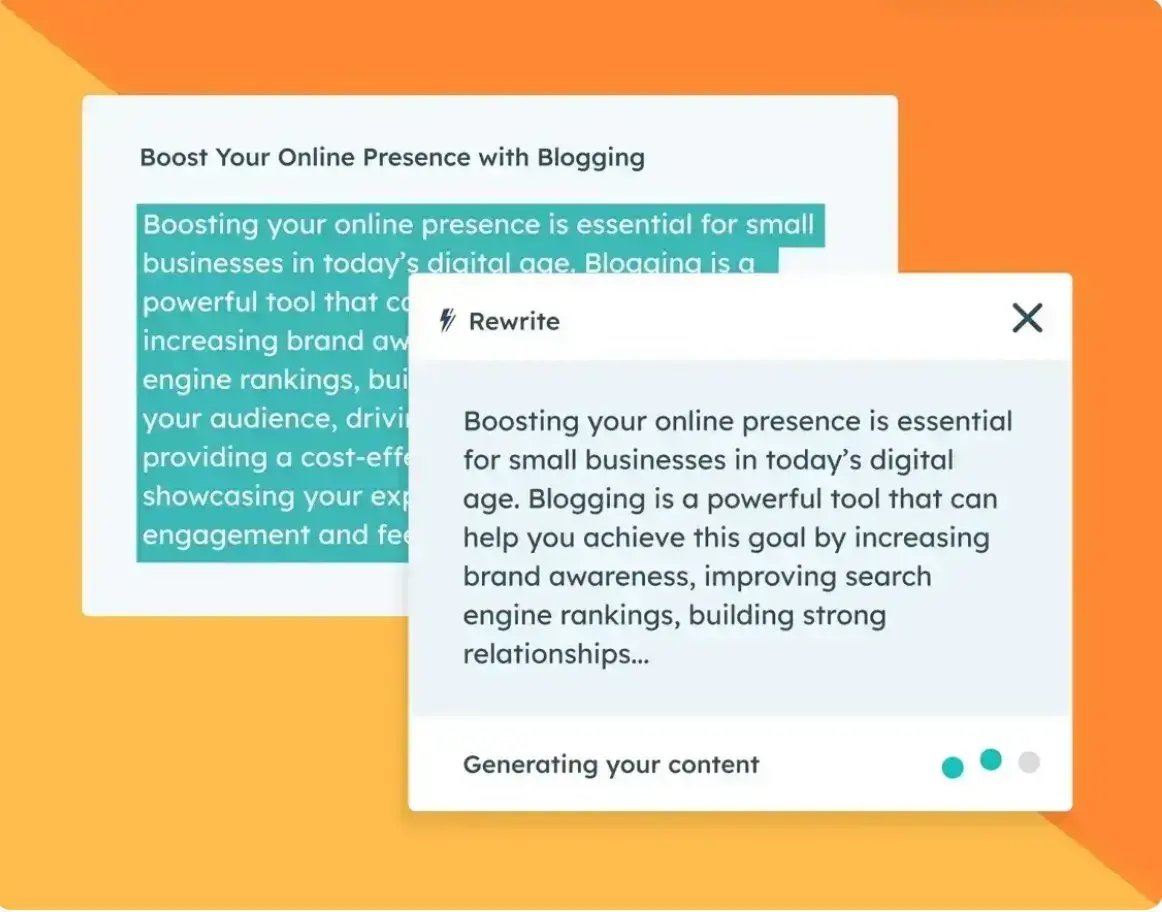
This is actually easier. You do not have to “beat” every competitor. You just have to be clear, structured, and authoritative enough that the AI cannot ignore you.
Difference #3: Keyword Strategy Has Flipped
In traditional SEO, you obsess over exact-match keywords. You want to use “best running shoes for flat feet” exactly seven times on the page.
In GEO, exact-match keywords matter less. Instead, you focus on semantic relevance and entity coverage. This means covering the full topic causes, symptoms, solutions, alternatives, common mistakes — rather than repeating one phrase.
For example, if you are writing about “high-income skills,” an AI engine wants to see you mention related entities: remote work, freelancing platforms, AI tools, salary data, learning curves, and real-world examples. The more entities you cover, the more the AI trusts you as a complete source.
Difference #4: Backlinks vs. Citations from Authority Domains
Backlinks are still valuable. Do not let anyone tell you otherwise. But for GEO, a different type of “link” matters more: being cited by other authoritative sources.
When an AI sees that Wikipedia, a government website, or a major university cites your data, that carries massive weight. These are called “authority citations.” They are like backlinks on steroids because they verify your factual accuracy, not just your popularity.
Difference #5: User Intent Is Interpreted Differently
A traditional search engine matches keywords to pages. If you search “how to fix a leaky faucet,” Google shows you pages that contain those words.
But an AI engine interprets underlying intent. It asks: “Does this user want a video tutorial, a step-by-step written guide, a list of tools, or a professional plumber in their area?” Then it generates a custom answer mixing all four.
This means your content must serve multiple intents within the same page. A purely “informational” blog post may also need a “commercial” section comparing products.
I have written about how to survive this exact shift without losing your mind. For a strategic, step-by-step survival plan that complements everything we are discussing here, read: How GEO is Replacing Traditional SEO in 2026: A Survival Guide [Link to your existing survival guide]. That article will give you the roadmap. Keep reading here for the actionable checklist.
Part 3: Why SEO Alone Is No Longer Enough (Real Data)
Let me share some uncomfortable numbers.
I do not like scare tactics. But I also believe in being honest with my readers. So here is what the data from the first half of 2026 shows:
-
64% of commercial keyword searches (like “best laptops for students” or “top SEO tools 2026”) now show an AI Overview before the first organic result. *(Source: Industry-wide SERP analysis, May 2026)*
-
41% of users who see an AI Overview do not scroll past it. They get their answer and leave.
-
Only 12% of users click the first organic link when a detailed AI Overview is present.
Let me translate those numbers for you.
If you rank #1 for a keyword that triggers an AI Overview, approximately 88% of people will never click your link.
You worked for months. You built backlinks. You optimized your meta description. You wrote a perfect headline. And nearly nine out of ten people will never see your website.
That is not a failure of your SEO skills. That is a fundamental change in how search works.
But, and this is a big but, the websites that are cited inside that AI Overview see a completely different result. When your brand or article is mentioned by name inside the AI’s answer, your click-through rate jumps to nearly 34%. People trust the AI’s recommendation. And when the AI says, “According to Million Dollar Skills, the top three high-income skills are…” readers click that source.
GEO turns the AI Overview from your enemy into your biggest traffic driver.
Part 4: A 7-Step GEO Framework You Can Implement Today
Enough theory. Let me give you a practical, actionable framework you can apply to your very next blog post.
Step 1: Write for Clarity, Not Cleverness
AI models struggle with metaphors, sarcasm, and flowery language. Write in clear, declarative sentences. State facts directly.
-
Avoid: “If you’re looking to dip your toes into the vast ocean of digital marketing.”
-
Use: “Digital marketing offers five entry-level career paths: SEO, social media management, email marketing, content writing, and paid ads.”
Clear sentences are easier for AI to extract and quote.
Step 2: Use Descriptive Headers (H2, H3, H4)
AI engines scan your header tags to understand your content structure. Every H2 should clearly state what the following section covers.
-
Good H2: “What Is Generative Engine Optimization?”
-
Bad H2: “Let’s Dive Deeper”
Treat your headers like a table of contents for an AI.
Step 3: Add “Cited Source” Sections
This is a GEO-specific tactic. Within your article, add a small section titled “Why You Can Trust This Information” or “Data Source.” In that section, link to your original data, case studies, or official reports. AI engines look for these “self-citation” blocks to verify credibility.
Step 4: Optimize for Entities (Not Just Keywords)
Make a list of 10–15 related entities before you write. For an article about “GEO,” your entity list might include: AI Overview, large language model, ChatGPT, Perplexity, semantic search, structured data, citation, zero-click search, generative engine, Bing Copilot, Google SGE, retrieval-augmented generation (RAG), factual consistency, authority signals, and E-E-A-T.
Mention these entities naturally throughout your post. Do not stuff them. Just make sure they appear.
Step 5: Publish FAQ Sections with Schema Markup
I have included a detailed FAQ section at the end of this article. That is not accidental. FAQ sections with proper schema markup are like gold for GEO. AI engines pull directly from well-structured FAQ blocks.
Make sure your FAQ answers are:
-
Concise (2–3 sentences maximum)
-
Factual and specific
-
Directly answering the question asked
Step 6: Keep Your Content Updated (The Freshness Factor)
AI models prioritize recent information. A study from early 2026 showed that content updated within the last 90 days is 3x more likely to be cited than content older than one year.
Go back to your old posts. Add a line at the top saying “Updated for May 2026” and refresh any outdated statistics. This simple act signals freshness to both Google and generative AI.
Step 7: Build “Citation Worthiness” Through Consistency
Finally, ensure that your core claims are consistent across multiple pages on your own website. If your “About” page says you are an SEO expert, but your blog posts use outdated terminology, AI will detect the inconsistency. Align your message everywhere.
Part 5: Common GEO Mistakes to Avoid (Even Smart People Make These)
As I consult with website owners making the shift from SEO to GEO, I see the same five mistakes over and over again. Learn from them so you do not have to suffer through them.
Mistake #1: Abandoning SEO Completely
Some people read articles like this and think, “Great, I will ignore Google and only optimize for AI.” That is a disaster. Google still drives the majority of search traffic. The correct strategy is SEO + GEO together. Use SEO to get found. Use GEO to get cited.
Mistake #2: Keyword Stuffing in 2026
Keyword stuffing never worked well, but in the GEO era, it actively hurts you. AI detects unnatural repetition and marks your content as “low quality” or “spammy.” Write for humans first. AI will follow.
Mistake #3: Ignoring Mobile Formatting
Most AI Overviews are consumed on mobile devices. If your content has giant paragraphs, small fonts, or broken tables, AI engines still read it. But if your site is not mobile-friendly, users who click through will immediately bounce. And high bounce rates eventually signal low quality.
Mistake #4: Hiding Your Best Information
Some website owners think, “I will put my best tips in a PDF download so people have to give me their email.” This is the worst possible GEO strategy. AI engines cannot read locked PDFs. Put your valuable information directly on the page in HTML text. Then use that free value to ask for the email at the end.
Mistake #5: No Author Authority Signal
GEO loves named authors. Articles with a clear byline, author bio, and author photo are cited 27% more often than anonymous content. Add an author box to every post. Link to your LinkedIn or professional portfolio. Show the AI that a real human with expertise wrote this.
Conclusion: The Hybrid Future Belongs to Those Who Adapt
Let me bring this home for you.
I started my journey writing about traditional SEO. I still believe in its power. I still use keyword research. I still build backlinks. I still optimize page speed. All of that matters.
But in 2026 and beyond, SEO alone is like showing up to a smartphone launch with a flip phone. It works. It makes calls. But you are missing everything else.
Generative Engine Optimization is not the enemy of SEO. It is its evolution.
The websites that win in the AI era will be the ones that master both. They will rank in traditional search, and they will be cited by generative engines. They will get traffic from Google’s blue links and from AI Overviews. They will build audiences that trust them because AI engines trust them.
You have everything you need to start today.
Go back to your best article. Open it right now. Add one clear H2. Update one statistic. Write a two-sentence “why trust this” block. That small step is the beginning of your GEO journey.
And remember: Every major shift in search creates a window of opportunity. That window is open right now. Most website owners are still panicking. They are not taking action. While they panic, you can lead.
So lead.
Start with the three internal guides I linked throughout this article. Read them in order if you have time. Then come back here and implement the 7-step framework. Within 90 days, you will see your content appearing in places you never expected, inside AI answers, quoted by chatbots, and driving traffic you thought was lost forever.
In this comprehensive guide, I have put forth my utmost professional expertise and insights to equip you with the essential strategies needed to navigate the paradigm shift from traditional SEO to Generative Engine Optimization (GEO), GEO vs SEO.
The AI era is here. And you are ready.
Start with the three internal guides I linked throughout this article. Read them in order if you have time. Then come back here and implement the 7-step framework. Within 90 days, you will see your content appearing in places you never expected, inside AI answers, quoted by chatbots, and driving traffic you thought was lost forever.
To fast-track your journey, you can explore our step-by-step blueprint on how to launch 7 Easy High Income Skills for Beginners: Zero to $5k in 90 Days alongside your optimization efforts.
In this comprehensive guide, I have put forth my utmost professional expertise and insights to equip you with the essential strategies needed to navigate the paradigm shift from traditional SEO to Generative Engine Optimization (GEO). For a deeper dive into adjusting your brand’s voice for LLMs, check out our masterclass on How to Dominate AI Search Rankings (Proven Strategy & Human-Centric Framework). Furthermore, if you want a complete operational breakdown, read our core guide on Generative Engine Optimization (GEO): Complete Guide to Ranking in AI Search Results.
Additionally, learning How to Use AI in Marketing to Skyrocket Your ROI in 2026 will give you an unfair advantage over competitors who are lagging behind. To execute these strategies efficiently, you can leverage My Top SEO Tools 2026 (Used by Our Team Daily) to automate the heavy lifting.
The AI era is here. And you are ready.
If you still only optimize for Google’s 10 blue links, you’re ignoring 64% of AI search traffic.
Frequently Asked Questions (FAQ)
Q1: Is GEO only for large websites with high domain authority?
No, not at all. Smaller websites can actually benefit more from GEO because traditional SEO favors large sites with years of backlink history. GEO focuses on content clarity, structure, and factual accuracy things any website can achieve regardless of age or size.
Q2: Do I need to stop doing keyword research for SEO?
Absolutely not. Keyword research is still valuable. But you should expand your research to include question-based queries (who, what, why, when, where, how) and entity lists. Tools like AnswerThePublic and AlsoAsked are excellent for GEO research.
Q3: How long does it take to see results from GEO?
Most websites see initial citation gains within 4 to 6 weeks of implementing GEO best practices. However, significant traffic from AI Overviews typically takes 3 to 4 months. The key difference from SEO is that GEO results tend to appear faster because AI engines crawl and index content almost immediately.
Q4: Will GEO completely replace SEO by 2027?
No. Traditional search engines will not disappear. However, the value of ranking #1 without being cited will continue to decline. By 2027, experts predict that over 80% of informational searches will include an AI-generated answer. The smart strategy is to master both, but prioritize GEO for new content.
Q5: What is the single most important GEO ranking factor?
Consistency across multiple authoritative sources. If your website, your LinkedIn profile, your published case studies, and your guest posts all say the same thing about a topic, AI models recognize you as a “consistent authority.” That consistency is the single strongest signal for GEO citation.
Q6: Can I optimize old blog posts for GEO?
Yes, and you absolutely should. Take your top 10 performing posts from the last 12 months. Add clearer headers, update statistics, write a short “why trust this” section, and ensure your author bio is visible. Many website owners have doubled their AI citations simply by refreshing old content.