What Is SEO? (And Why It Still Matters Today)
What Is SEO? (And Why It Still Matters Today)
Written by Hafiz Saif Ur Rehman
Last updated: May 15, 2026
Introduction: The Wake Up Call Every Website Owner Needs
Let me paint a picture you’ll recognize.
You’ve just published a beautiful blog post. You spent hours on it, maybe days. The research is solid. The examples are real. You even added custom images.
You hit “Publish” with a smile.
Then you wait.
A day passes. Then a week. Then a month.
You go to Google. Type your exact article title in quotes.
And… nothing.
Your post is somewhere on page 7. Buried. Invisible.
And then you see it. Some other website with worse content, less helpful information, and uglier design is sitting right there at the top of Google. They’re getting hundreds of visitors every single day. While you’re invisible.
You feel frustrated. Confused. Maybe even cheated.
I’ve been there. Honestly, most website owners have.
But here’s the truth they don’t tell you:
You don’t have a content problem. You have an SEO problem.
Search Engine Optimization isn’t a mysterious hack reserved for tech wizards or big-budget agencies. It’s a set of clear, learnable, repeatable principles that anyone, including you, can master.
And in 2026, with AI search engines like ChatGPT, Perplexity, and Google’s AI Overviews changing the game, SEO has become more important than ever.
Not less. More.
Whether it’s a traditional Google search or an AI chatbot giving answers, the same rule applies:
If you’re not optimized, you don’t exist.
So let me ask you something, honestly:
Do you want to keep shouting into the void?
Or do you want to learn how search engines actually work and finally get the traffic you deserve?
If you picked the second option, keep reading.
This guide will give you everything you need. No fluff. No outdated tricks. Just practical, human-friendly SEO that works in 2026 and beyond.
Inside this comprehensive guide, I have channeled my years of hands-on industry expertise to deliver a definitive answer to the ultimate question: What is SEO and how does it drive sustainable organic growth? My goal is simple: to cut through the digital noise and provide absolute clarity. Whether you are struggling to understand search engine algorithms or looking to bulletproof your current website strategy, I am confident this deep dive will address your core queries, challenge outdated perceptions, and provide you with actionable blueprints.
Let’s dive in.
Chapter 1: What Is SEO? (The One Definition You’ll Ever Need)
Let’s strip away the jargon.
SEO (Search Engine Optimization) is the practice of getting targeted, free traffic to your website from search engines.

That’s it.
Not “manipulating algorithms.” Not “gaming the system.” Not “technical wizardry.”
Just helping search engines understand your content so they can show it to people who are already looking for exactly what you offer.
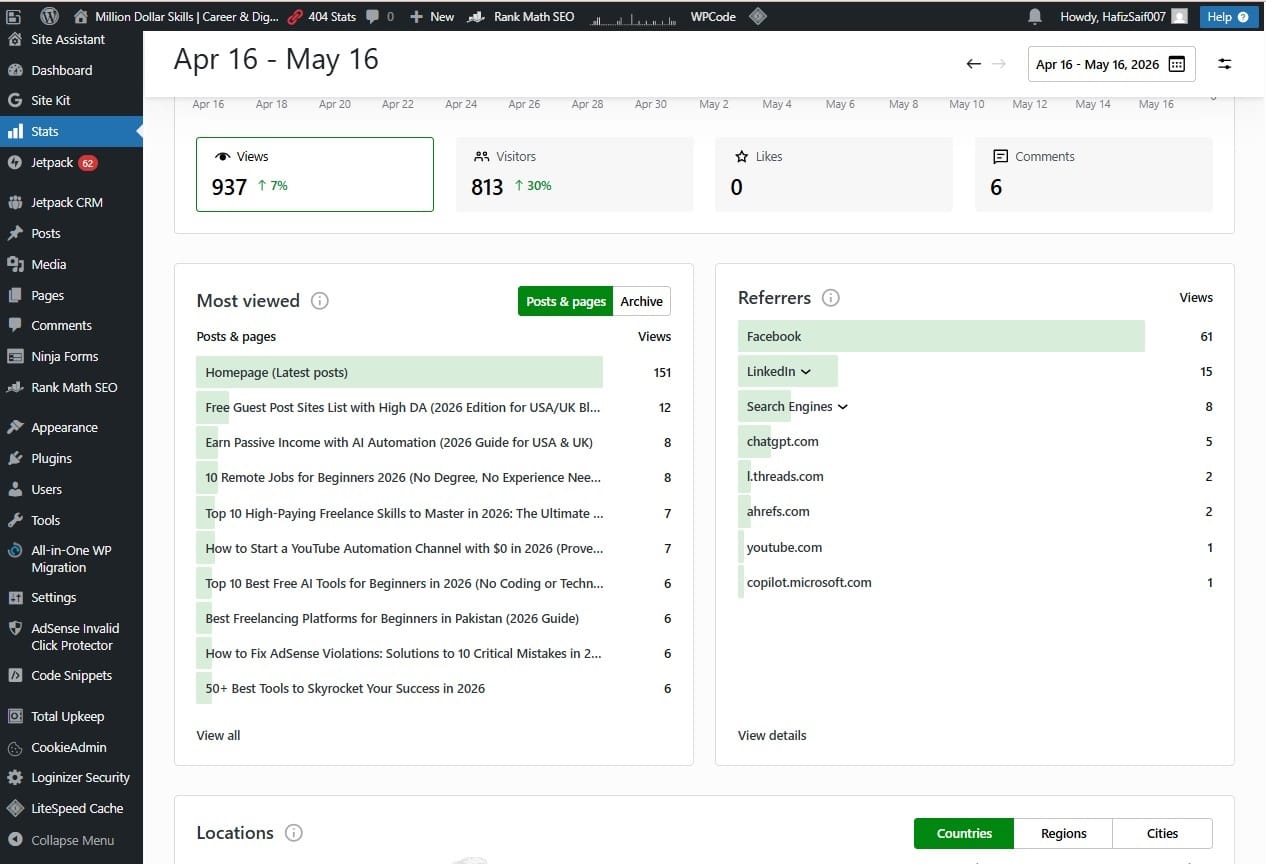
Think of it like this:
Let me ask you something. Have you ever walked past a small, hidden shop in a crowded city? The kind with amazing stuff inside, but zero signage, no foot traffic, and dusty windows? That’s your website without SEO. Great content. Zero visibility.
SEO is the process of putting up clear signs, paving the road to your door, and making sure your shop looks inviting.
Without those signs, no one finds you — no matter how great your products are.
SEO isn’t just about Google anymore. AI search engines like ChatGPT and Perplexity are changing everything. That’s why I wrote a complete guide on how to dominate AI search rankings, and it pairs perfectly with what you’re about to learn here.
Search engines like Google are the city’s navigation system.
Your job? Make it easy for that system to find, read, and recommend your shop.
Chapter 2: Why SEO Still Matters in 2026 (Real Data, Real People)
Let me show you why SEO isn’t dying, it’s evolving.
Fact #1: Over 8.5 Billion Searches Happen on Google Every Day
That’s not a typo. 8.5 billion.
People search for everything:
-
“How to learn graphic design fast.”
-
“Best high-income skills for beginners”
-
“Data analytics certification worth it?”
-
“AI tools for small business marketing”

Behind every single search is a real person. Someone has a question. A frustration. A problem they need solved right now.
They want an answer, a solution, a product, or a service.
If your website shows up, you get that person’s attention for free.
Fact #2: The First Organic Result Gets 27.6% of All Clicks
Let me put this into perspective.
Let’s say 1,000 people search for “how to start freelancing in 2026.”
-
Position #1 gets ~276 clicks
-
Position #2 gets ~150 clicks
-
Position #3 gets ~110 clicks
-
Position #10 gets fewer than 20 clicks
The difference between #1 and #10 isn’t small. It’s life-changing.
Fact #3: SEO Traffic Compounds Over Time
Paid ads stop the moment your budget runs out.
Social media posts disappear in 48 hours.
Email open rates drop after a week.
But an SEO-optimized article?
It can bring you traffic for years.
I have articles published in 2024 that still generate hundreds of monthly visitors. No extra work. No ad spend. Just consistent, compounding results.
Those 9,000 visitors? They’re worth around $9,000 every single month. And here’s the best part: you can earn that traffic for free with SEO. Yes, free. But let me be honest with you. It still costs you time. And sometimes a little money too.
Here’s where it gets even better. That’s just one search phrase. If your website is properly optimized for SEO, you can rank for hundreds — sometimes thousands — of different keywords. All from a single piece of content.
But the real magic isn’t just traffic. It’s what that traffic does for your business. Let’s do some simple math. Imagine you turn just 1% of those visitors into paying customers. And let’s say your average customer spends 50. That one blog post could bring you 4,500 in revenue. Every month. From one article.

That’s the beauty of SEO. It’s the gift that keeps giving.
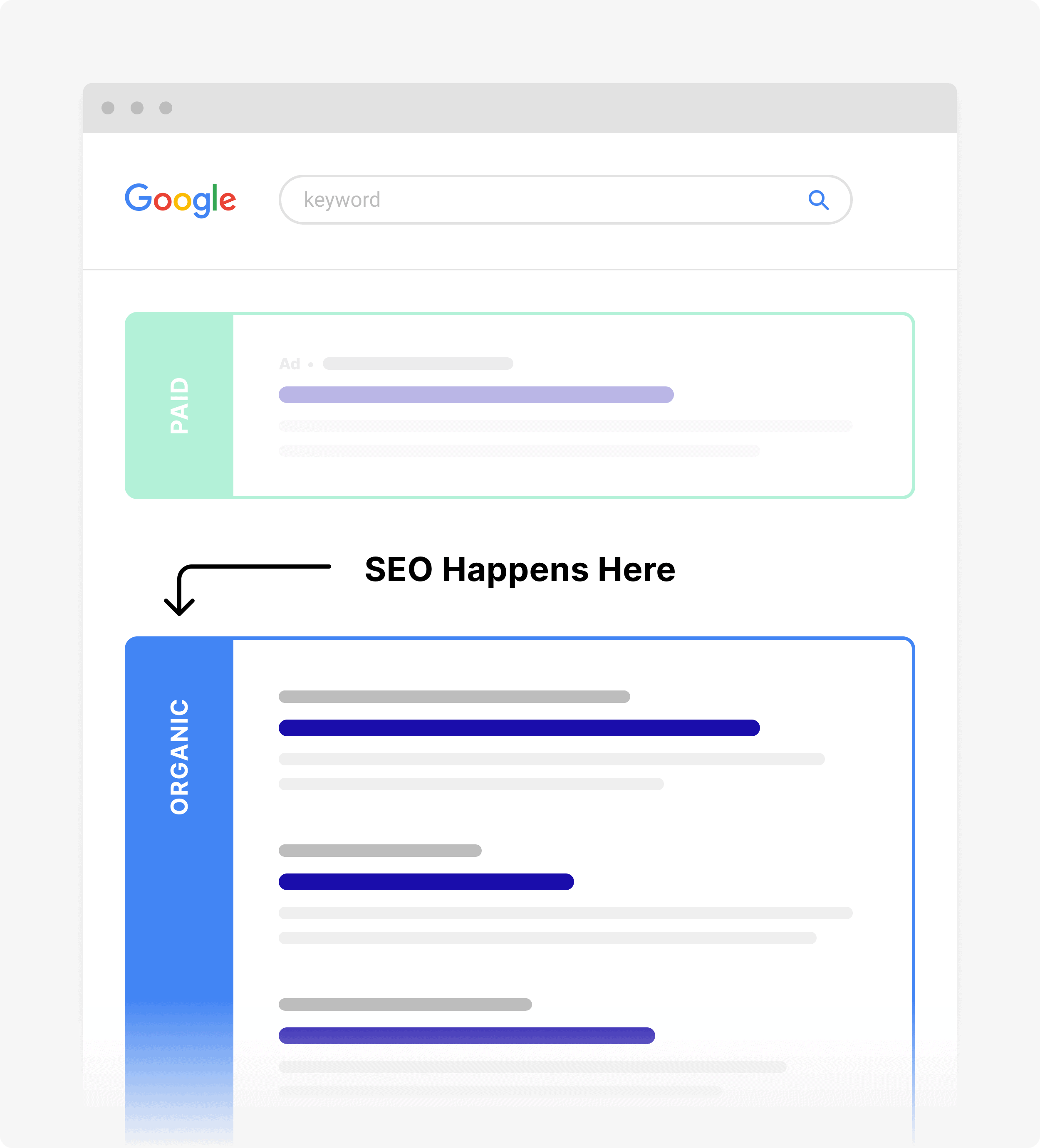
When you search for something on Google, the results page is split into two completely different sections. Let me show you what each one means.
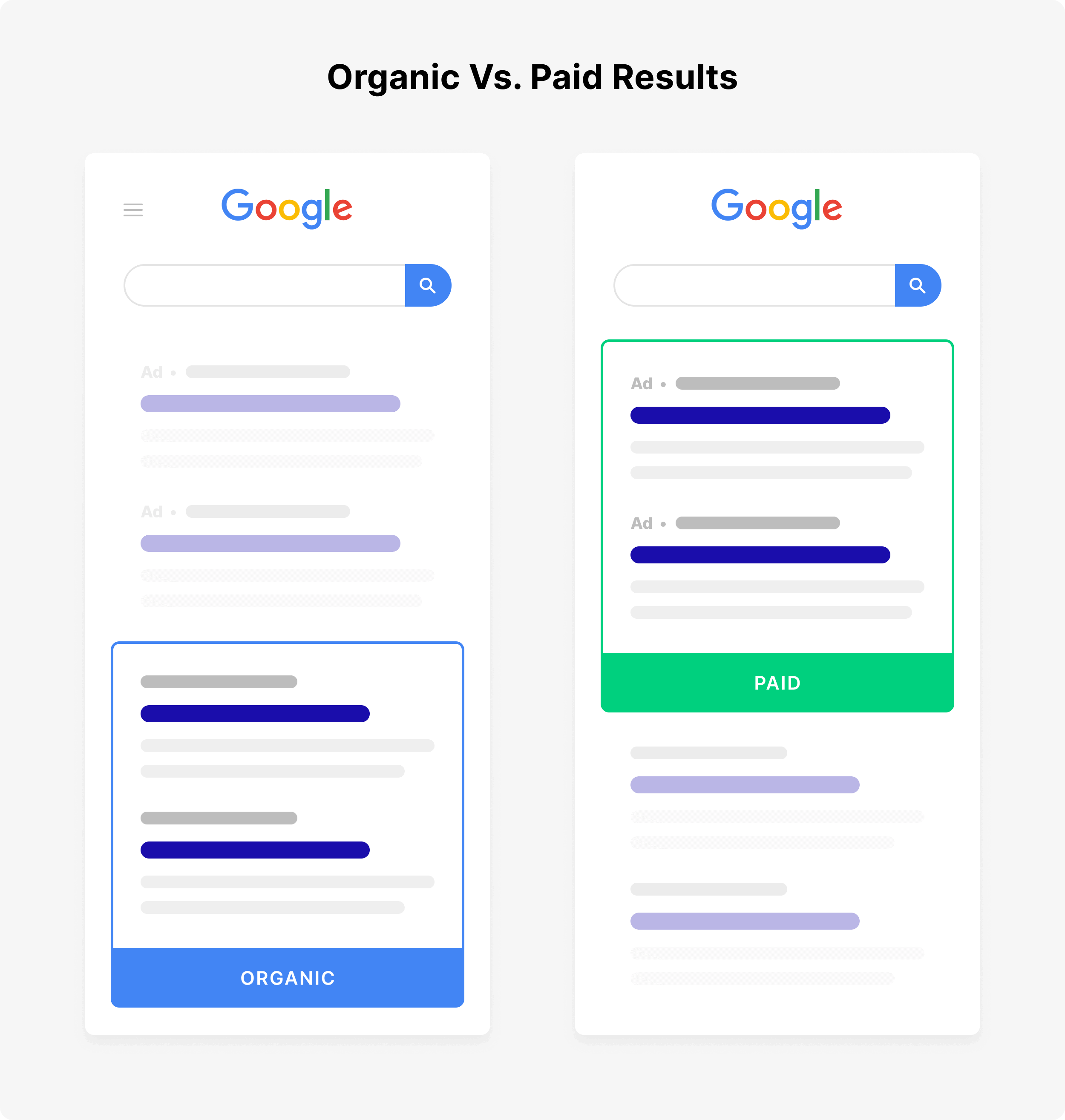
Organic results don’t cost you a penny. No payments. No bids. No budgets. Google ranks these listings using hundreds of different factors behind the scenes.
But here’s what you really need to know. When Google puts a website in the organic results, it’s because they believe that site is the most relevant, trustworthy, and authoritative option available for that search. In other words, you earn your spot. You don’t buy it.
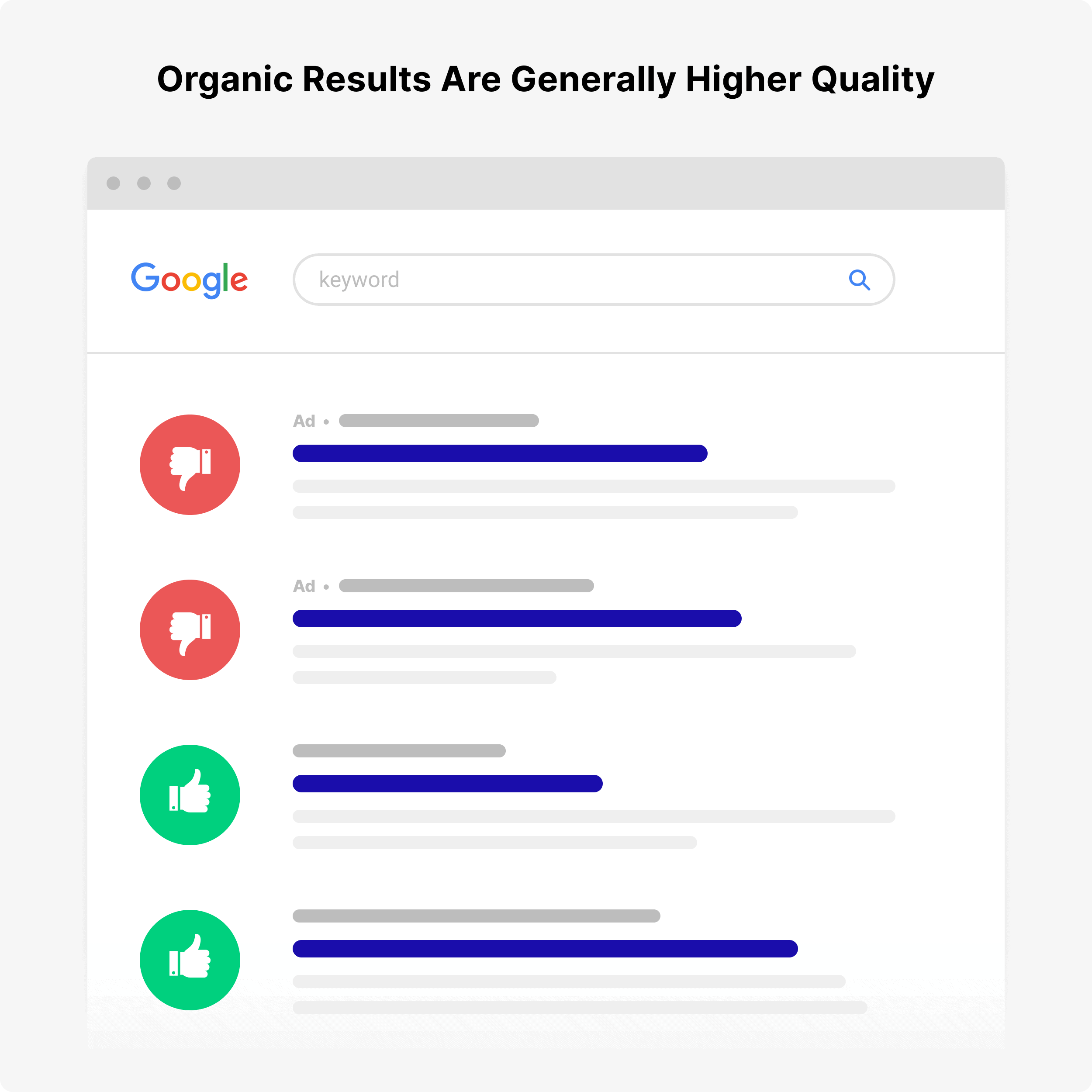
When you run a paid search campaign, the ads you see at the very top or bottom of the search results page are separate from the regular, unpaid listings.
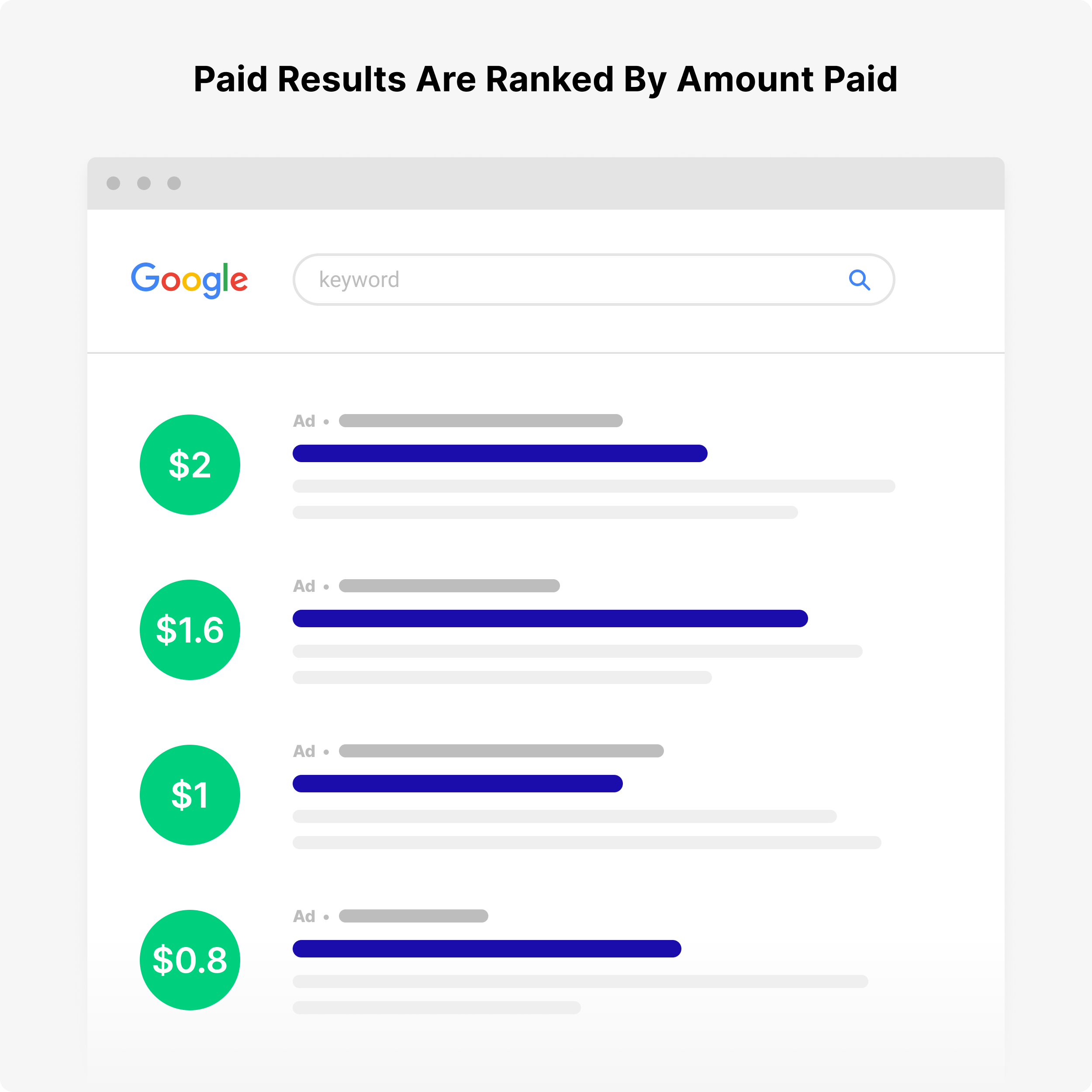
Those sponsored results operate under a completely different set of ranking rules, and for the purposes of this guide, we won’t be diving into how they work. What we’re really focusing on here is SEO specifically, how to help your website earn a higher spot in the organic, or non-paid, search results.
Chapter 3: How Search Engines Actually Work (In Human Words)
You don’t need to be a tech genius. You don’t need a fancy degree. Anyone can learn this stuff, including you.
Search engines do three things:
1. Crawling
Google sends out digital “spiders” (bots) that follow links from known pages to new pages. They discover content across the web.
2. Indexing
Once a bot finds your page, it reads and stores it in Google’s massive database, the index. Think of it as a library with billions of books.
3. Ranking
When someone searches, Google scans its index and ranks pages based on hundreds of factors. The most relevant, authoritative, and useful pages go to the top.
That’s it. Crawl. Index. Rank.
Your job as an SEO is to make sure Google can easily crawl your site, correctly index your content, and believe your page deserves to rank high.
You’ll hear me mention tools like Ahrefs, Semrush, and Surfer throughout this guide. If you’re curious about exactly which tools our team uses daily and why, check out my breakdown of top SEO tools for 2026.
Chapter 4: The 3 Pillars of SEO (Master These, Win Forever)
Let’s break SEO into three simple buckets.
Pillar #1: On-Page SEO: Everything That Lives ON Your Website
This is the content users see, and search engines read.
Key elements:
a) Keywords
These are the words people type into search boxes.
If your page doesn’t include the keyword you want to rank for, Google won’t know how to show it.
✅ Do this:
Use your main keyword in:
-
Title tag
-
First 100 words
-
At least one H2 or H3 heading
-
Image alt text
-
URL (if possible)
What to Avoid:
-
Don’t repeat the same word over and over just to trick Google
-
That old tactic is called keyword stuffing
-
Trust me — Google is way too smart for that now
-
They’ll quietly push your page down, not up
b) Content Quality
Google can tell if people actually read and enjoy your content.
How? Through engagement signals: time on page, bounce rate, and scroll depth.
✅ Do this:
Write short sentences (max 20 words). Use bullet points. Add real examples. Answer the question completely.
c) Internal Linking
Connect your articles together. When you write a new post, find older posts on your site that relate to it and add a link.
This helps Google discover more of your content and passes “link juice” around your site.
✅ Example:
In this article, I linked to our guides on “High Income Skills 2026” and “GEO Complete Guide.”
d) Image Optimization
Search engines can’t “see” images the way we do. They rely on filenames and alt text.
✅ Do this:
-
Rename
IMG_1234.jpg→high-income-skills-2026.jpg -
Add alt text: “Man learning data analytics on laptop.”
Pillar #2: Technical SEO (Behind the Scenes)
This is the plumbing of your website. If it’s broken, nothing else matters.
At its core, technical SEO is all about making it simple for search engines like Google to discover, crawl, and index every important page on your site.
If Google runs into trouble doing any of that, ranking your content for the right search terms becomes an uphill battle.
And when rankings suffer, so does your traffic.
That’s why we’re going to walk through a few key technical SEO tactics that can give your site’s performance a real boost.
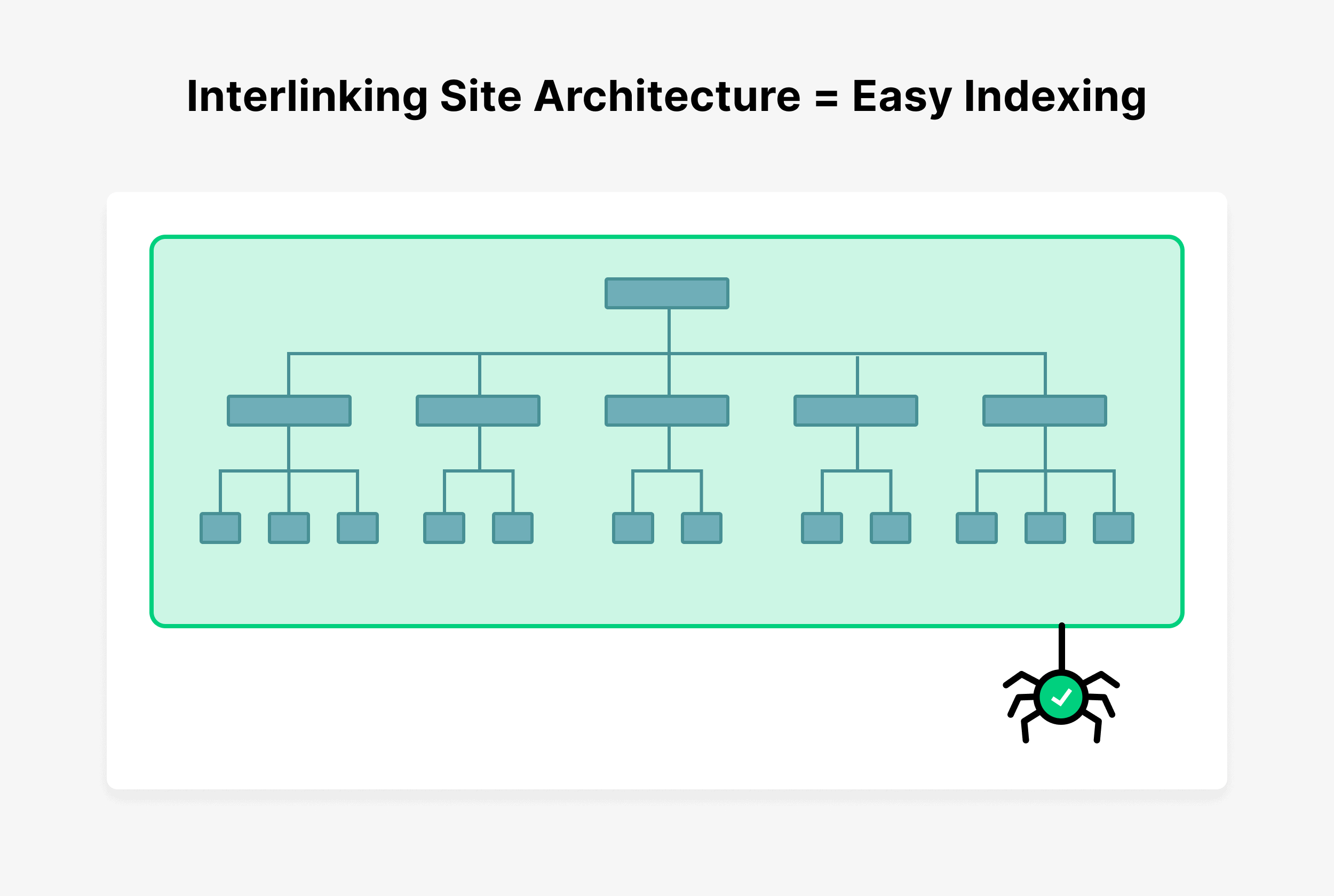
Build a Smart Site Structure and Use Internal Links Wisely
When you’re just starting out, and your website has only five pages, the way you structure it doesn’t really matter all that much.
But once your site grows to include hundreds or even thousands of pages, your site architecture can make or break your SEO performance.
That’s why your first step should be to create a clear, logical structure, often called a “hierarchy,” that groups related pages into well-defined categories.
What to check:
a) Mobile Friendliness
Over 60% of searches happen on phones. If your site looks bad on mobile, Google won’t rank it.
✅ Test: Use Google’s Mobile-Friendly Test (free).
b) Page Speed
A 1-second delay can reduce conversions by 20%.
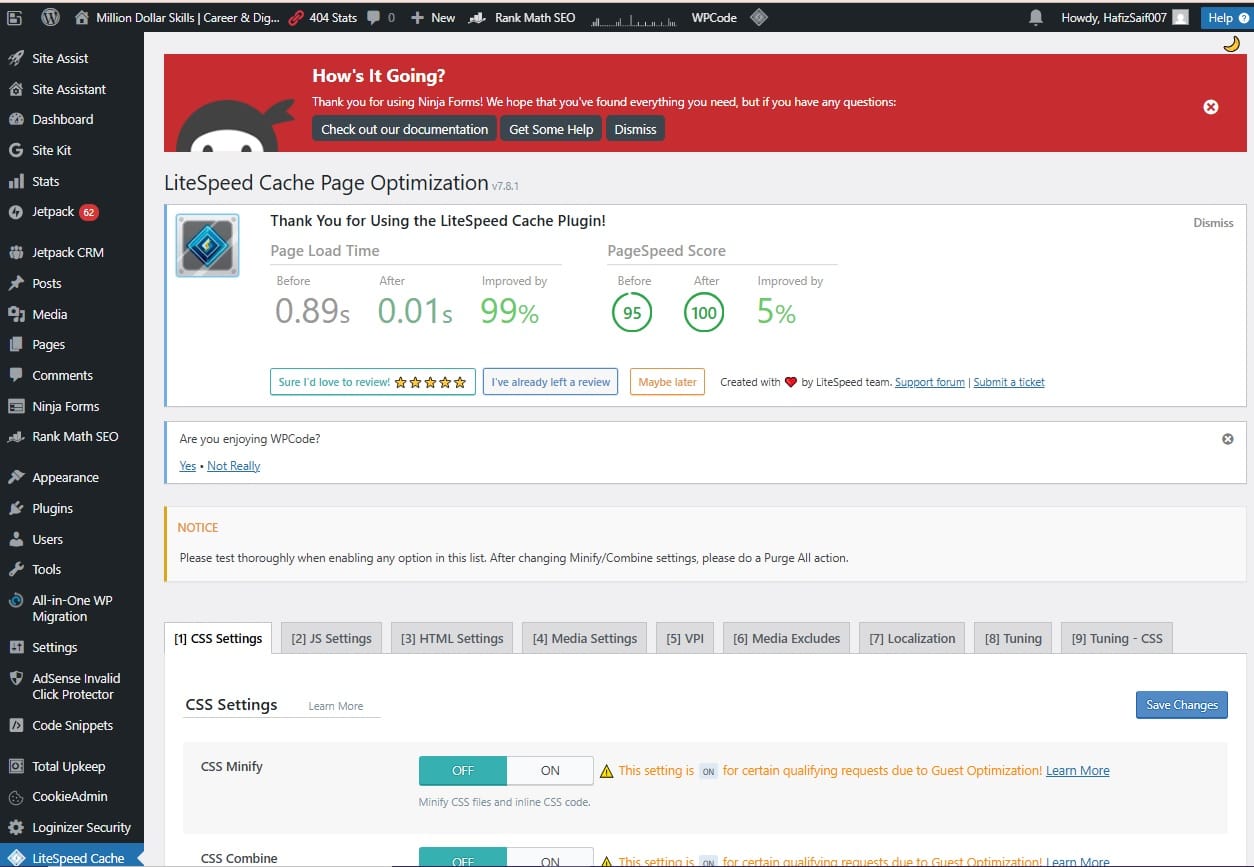
✅ Tools: Google PageSpeed Insights, GTmetrix.
c) HTTPS Security
Google gives a small ranking boost to secure sites. Your site already has HTTPS (good). If not, get a free SSL certificate from your host.
d) XML Sitemap
This is a roadmap of your website for Google. Submit it via Google Search Console (free and essential).
Two of the most powerful tools for on-page optimization are Rank Math and Surfer SEO. Both are excellent, but they serve different purposes. If you’re trying to decide which one fits your workflow, I’ve written a detailed comparison of Rank Math vs Surfer SEO just for you.
Pillar #3: Off-Page SEO (What Others Say About You)
This is mostly about backlinks, links from other websites to yours.
Backlinks are like votes of confidence.
If a trusted, relevant site links to you, Google thinks: “This page must be valuable.”
How to earn quality backlinks:
-
Guest posting on related blogs (AI, career, business topics)
-
Creating original data or surveys that others will cite
-
The Skyscraper Technique: Find popular content, make it 10x better, then email everyone who linked to the original
-
Broken link building: Find broken links on other sites, suggest your content as a replacement
✅ Important:
One link from a high-authority relevant site (like a popular marketing blog) is worth more than 100 links from spammy directories.
Chapter 5: The New Reality AI Search & GEO in 2026
You’ve probably heard people say: “SEO is dead because of ChatGPT.”
That’s false. But the game has changed.
What’s GEO?
Generative Engine Optimization (GEO) is the practice of optimizing your content for AI-powered search engines like:
-
ChatGPT Search
-
Perplexity AI
-
Google AI Overviews (SGE)
How is GEO different from traditional SEO?
| Traditional SEO: What Is SEO | GEO (AI Search) |
|---|---|
| Optimize for blue links | Optimize for being cited in AI answers |
| Focus on keywords | Focus on conversational questions |
| Backlinks are critical | Clarity and structure matter more |
| CTR (click-through rate) matters | Being mentioned as a source matters |
The good news?
The fundamentals are the same.
AI engines still reward:
-
Clear, useful, honest content
-
Real-world experience (E-E-A-T: Experience, Expertise, Authority, Trust)
-
Logical formatting (headings, lists, tables)
So if you master classic SEO, you’re already 80% ready for AI search.
Chapter 6: Common SEO Mistakes (And How to Avoid Them)
Let me save you months of frustration.
Mistake #1: Ignoring Search Intent
-
You rank for a keyword but people leave immediately
-
Why does that happen?
-
Because your page doesn’t match what they actually wanted
✅ Fix: Before writing, check Google. What type of content ranks? Tutorials? Lists? Reviews? Give people exactly that.
Mistake #2: Writing for Robots, Not Humans
-
Keyword-stuffed content? Robots love it
-
Real humans? They hate it
-
And Google? They hurt your rankings for it
✅ Fix: Write as you talk. Use “you” and “I.” Tell stories. Give examples from your real life.
Mistake #3: No Internal Links
-
Every page on your site needs internal links
-
Aim for at least 2 to 3 links per page
-
Link to other relevant articles on your own website
✅ Fix: After publishing, spend 5 minutes linking to related articles.
Mistake #4: Giving Up Too Early
-
SEO takes time
-
Don’t expect results overnight
-
Most results appear between 3 to 6 months
✅ Fix: Create a content calendar. Publish consistently for 6 months before judging results.
Chapter 7: Your First 30 Day SEO Action Plan
You don’t need to do everything at once. Just follow this.
Week 1: Foundation
-
Install Google Search Console (free)
-
Submit your sitemap
-
Check mobile friendliness
Week 2: Keyword Research
-
Find 5 questions your audience asks (use “People also ask” on Google)
-
Pick 1 primary keyword per article
Week 3: Content Creation
-
Write one long-form article (1,500+ words)
-
Use your keyword in the title, the first 100 words, and one heading
-
Add 3 internal links
Week 4: Promotion & Backlinks
-
Share article on LinkedIn / Twitter
-
Email 5 people who might link to it
-
Reply to every comment
Repeat this cycle every month.
Within 90 days, you’ll see traffic.
Within 6 months, you’ll see real results.
Conclusion: The Only SEO Secret That Actually Matters
Let me tell you something most “gurus” won’t.
I’ve read hundreds of SEO guides. I’ve tested dozens of strategies. I’ve ranked articles #1 and watched them fall to page 3.
And after all that, here’s what I’ve learned:
There is no magic button.
No secret trick.
No hidden algorithm hack.
No $997 course that will hand you the keys.
What actually works is boring. Unsexy. And completely available to you right now.
Clarity over cleverness.
Consistency over intensity.
Helping people over tricking robots.
Every single day, Google processes 8.5 billion searches.
Most of those searches end in frustration because the top results are generic, lifeless, and unhelpful.
You can be different.
You can write the article that finally answers the question.
You can create a resource that saves someone hours of confusion.
You can build a website that people actually bookmark.
Not because you outsmarted Google.
But because you out-cared everyone else.
SEO is not a technical barrier.
It’s an invitation.
An invitation to step up. To share what you know. To solve real problems for real people.
The search engines will follow. They always do.
So here’s my challenge to you:
Stop waiting for perfect. Stop rewriting that headline for the tenth time. Stop worrying about whether your domain authority is high enough.
Just start.
Open your dashboard right now. Write 500 words. Publish it. Add one internal link. Share it with one human being.
Then do it again tomorrow. And the day after.
Because the #1 ranking isn’t given to the smartest SEO.
It’s given to the one who showed up consistently, helped generously, and never quit.
That person can be you.
SEO doesn’t stop at written content. Video is massive, especially on YouTube. If you’re creating video content or planning to, don’t miss my step-by-step guide on how to rank your videos on YouTube in 2026.
Now go make your content impossible to ignore.
Hafiz Saif Ur Rehman
Million Dollar Skills