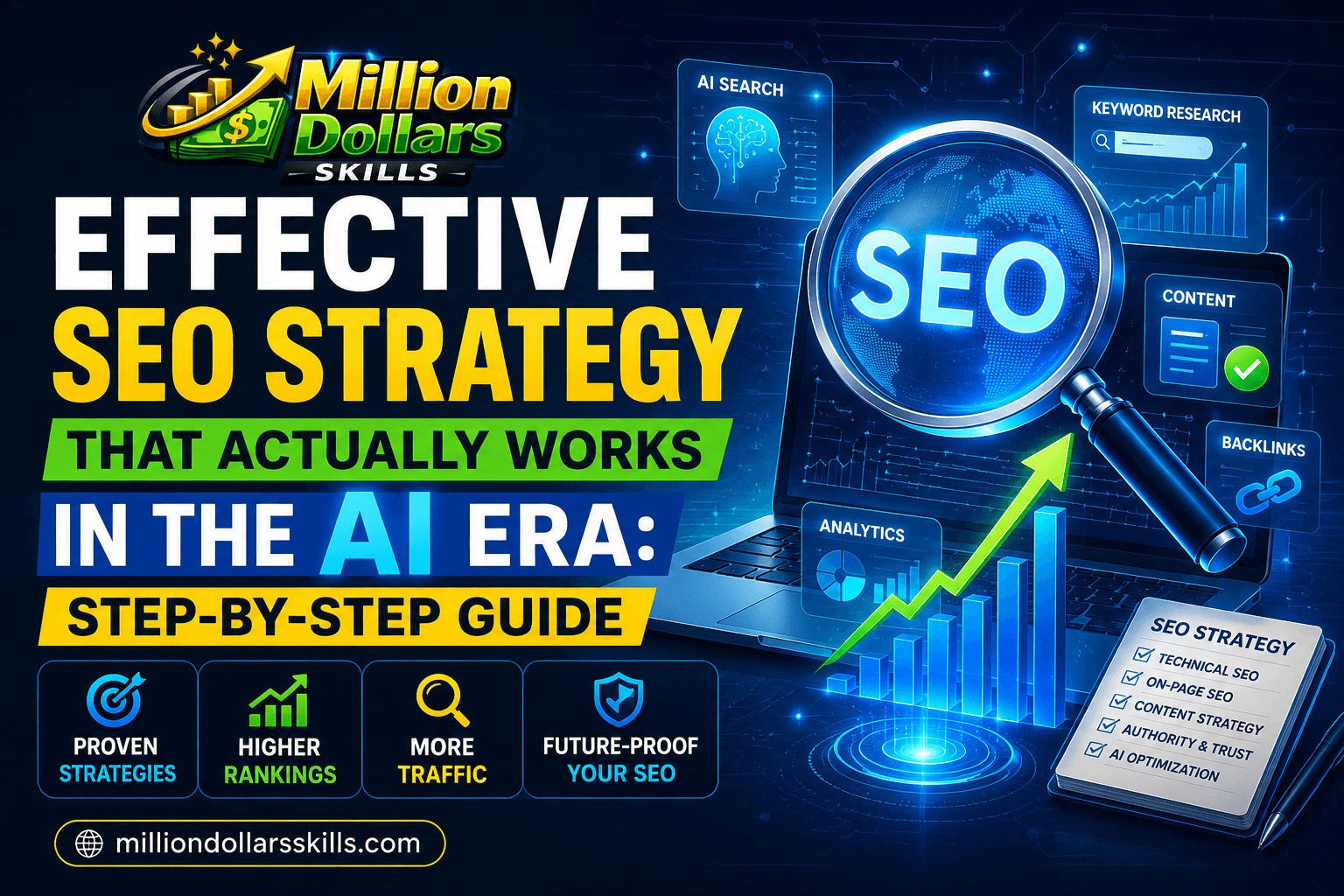
Effective SEO Strategy That Actually Works in the AI Era: A Step by Step Guide
Effective SEO Strategy That Actually Works in the AI Era: A Step by Step Guide
Introduction
Let me start with an observation that might make you uncomfortable.
How did you use to do SEO? It is not working anymore.
Not because you are doing anything wrong. But because the search itself has fundamentally changed.
Think about your own behavior over the past year.
When you have a question, where do you go first?
Maybe you open ChatGPT. Or you ask Perplexity. Or you scroll through Reddit to see what real people are saying. Or you let Google’s AI Overview give you the answer without ever clicking a link.
If you are honest, you will admit that your own search habits look nothing like they did three years ago.
Now ask yourself this.
If you are searching differently, why would your customers be searching the same way?
They are not.
Here is what has changed.
Search is no longer just a list of blue links. It is answers. Summaries. Recommendations. Conversations. And those answers are coming from everywhere: Google, ChatGPT, YouTube, Reddit, LinkedIn, X, TikTok, and dozens of other platforms.
This fragmentation scares most SEOs.
They think it means more work. More complexity. More channels to manage.
But I see it differently.
This shift is actually the biggest opportunity for SEO in a decade.
Here is why.
When search was just Google, the biggest brands with the biggest budgets always won. They had more links, more content, and more resources.
But today? But today? Visibility is fragmented across dozens of platforms. And that means smaller, smarter, more focused teams can win by being useful in the right places.
You do not need to outspend your competitors. You need to out-serve them.

That is exactly what this guide will help you do.
Over the next several chapters, I will walk you through a complete, step-by-step framework for building an SEO strategy that works in 2026 and beyond.
No fluff. No recycled advice. No theory that sounds good but fails in practice.
Just actionable steps you can implement starting tomorrow morning.
No fluff. No recycled advice. No theory that sounds good but fails in practice. Just actionable steps you can implement starting tomorrow morning.
💡 Note: If you are completely new to search engine optimization, it is highly recommended to first brush up on the fundamentals by reading our absolute beginner’s guide on What Is SEO? (And Why It Still Matters Today) before diving into these advanced 2026 strategies.
Let us get to work.
Chapter 1: Start with Business Goals, Not Keyword Goals
Here is the single biggest mistake I see SEOs make.
They open a keyword tool, find a bunch of high-volume keywords, and start creating content without ever asking a simple question.
Does this actually help my business make money?
Ranking for “what is SEO” might feel good. But if you sell enterprise SEO software, that keyword will never bring you a single qualified lead.
Ranking for “best SEO tools for agencies” is harder. The volume is lower. But the person searching that phrase is ready to buy.
Which one would you rather rank for?
The Goal-Setting Framework That Works
Before you do anything else, answer these four questions.
| Question bout Effective SEO Strategy | Your Answer |
|---|---|
| What specific business outcome do I want from SEO this year? | |
| What does my ideal customer actually need from me? | |
| What keywords signal real buying intent for my business? | |
| How will I measure success beyond rankings and traffic? |
Let me give you real examples.
-
Local restaurant: “I want 50 new customers per month from ‘best Italian food near me’ searches.”
-
SaaS company: “I want 200 qualified demo requests from bottom-of-funnel keyword searches.”
-
E-commerce store: “I want 30% of my organic revenue to come from product category pages.”
-
Agency: “I want to rank for high-intent terms like ‘SEO audit service’ rather than informational terms.”
None of these are “I want to rank number one for X.”
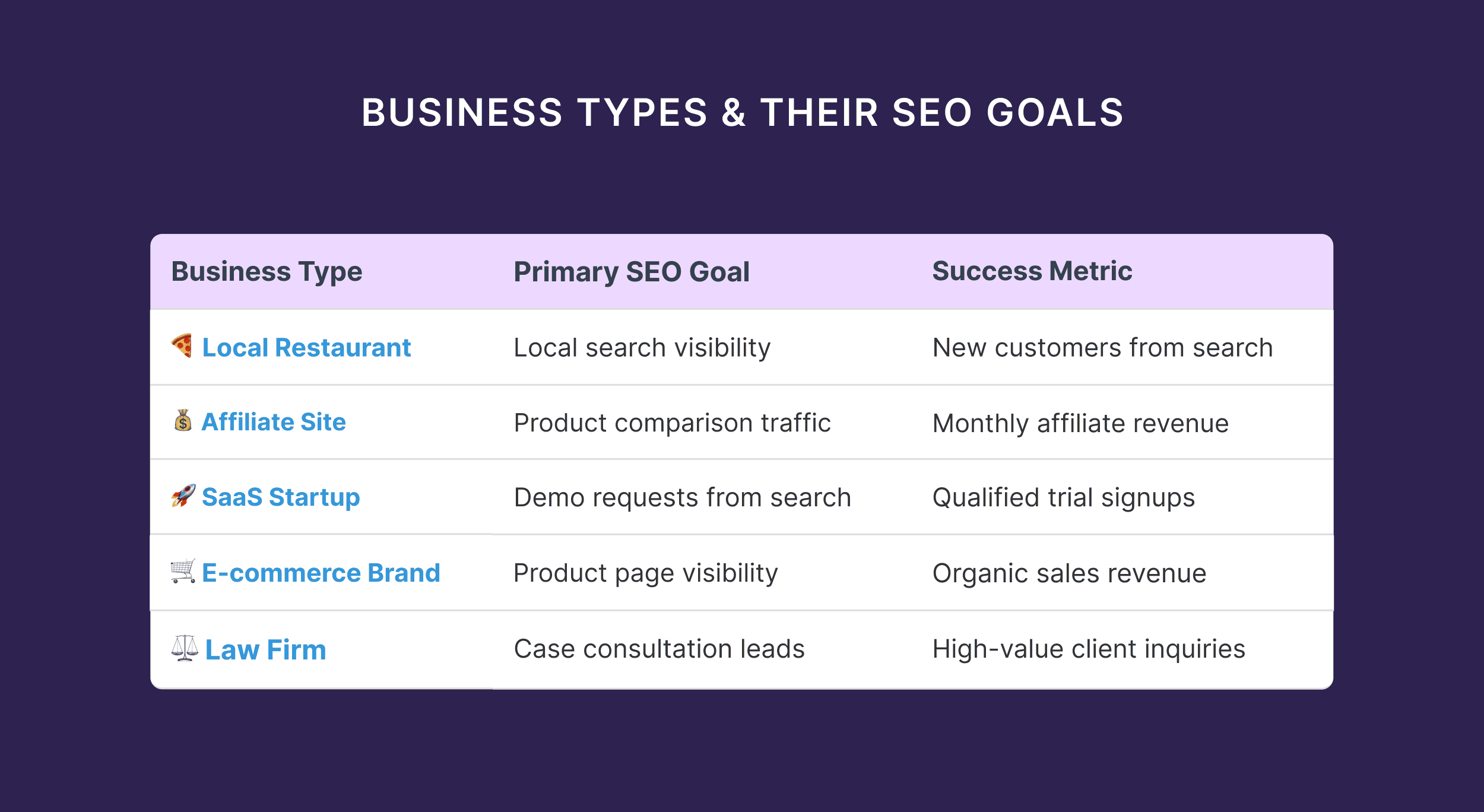
These are business outcomes. And they completely change how you approach SEO.
How to Map Business Goals to SEO Activities for an Effective SEO Strategy
| Business Type | Primary Focus | Content Priority | Success Metric |
|---|---|---|---|
| Lead generation (SaaS, services) | Bottom-funnel commercial keywords | Case studies, comparison pages, solution guides | Qualified leads, conversion rate |
| E-commerce/affiliate | Product and transactional keywords | Product guides, reviews, buying guides | Organic revenue, transaction value |
| Local business | Local pack and near-me searches | Service pages, location content, review generation | Store visits, phone calls, and direction requests |
| Publisher/media | Informational and news keywords | Breaking news, data studies, listicles | Ad revenue, page views, return visitors |
Your first job is not to write content.
Your first job is to get crystal clear on what winning looks like for your specific business.
Do that before you do anything else.
Chapter 2: Find Topics Your Competitors Have Missed
Most SEO research starts and ends with Google Keyword Planner.
That is like trying to catch fish in a bathtub while the ocean is right next to you.
Your audience is searching across multiple platforms. And each platform reveals different insights about what they actually want.
Step 1: Listen to Your Existing Customers
You already have the most valuable research tool in the world. You just are not using it.
Go through these sources and write down every question you find.
-
Customer support emails and chat logs: What confuses people? What do they ask repeatedly?
-
Sales call recordings and transcripts: What exact words do buyers use to describe their problems?
-
Product reviews (both positive and negative): What do people love? What frustrates them?
-
Social media comments and DMs: What questions are people asking in public?
-
Community forum threads about your brand: How do people really talk about you when you are not in the room?
The exact language your customers use is pure gold. Use those exact phrases in your content.
Step 2: Analyze Your Competitors’ Best Content
You do not need to reinvent SEO. You just need to do it better.
Spend two hours doing this competitor analysis.
-
Identify your true SEO competitors: Use Semrush, Ahrefs, or Moz to see who ranks for the same keywords you want.
-
Find their highest-traffic pages: Look for pages that drive significant organic visits.
-
Focus on commercial pages first: Service pages, product pages, comparison pages, pricing guides.
-
Note what they do well: What format are they using? How deep is the content? What makes their page valuable?
-
Find what they are missing: What questions do they leave unanswered? What examples are outdated? What angle could you improve?
You are not copying them. You are learning from them and then doing better.
Step 3: Expand Your Research Across Platforms
This is where most people stop. Do not be most people.
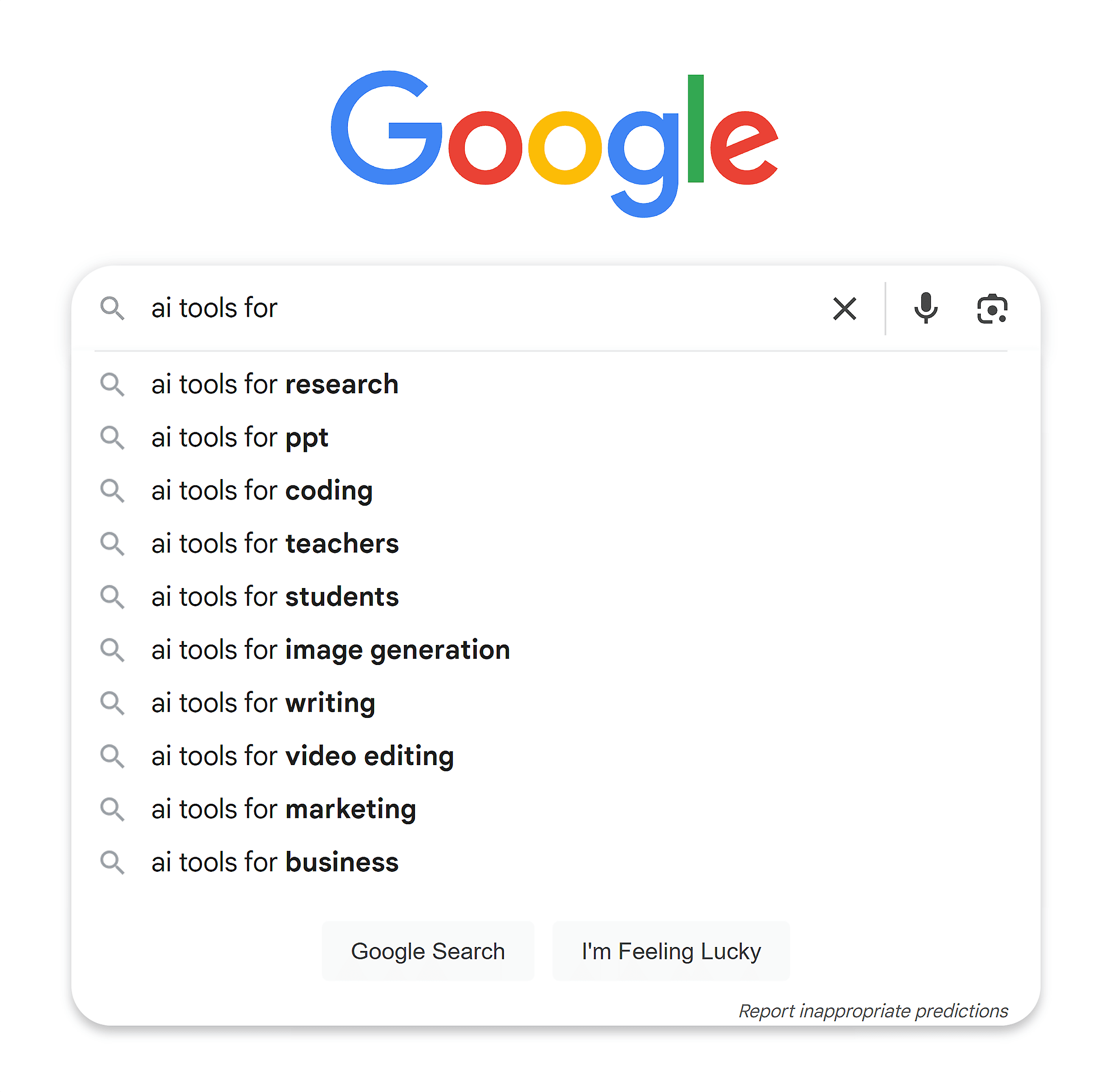
Google Autocomplete
Start typing your topic into Google and watch what it suggests. Each suggestion is a real search query. Add them all to your list.
Reddit is where people ask honest, unfiltered questions they would never type into Google.
Search relevant subreddits for your topic. Look for:
-
Posts with hundreds of comments
-
Questions that get asked every week
-
Pain points people mention over and over
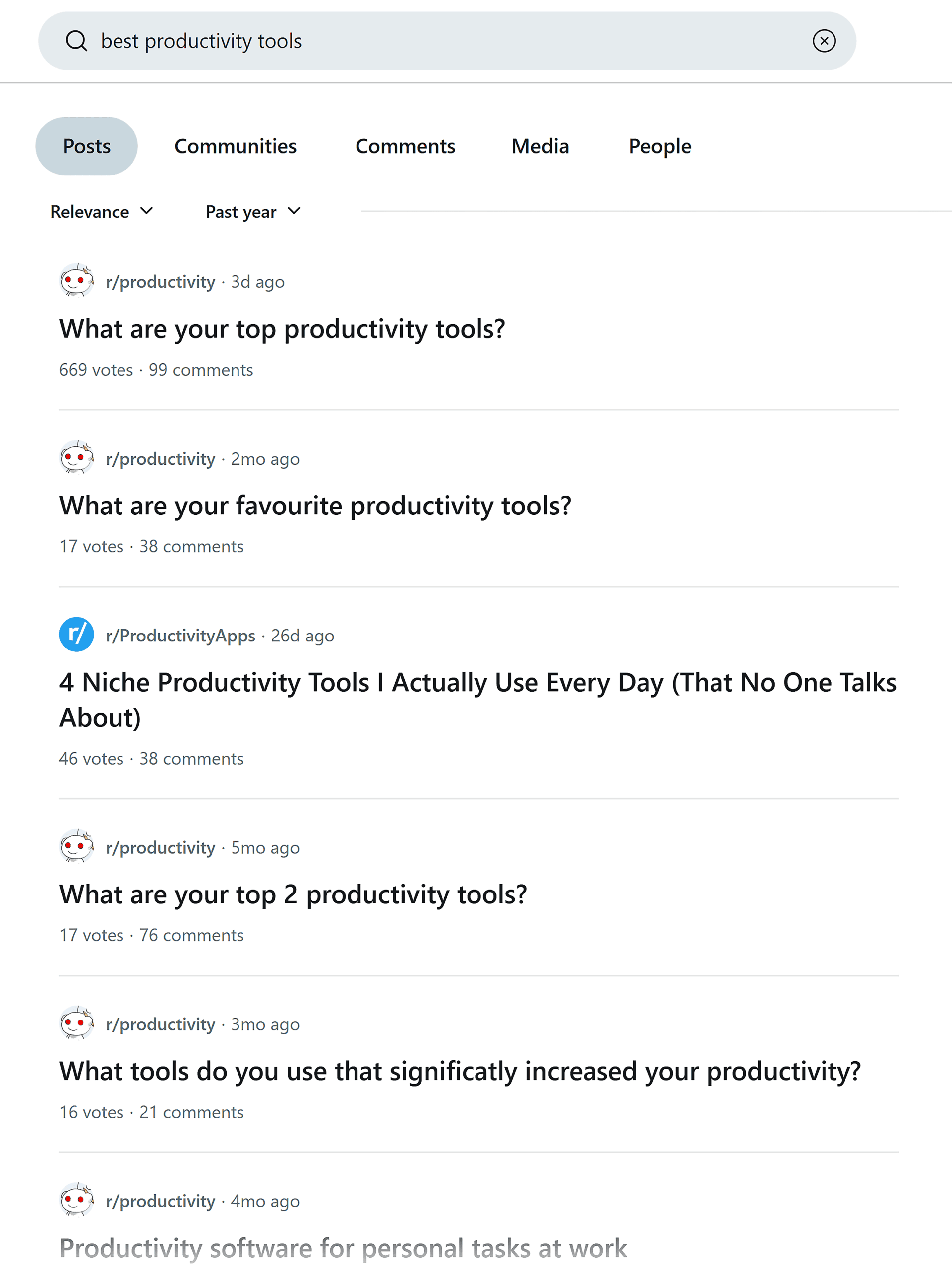
The language people use on Reddit is often different from that on Google. Use that language.
YouTube
YouTube is the second-largest search engine on earth.
Type your topic into YouTube and look at:
-
Search suggestions
-
Videos with the highest view counts
-
The most-liked comments (they reveal what viewers actually wanted)
ChatGPT and other AI tools
Try this exact prompt:
“I sell [your product/service]. What questions do people have about [your topic] that are not being answered well in existing content?”
The answers often reveal question patterns and information gaps you would never find in traditional keyword research.
Quora and LinkedIn
For B2B topics, LinkedIn is growing fast. For general topics, Quora still has active communities.
The goal is not to create content for every platform. The goal is to understand your audience so well that you can create something undeniably better than what exists today.
Chapter 3: Decode Search Intent Before You Write Anything
I have seen brilliant content fail.
Not because it was bad. But because it did not match what searchers actually wanted.
Search intent is simple. It answers one question.
What is the user really trying to accomplish?
The Four Types of Search Intent
| Intent | User Goal | Example Query |
|---|---|---|
| Informational | Learn something | “What is an SEO strategy?” |
| Navigational | Find a specific site | “Backlinko SEO guide” |
| Commercial | Research before buying | “Best SEO tools for small business” |
| Transactional | Take action | “Buy SEO audit tool” |
How to Analyze Intent for Any Keyword
Search your target keyword on Google. Study the first page of results. Ask yourself these questions.
What content format dominates?
-
If the top 5 results are all comprehensive guides → do not write a product page
-
If top results are comparison lists → do not write a tutorial
-
If videos dominate the SERP → consider creating video content
How deep is the content?
-
500-word quick answers → you can write shorter
-
3000-word deep dives → you need significant depth
-
Mixed depths → find the sweet spot
What SERP features appear?
-
Featured snippet → Google has a “best answer” for this query
-
People Also Ask → these are related questions you should answer
-
AI Overview → Google sees this as a question that benefits from synthesis

The 5-Minute Intent Test
Before you write a single word, ask:
-
Does this format match what searchers expect?
-
Can I realistically create something better than what is ranking?
-
Will this content drive my business objectives?
If you answer “no” to any of these, either adjust your approach or target a different keyword.
Chapter 4: Write Content That Demonstrates Real Experience
Here is what AI-generated content cannot do.
It cannot share a story about a client project that went wrong and what you learned.
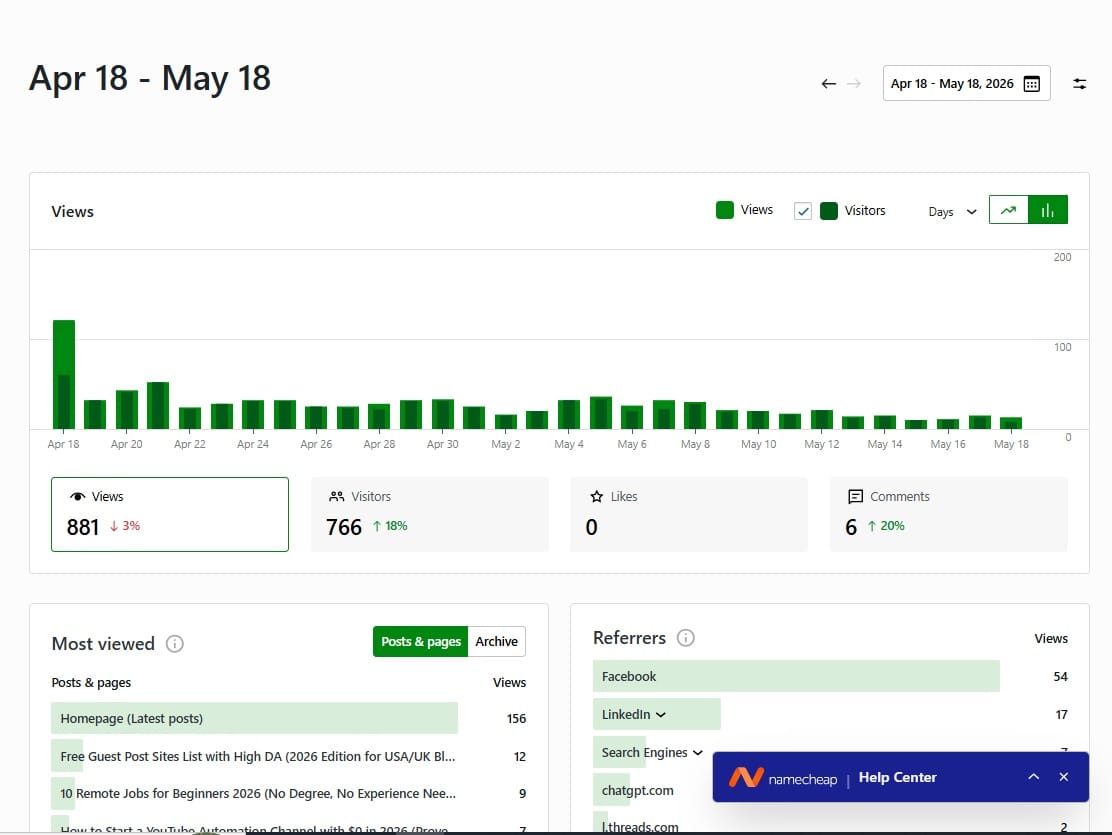
It cannot show a screenshot from your actual analytics account with real numbers.
It cannot explain a mistake you made and how to avoid it.
It cannot offer an opinion based on years of doing the work.
That is your competitive advantage.
What Google Actually Wants (According to Their Own Guidelines)
Google’s Search Quality Rater Guidelines focus on something called E-E-A-T.
-
Experience: Does the content show first-hand knowledge?
-
Expertise: Does the creator have relevant qualifications or proven skills?
-
Authoritativeness: Is the brand or creator recognized as a go-to source?
-
Trustworthiness: Is the content accurate, honest, and transparent?
In 2026, these signals matter more than ever. AI has flooded the internet with generic, superficial content. Google (and other search tools) are desperate to reward real expertise.
How to Infuse Experience Into Everything You Write
Use specific, personal examples
Instead of: “You should optimize your meta descriptions.”
Write: “Last month, I rewrote the meta descriptions for our top 20 product pages. We saw click-through rates increase by 12% within two weeks. Here is exactly what I changed.”
Include original screenshots and data
Stock photos are fine. But original screenshots from your own analytics, your own tools, or your own projects are infinitely more valuable.
Share what did NOT work
Everyone shares success stories. Few people share failures.
But failures teach more. And they build trust because they show you are honest.
Add an author bio with real credentials
Who wrote this? Why should I trust them?
Add a photo. Add a LinkedIn link. Add relevant experience. Add case studies they worked on.
The Content Quality Checklist
Before you publish anything, run it through this checklist.
| Criteria | Pass/Fail |
|---|---|
| Does it answer the user’s question completely? | |
| Does it include original examples from real experience? | |
| Is it scannable with clear headings and short paragraphs? | |
| Does it offer something competitors do not have? | |
| Would I personally share this with a colleague? |
If you cannot check every box, keep editing.
Chapter 5: Structure Your Content for Humans and AI
Good content structure serves two masters.
It helps humans read and understand your content.
It helps search engines (and AI tools) understand what your content covers and how it is organized.
The Anatomy of a Well-Structured Page
Title Tag (60 characters max)
Put your main keyword near the beginning. Make it compelling enough to click.
Example: “Effective SEO Strategy in AI Era: Step-by-Step Guide”
Meta Description (150-160 characters)
Summarize what the page offers. Include your keyword naturally. Add a reason to click.
Example: “Learn a step-by-step SEO strategy that works in 2026. Covers keyword research, content creation, link building, and AI search optimization.”
H1 Heading
Match your title tag exactly or use a very close variation.
H2 Headings (Main sections)
Each H2 should cover a major topic. Someone should understand your entire article just by reading your H2s.
H3 Headings (Subsections)
Use H3s under H2s to break down complex topics into smaller, scannable chunks.
URL Structure
Keep URLs short and descriptive.
Good: domain.com/seo-strategy-ai-era
Bad: domain.com/blog/2026/03/15/2345-article
Internal Links
Link to your own relevant content using descriptive anchor text.
Example: “For more details, read our complete on page SEO checklist.”
Formatting for Scannability
Most people will not read every word. They will scan.
Help them by using:
-
Short paragraphs (2-4 sentences maximum)
-
Bullet points and numbered lists for steps, features, or examples
-
Bold text for key takeaways (but use it sparingly)
-
White space between sections (no walls of text)
-
Tables for comparing options or summarizing data
Beyond basic on-page formatting, optimizing your structure specifically for AI engines requires a specialized approach. Read our proven blueprint on How to Dominate AI Search Rankings (Proven Strategy & Human-Centric Framework) to master how automated crawlers synthesize and surface your data.
Image Optimization That Actually Matters
| Element | Best Practice |
|---|---|
| File name | seo-strategy-checklist.png (not IMG_001.jpg) |
| Alt text | Describe what the image shows and why it matters |
| File size | Compress images to under 200KB when possible |
| Format | Use WebP for better compression than JPEG/PNG |
Chapter 6: Build Visibility That Works for AI and Google
Traditional link building is not dead.
But it is no longer enough.
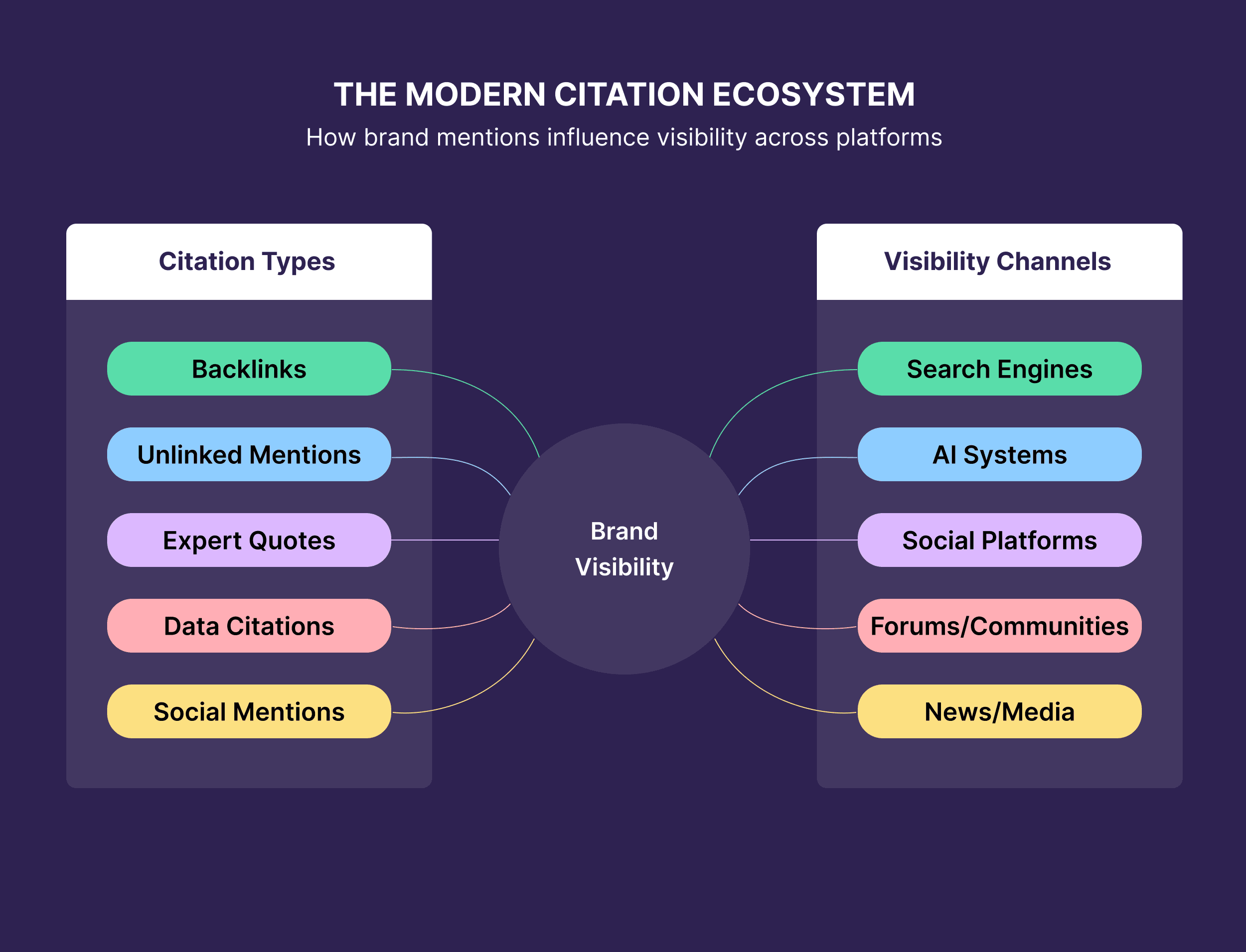
In 2026, you need visibility across the entire search ecosystem. That includes backlinks, but it also includes brand mentions, forum discussions, expert citations, and references in AI-generated answers.
Where to Build Visibility Today
| Channel | Why It Matters |
|---|---|
| Traditional backlinks | Still a top Google ranking factor |
| Unlinked brand mentions | Search engines notice and reward them |
| Expert quotes in the media | Builds authority and earns links naturally |
| Reddit and forum discussions | Drives targeted traffic and builds trust |
| Citations in AI tools | ChatGPT and Perplexity reference your brand |
| Social media conversations | Builds brand awareness and indirect SEO value |
Practical Link Building That Actually Works
Create genuinely linkable assets
What can you create that people would actually want to reference?
-
Original research with surprising findings
-
Free tools or calculators that solve a specific problem
-
Comprehensive guides on complex topics
-
Unique data visualizations or infographics
-
Industry surveys with actionable insights
Share your expertise with journalists
Writers constantly need expert quotes.
Sign up for:
-
HARO (Help a Reporter Out)
-
Qwoted
-
Featured
-
Sourcebottle
When you see a relevant request, respond quickly with a specific, useful answer. Do not just pitch yourself. Actually help.
Be useful in communities
Do not spam Reddit, Facebook groups, or LinkedIn with your links.
Show up consistently. Answer questions thoroughly. Share what you know without expecting anything in return.
Build a reputation as someone who helps. The traffic will follow naturally.
Turn one piece of content into many
A single well-researched article can become:
-
A LinkedIn post series (5-10 posts)
-
A Twitter thread
-
A YouTube video script
-
A newsletter issue
-
A podcast episode outline
-
Slide deck for a presentation
More visibility channels = more chances to be discovered.
Chapter 7: Measure Progress Without Getting Lost in Vanity Metrics
Here is a hard truth.
Most SEOs measure the wrong things.
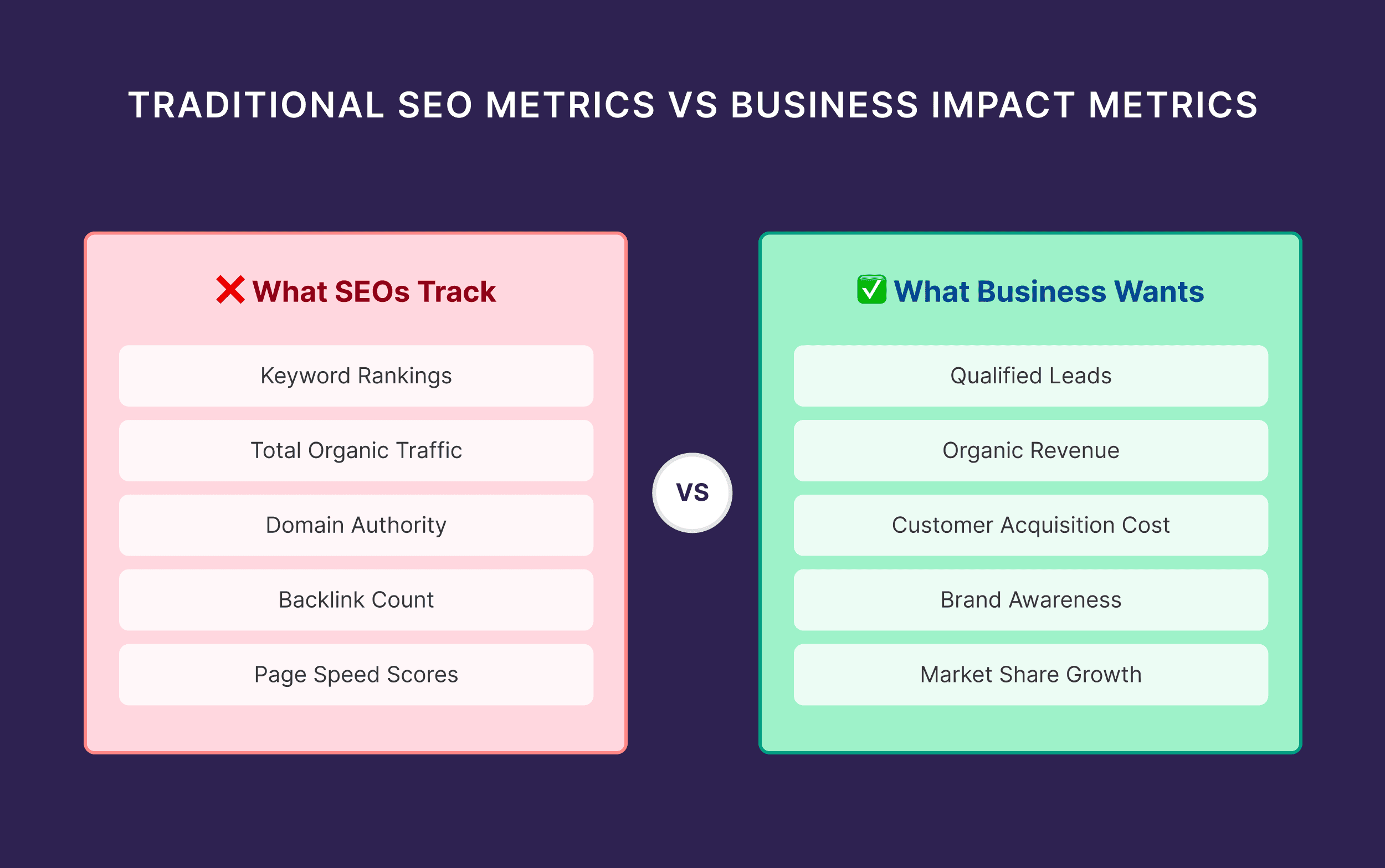
They celebrate when a keyword moves from position 12 to position 8. But that movement might drive zero additional revenue.
They obsess over Domain Authority. But DA is a third-party metric. Google does not use it.
They track total organic traffic. But traffic from low-intent keywords rarely converts.
The Metrics That Actually Matter
Primary Metrics (Direct Business Impact)
| Metric | What It Tells You |
|---|---|
| Organic revenue | The ultimate metric for e-commerce |
| Qualified leads from organic | The ultimate metric for B2B and services |
| Conversion rate by organic source | How well your traffic converts compared to other channels |
| Customer acquisition cost (SEO vs. paid) | SEO efficiency compared to advertising |
Secondary Metrics (Leading Indicators)
| Metric | What It Tells You |
|---|---|
| Organic traffic to high-converting pages | Are your most important pages getting visibility? |
| Brand search volume | Is SEO building brand awareness? |
| Click-through rate from search results | Is your title and description compelling? |
| Engagement metrics (time on page, scroll depth) | Do people actually read and value your content? |
| Share of voice for important topics | How visible are you compared to competitors? |
Metrics to Stop Tracking Immediately
-
Total keyword rankings (most are irrelevant to your business)
-
Domain Authority or similar third-party scores
-
Traffic to blog posts that do not convert
-
Rankings for informational keywords with no commercial value
-
Page views without engagement context
How Often to Review Your Performance
| Review Type | Frequency | What to Check |
|---|---|---|
| Quick health check | Weekly | Critical pages, major traffic drops or spikes |
| Performance deep dive | Monthly | Trends, conversion data, competitor movements |
| Strategy review | Quarterly | Goals, priorities, resource allocation |
| Full audit | Annually | Complete strategy refresh, new opportunities |
Chapter 8: Keep Your Content Fresh and Competitive
Content ages.
Not like fine wine. Like milk.
Examples become outdated. Statistics get old. Tools change. Strategies evolve.
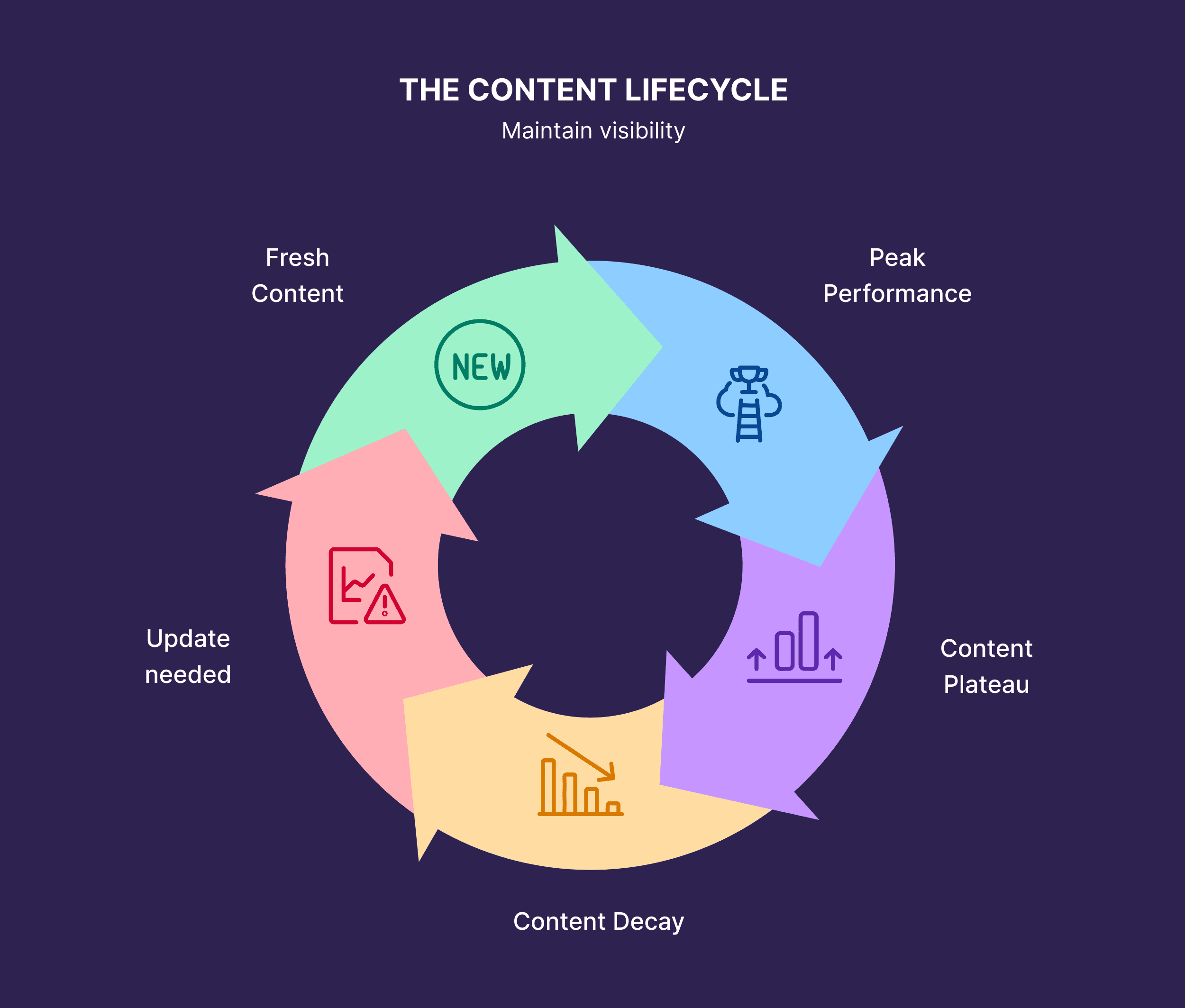
If you published a great article 18 months ago and have not touched it since, it is probably losing rankings right now.
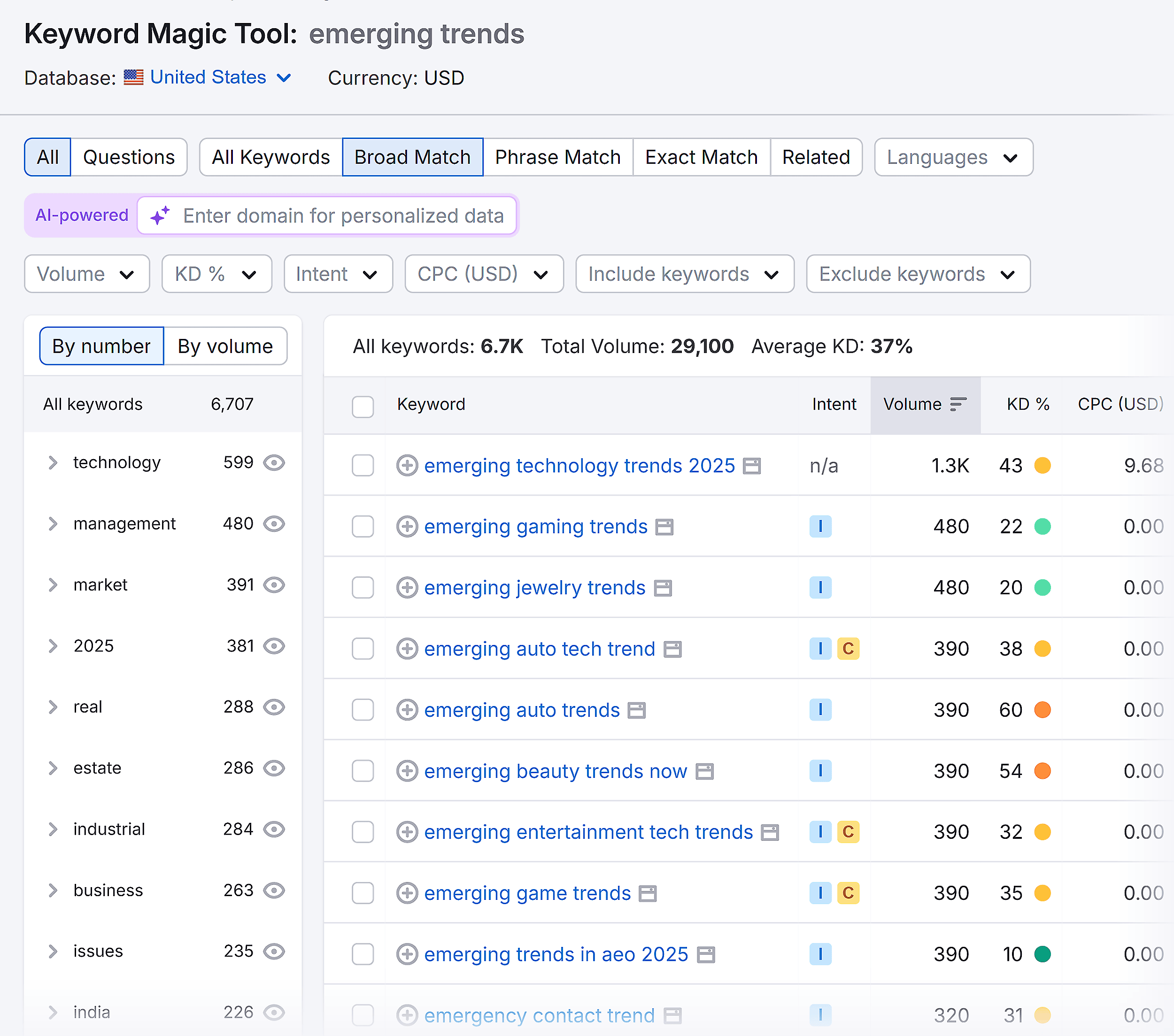
Ranking for “what is SEO” might feel good. But if you sell enterprise SEO software, that keyword will never bring you a single qualified lead.
Ranking for “best SEO tools for agencies” is harder. The volume is lower. But the person searching that phrase is ready to buy. Which one would you rather rank for?
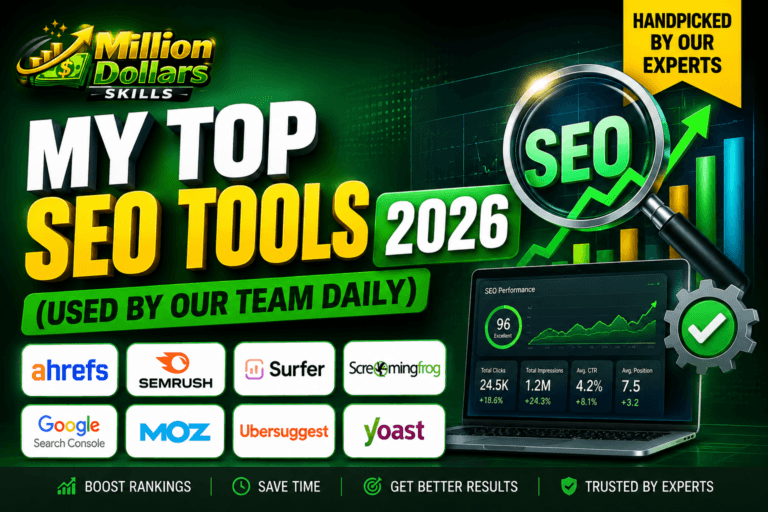
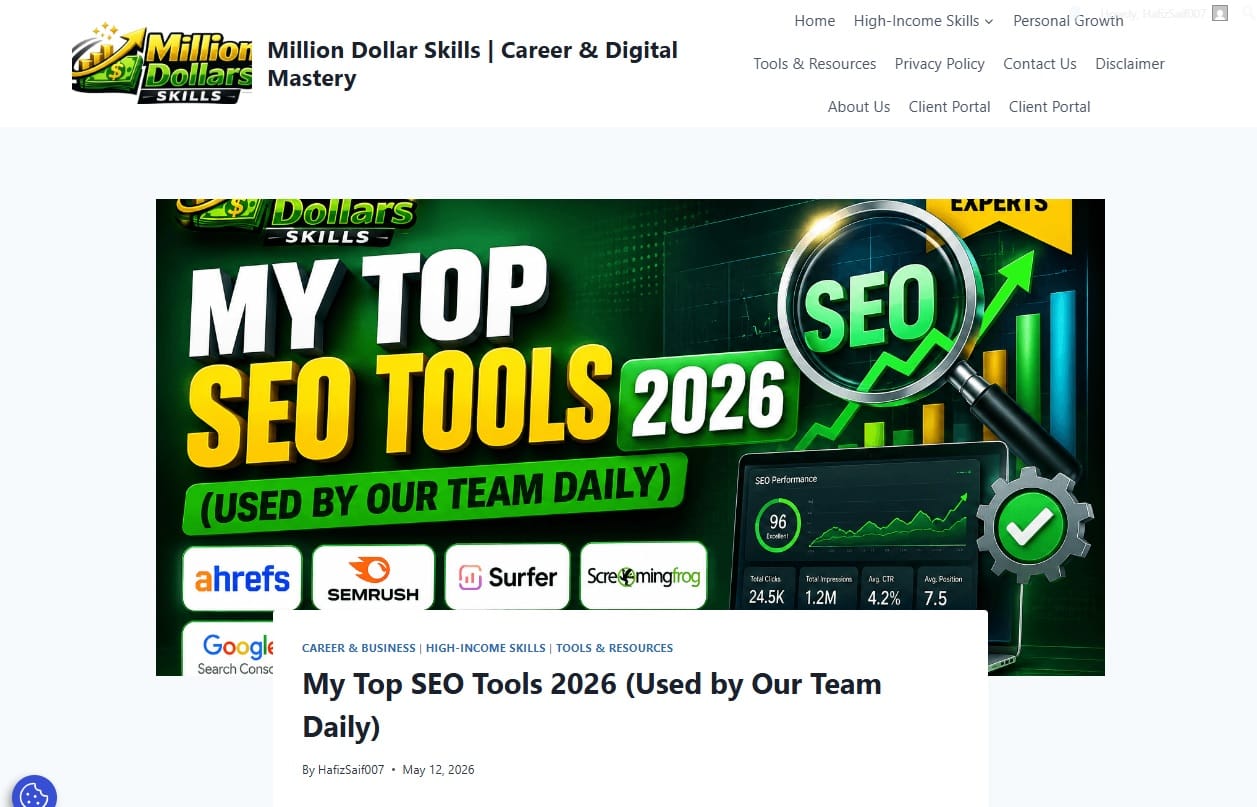
💡 Related Resource: To see exactly which software we use to reverse-engineer competitor intent and filter these commercial keywords, check out our curated breakdown of My Top SEO Tools 2026 (Used by Our Team Daily).
The Content Maintenance System
Tier 1: Quick Optimizations (Monthly)
Spend 10-15 minutes per important page:
-
Update outdated statistics (add the current year’s data)
-
Fix broken links (internal and external)
-
Refresh examples with more recent ones
-
Add a new internal link to recent content
-
Update the meta description to improve CTR
Tier 2: Moderate Upgrades (Quarterly)
Spend 1-2 hours per high-value page:
-
Add a new section covering recent developments
-
Replace old screenshots with current ones
-
Expand shallow sections with more depth
-
Improve formatting and scannability
-
Add new images, tables, or data visualizations
Tier 3: Major Rewrites (Annually)
Spend 4-8 hours per critical page:
-
Re-evaluate search intent (has it changed?)
-
Restructure the entire page for better flow
-
Rewrite large sections with new examples
-
Add original research or case studies
-
Merge related pages into one stronger asset
When to Consolidate Content
If you have multiple pages targeting similar keywords, you are competing with yourself.
Consolidate them into one comprehensive page.
One strong page will almost always outperform two or three weak pages. Consolidation also consolidates backlink authority, making it easier to rank.
Signs you should consolidate:
-
Two pages rank for many of the same keywords
-
Both pages have declining or low traffic
-
One page is significantly better than the other
-
The combined page would better serve user intent
What to Look For When Updating Your Existing Content
Most people pour all their energy into creating new content. They write blog post after blog post. They chase fresh keywords. They publish on a strict schedule.
And then? They completely ignore what they already published.
That is a mistake.
A big one.
Here is why.
Updating an old article that already has some traffic and backlinks often gives you faster, bigger results than writing ten new posts from scratch.
Think about it.
That old post already has history. Google knows it. Some people have linked to it. Maybe it even brings in a few visitors every month.
All it needs is a refresh. A tune-up. A second chance.
And when you give it that? The results can surprise you.
Conclusion
Let me be honest with you.
SEO is harder than it used to be.
The bar is higher. The competition is smarter. The technology is more complex.
But here is what I have learned after years of doing this work.
The fundamentals have not changed as much as people think.
Being useful still wins. Answering questions completely still wins. Demonstrating real expertise still wins. Building genuine authority still wins.
The difference is that these things now require more effort than before.
You cannot publish a shallow 500-word article and expect to rank.
You cannot outsource your content to AI and expect readers to trust you.
You cannot build a few low-quality links and expect Google to reward you.
The shortcuts are gone. And honestly? That is good news.
It means the people who are willing to do the work, who care about what they publish, who show up consistently, who actually help their audience, those are the people who will win.
Not because they are smarter or richer or luckier.
Because they are more committed.
So here is my challenge to you.
Start today.
Not tomorrow. Not next week. Today.
Pick one thing from this guide. Just one.
Maybe it is reframing your SEO goals around business outcomes. Maybe it is researching one topic across multiple platforms. Maybe it is updating one old piece of content.
Do that one thing today.
Then do another thing tomorrow.
Small steps, consistently applied, over time, produce extraordinary results.
That is not just an SEO strategy.
That is how you win at anything.
Now go build something worth finding.
Frequently Asked Questions (FAQs)
Q1: Is SEO still worth investing in for 2026 and beyond?
Yes. Absolutely.
Organic search still drives approximately 50% of all website traffic. No other channel comes close to that scale. The difference is that SEO now requires more depth, more expertise, and more strategic thinking than it did five years ago.
Q2: How long does it take to see results from an SEO strategy?
It depends on your industry, competition, and starting point.
Most sites see initial movement within 3-6 months. Significant traffic growth typically takes 6-12 months. Competitive niches can take 12-24 months.
The key is consistency. SEO compounds over time. The longer you do it, the more valuable your existing content becomes.
Q3: Do I need to optimize specifically for ChatGPT and other AI tools?
Not directly.
Focus on creating clear, authoritative, well-structured content that answers questions completely. AI tools look for the same signals as Google: expertise, trustworthiness, relevance, and completeness.
If you win at traditional SEO, you will likely win in AI search too.
Q4: How often should I publish new content?
Quality over quantity.
One excellent, well-researched article per week will outperform ten shallow, rushed articles every time.
Start with a schedule you can maintain consistently. Publishing one great piece every two weeks is better than publishing daily for a month and then burning out.
Q5: What is the single biggest SEO mistake people make in 2026?
Chasing tactics instead of building a system.
People jump from trend to trend. They try AI content, then abandon it. They build links for a month, then stop. They publish inconsistently.
The winners build consistent systems. They show up every week. They make small improvements over time. They trust the process.
Q6: How do I know if my content is “high quality” enough to rank?
Run it through this test:
-
Does it answer the user’s question more completely than the current top result?
-
Does it include original examples, data, or insights from real experience?
-
Is it organized and formatted so someone can easily scan it?
-
Would I feel confident sharing this with a colleague or client?
If you answered yes to all four, your content is ready.
Q7: What is the role of AI in SEO content creation?
AI is a tool, not a replacement.
Use AI for research, outlining, editing, and generating ideas. Use AI to write first drafts that you then heavily edit and improve. Use AI to summarize complex information.
Do not use AI to publish final drafts without significant human editing. Do not use AI to create content about topics you do not understand. Do not use AI to replace your unique voice and experience.
Q8: How does Google E-E-A-T affect rankings?
E-E-A-T stands for Experience, Expertise, Authoritativeness, and Trustworthiness.
These are not direct ranking factors. But they influence how Google evaluates content quality. Pages that demonstrate high E-E-A-T tend to rank better, especially for Your Money or Your Life (YMYL) topics.
The best way to improve E-E-A-T is simple: create content that demonstrates real, first-hand experience.
Q9: Should I target featured snippets?
Yes, but do not obsess over them.
Featured snippets can drive significant traffic. But they can also reduce clicks to your site if Google answers the question completely without requiring a click.
The best strategy is to create content that thoroughly answers questions. If you earn a featured snippet, great. If not, you still have content that ranks and drives traffic.
Q10: Where should I start if I am completely new to SEO?
Start with one thing.
Choose one keyword that matters to your business. Research the intent. Create the best possible piece of content on that topic. Optimize it properly. Promote it to your audience.
Learn from what happens. Then do it again.
Small, consistent actions beat grand plans that never launch.