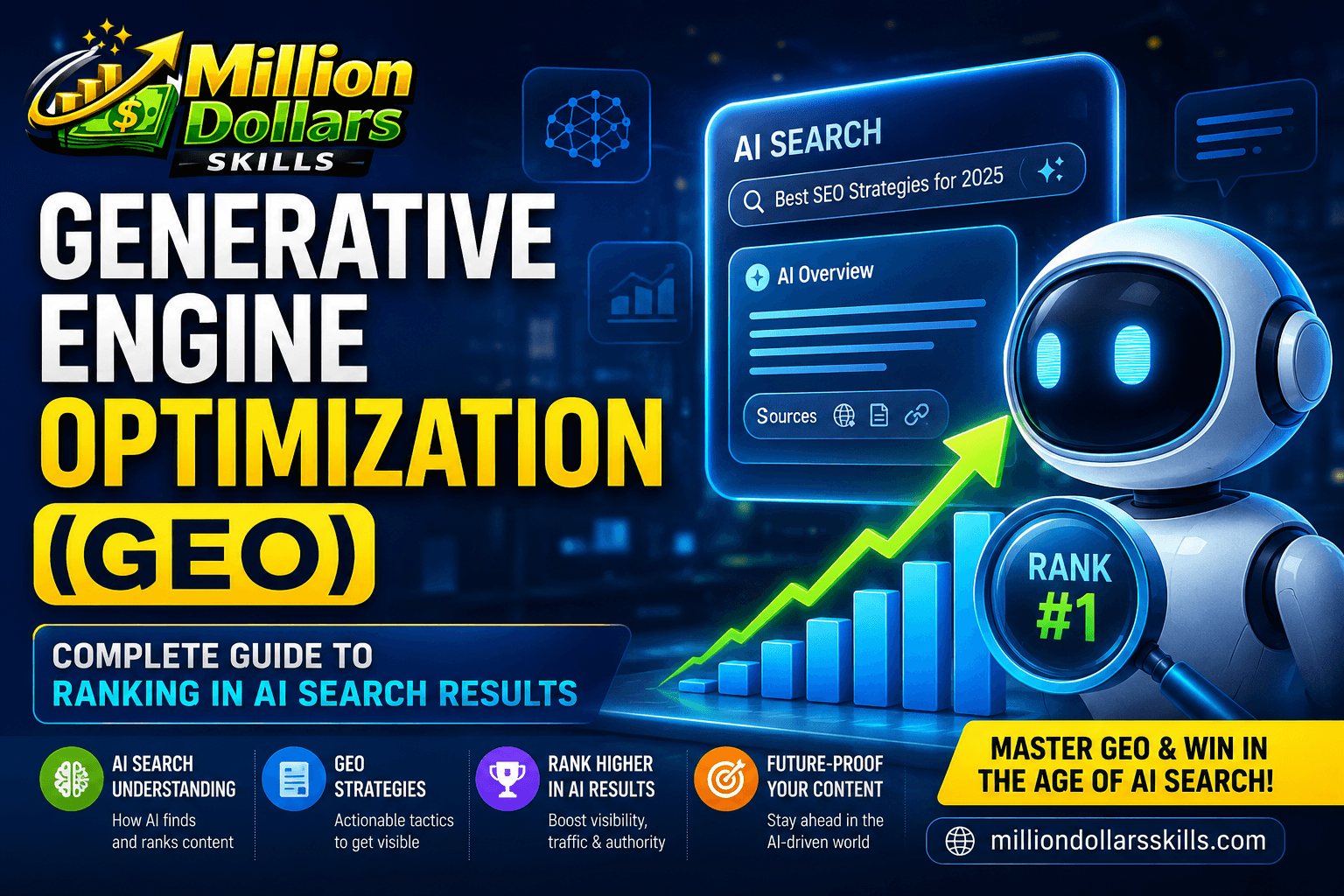
Generative Engine Optimization (GEO): Complete Guide to Ranking in AI Search Results
Generative Engine Optimization (GEO): Complete Guide to Ranking in AI Search Results
The brands you see popping up in AI search results didn’t crack some secret algorithm.
They simply built a presence that AI systems can easily find, understand, and trust.
And that’s exactly what generative engine optimization, or GEO, helps you do.
As large language models (LLMs) change the way people find information and make decisions, GEO is your answer to staying visible in AI-generated responses.
But this is a much bigger deal than it sounds.
Because by 2026, search has moved far beyond Google. We’ve entered the “Search Everywhere” era, where users look for information across platforms, not just one search bar.
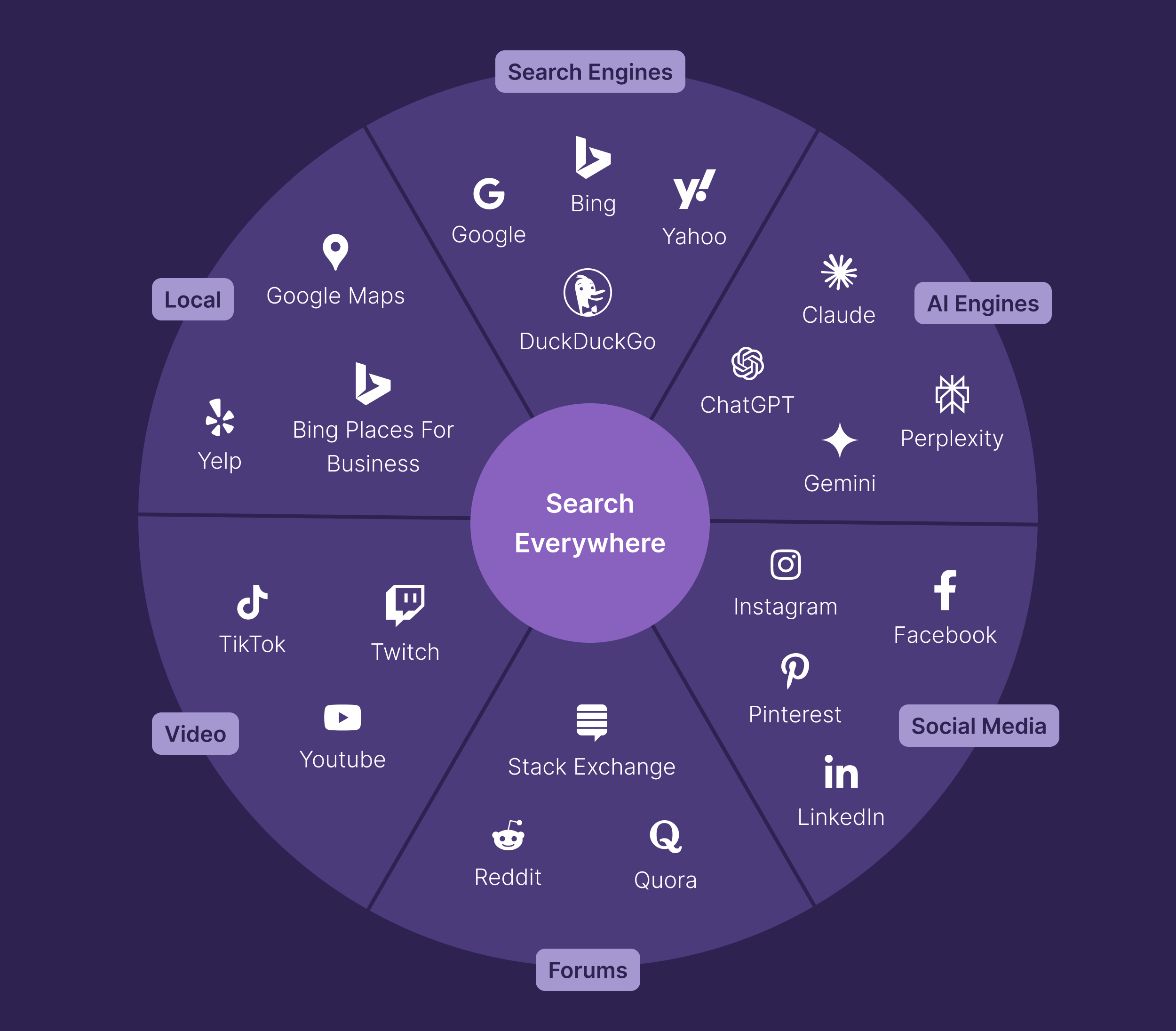
And among them, AI platforms are one of the fastest-growing discovery channels of all. In this article, I have tried my best to share my expertise about the Generative Engine Optimization (GEO) Complete Guide to Ranking in AI Search Results
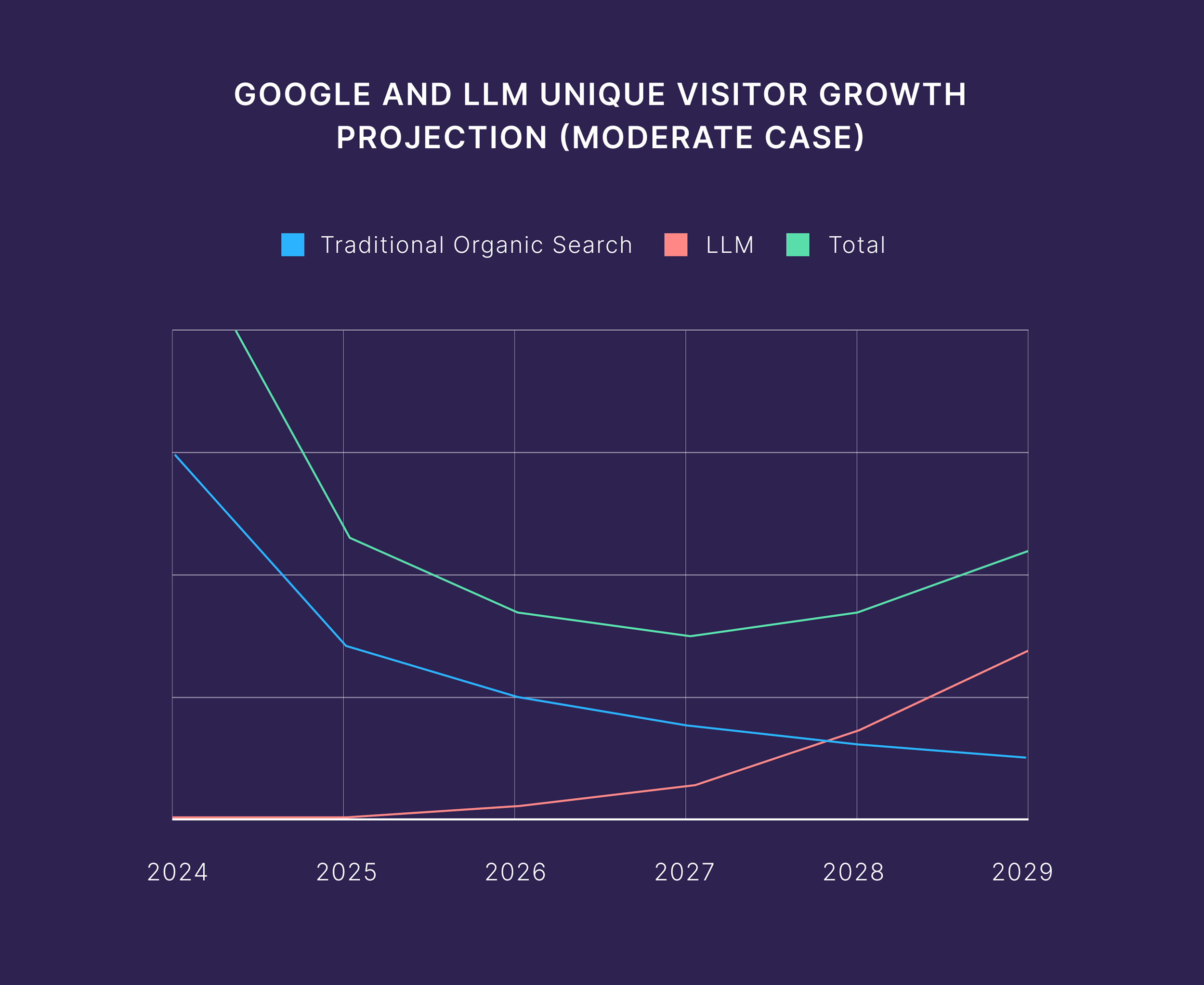
Our internal data supports this conclusion.
The brands that start adapting now will find themselves in a far stronger position to stay visible as this shift continues.
In this guide, I’ll walk you through:
-
What GEO actually is and how it differs from traditional SEO
-
Why you shouldn’t abandon everything you’ve already learned
-
The most effective techniques to optimize your content for generative engines and drive real results for your business along the way
What Is GEO?
Generative engine optimization, or GEO, is the process of making sure AI systems can easily discover, understand, and reference your brand along with your content when they generate answers across different platforms.
It’s not a single tactic but a complete approach that involves:
-
Publishing content in the right places so AI platforms are more likely to find it
-
Building positive brand mentions around the web, even when there’s no direct link involved
-
Keeping your site technically accessible so AI crawlers can read and interpret your content without trouble
Here’s the key difference from traditional search:
AI platforms don’t just serve up a list of links anymore. Instead, they pull useful passages from across the internet and stitch them together into a complete answer. In that answer, your brand can appear as a mention, a citation, or both.
So you’re no longer optimizing just to rank.
You’re optimizing to become part of what AI platforms actually say when your audience asks a question.
Take this real example:
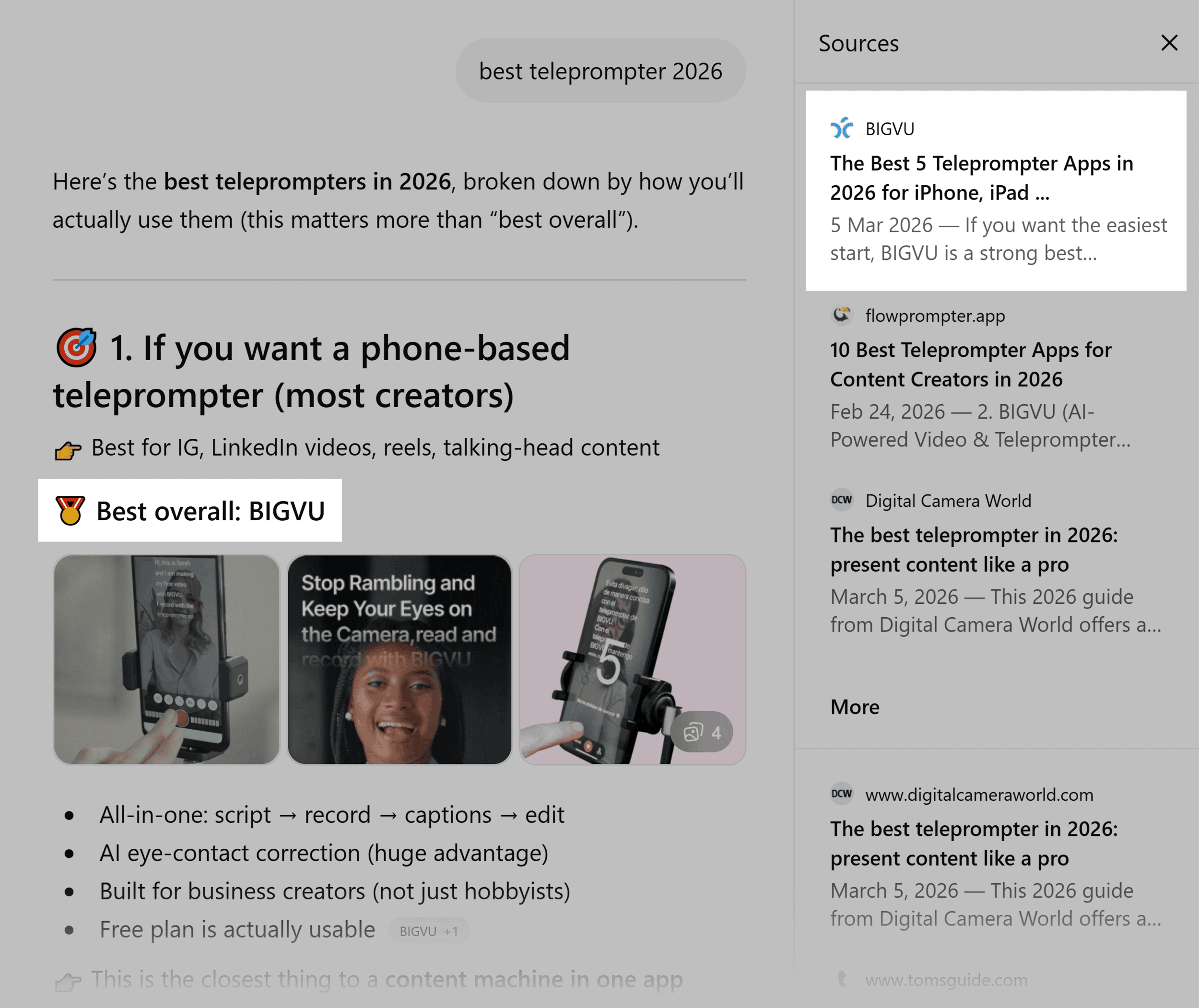
When I searched for “best teleprompter 2026” inside ChatGPT, BIGVU showed up directly in the response, and its website was cited as a source.
That’s exactly the kind of visibility Generative Engine Optimization (GEO) is designed to create.
Why GEO Matters Right Now
Let’s be honest, traditional Google search is still king.
And for the near future, it will probably continue to drive most of your traffic.
But here’s what’s changing fast: the way people find information.
In the past, success meant landing at the top of the search engine results page. Going forward, that “top spot” might not even exist anymore.
Instead, your goal shifts. You need to become the solution that AI platforms choose to include and recommend inside their answers.
The numbers back this up.
When ChatGPT launched, it hit 100 million users faster than any app in history at the time. Fast forward to April 2026, and it now has over 900 million weekly active users.
That’s not a trend anymore. That’s a shift.
| Month | Weekly Users |
|---|---|
| November 2022 | 1 million |
| January 2023 | 30 million |
| November 2023 | 100 million |
| December 2024 | 300 million |
| February 2025 | 400 million |
| March 2025 | 500 million |
| October 2025 | 800 million |
| February 2026 | 900 million |
Google’s AI Overviews now appear on billions of searches every month.
Semrush data from 2025 found that they show for roughly 16% of all queries, up from just 6.49% at the start of the year.
How GEO and SEO Work Together
You might be reading this guide and thinking, “Wait, isn’t this just SEO with a fresh coat of paint?”
And honestly?
In a lot of ways, you wouldn’t be wrong. But there’s a good reason everyone’s suddenly talking about it.
Terms like GEO, AEO (answer engine optimization), and AIO (AI optimization) have blown up in popularity not because they’re brand new ideas, but because they reflect something real: a major shift in how search actually works.
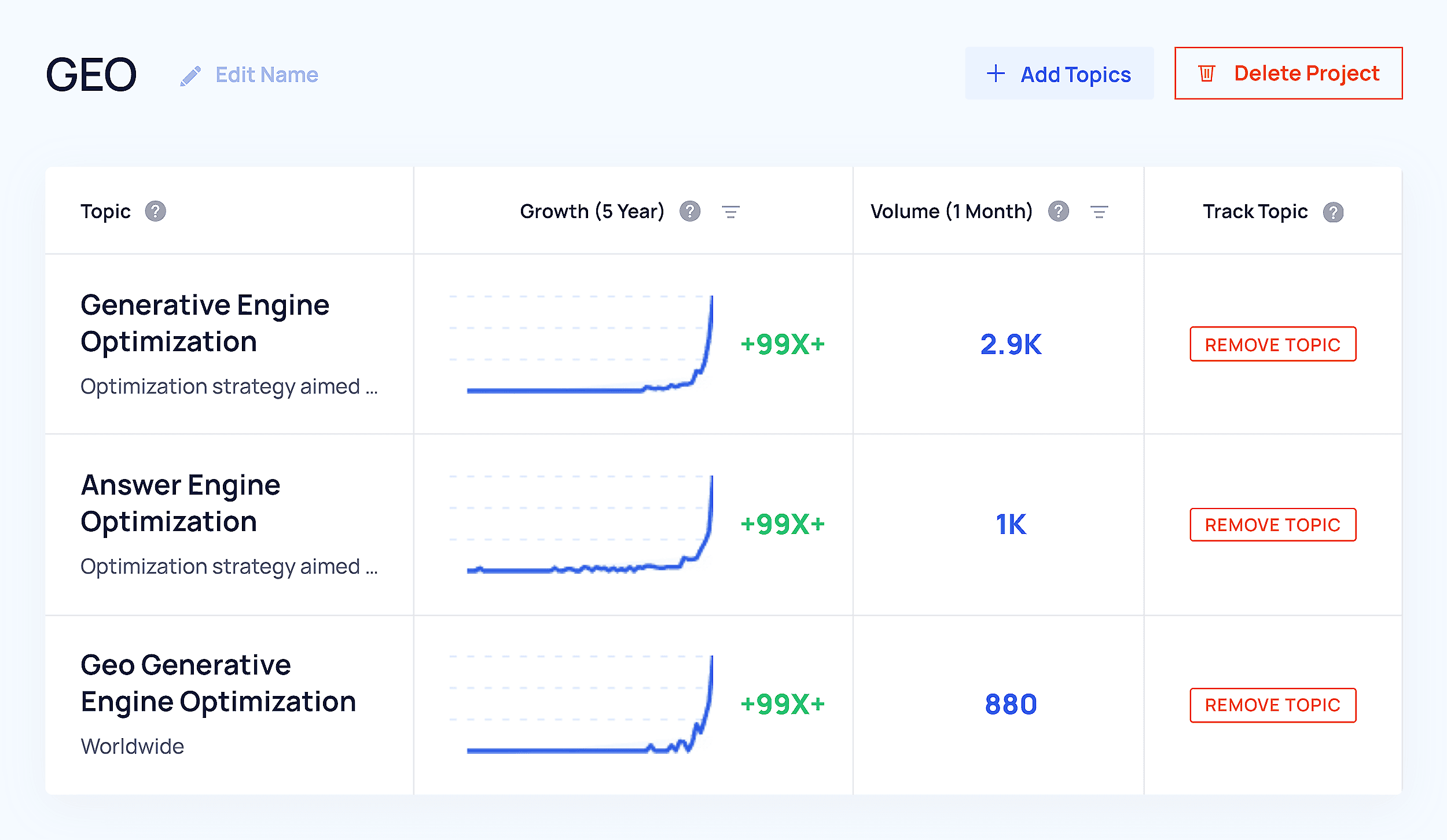
These days, there are so many acronyms floating out there that it’s tough to know whose advice is worth following.
Further reading: How GEO is Replacing Traditional SEO in 2026: A Survival Guide
I’m not suggesting GEO is here to replace SEO.
But it does change how you think about discovery because discovery now happens across AI platforms and other surfaces far beyond traditional search.
To put it simply, here’s what the role of SEO looks like today:
| Evolving From | Evolving To |
|---|---|
| SEO = Google Search | SEO = multi-surface visibility (Search, AI/LLMs, social) |
| Success = ranking for keywords | Success = being found across Search + Chat |
| SEO is a siloed function | SEO is cross-functional + connected to product, brand, PR, and social |
| Keyword-first content planning | Intent and entity-driven topic planning with semantic structure |
| Backlinks to pass PageRank | Traditional backlinks plus more focus on brand mentions and co-citations |
| Traffic as a core KPI | Visibility, influence, and conversions across touchpoints as core KPIs |
| Technical SEO as the foundation | Technical SEO as the foundation (with additional focus on JavaScript compatibility) |
Here’s the good news: if you’ve already put effort into solid SEO, you’re most of the way there.
GEO simply builds on that foundation, the kind of great SEO that includes:
-
Creating high-quality content tailored to your specific audience
-
Making it easy for search engines to access and understand your site
-
Earning credible mentions across the web
These same core elements also help AI engines decide which brands to trust and reference.
But here’s where things change:
AI systems don’t pull or present information the same way Google does.
That means some of your current tactics and the metrics you track will need to evolve.
So let’s walk through exactly how to make that happen.
7-Step Generative Engine Optimization (GEO) Action Plan
Let’s be honest, we’re still in the early stages of figuring out exactly how AI engines pull and prioritize content.
But one thing is already clear:
You need to either adapt some of your traditional SEO tactics or rethink your priorities entirely all with generative engine optimization in mind.
Here’s how this guide breaks down:
-
Steps 1–3 cover the big-picture best practices for GEO that apply across the board.
-
Steps 4–7 dive into content optimization specifically for generative engines and show you how to track your results along the way.
Step 1. Master the SEO Fundamentals
As I mentioned earlier, good GEO usually comes from good SEO. But that doesn’t mean every part of your broader SEO strategy carries the same weight for generative engines.
I won’t rehash every basic SEO principle here; we cover that separately in our SEO fundamentals guide.
Instead, let’s focus on what truly matters.
Make Your Site Easy for Bots to Read
Before any AI platform can reference your content, it first needs to access and understand it.
So make sure your website checks these boxes:
-
Crawlable and indexable: If AI platforms can’t reach your pages, they can’t use them in their answers.
-
Fast and mobile-friendly: Slow or clunky websites hurt user experience and lower your chances of being cited.
-
Secure (HTTPS): This is no longer optional. It’s basic table stakes, and it builds trust with both users and AI systems.
-
Server-side rendering: Some AI crawlers still struggle with JavaScript-heavy pages. That’s why server-side rendering is often a safer, more reliable option.
Prove You’re Worth Trusting
AI systems are far more likely to reference sources that look credible, identifiable, and well-backed.
A helpful way to think about this is through the lens of E-E-A-T:
-
Experience: Share real results, personal stories, or firsthand knowledge.
-
Expertise: Stick to topics you genuinely know and go deep, not wide.
-
Authority: Get quoted, write guest posts, or contribute to reputable sites in your space.
-
Trust: Use real author bios, cite your sources clearly, and include genuine reviews or testimonials.
Important Note: A quick note: I’m not saying these AI platforms officially use an E-E-A-T framework. But signals like the ones above still go a long way in building credibility — and when your content looks credible, it becomes much easier for AI systems to trust and reference.
Step 2. Build Mentions and Co-Citations
AI systems don’t rely solely on backlinks to gauge your authority. They pay attention to every mention of your brand across the web — even when those mentions don’t include a clickable link.
Why? Because AI systems are built to understand entities, not just content.
They try to figure out who’s behind the information and whether that entity shows up consistently across the internet, with clear connections to relevant people, brands, and topics.
That means your brand needs to exist as a well-defined entity with consistent signals across your website, social profiles, and third-party mentions. The more coherent that overall picture is, the easier it becomes for AI systems to trust and reference you.
Now, don’t get me wrong — backlinks still matter. But this shift changes how you should think about building your broader online presence.
Audit Your Current Mentions
Start by auditing where you’re already being mentioned. Search for your brand name, product names, and key team members across Google, social media, and industry forums.
Pay attention to what people are saying and where those conversations are taking place.
You’ll likely come across mentions you never knew existed. Some will be positive, others neutral, and a few might need your attention.
Then, take it a step further. Run your brand name and related terms directly through the AI platforms themselves:
-
Does Google’s AI Mode cite your brand as a source for relevant searches?
-
Does ChatGPT recognize who your team members are?
-
What kind of sentiment shows up in the answers when you ask these platforms about your brand?
This lets you track your LLM visibility as a natural byproduct of solid GEO across the leading tools, and see exactly how you compare to your competitors.
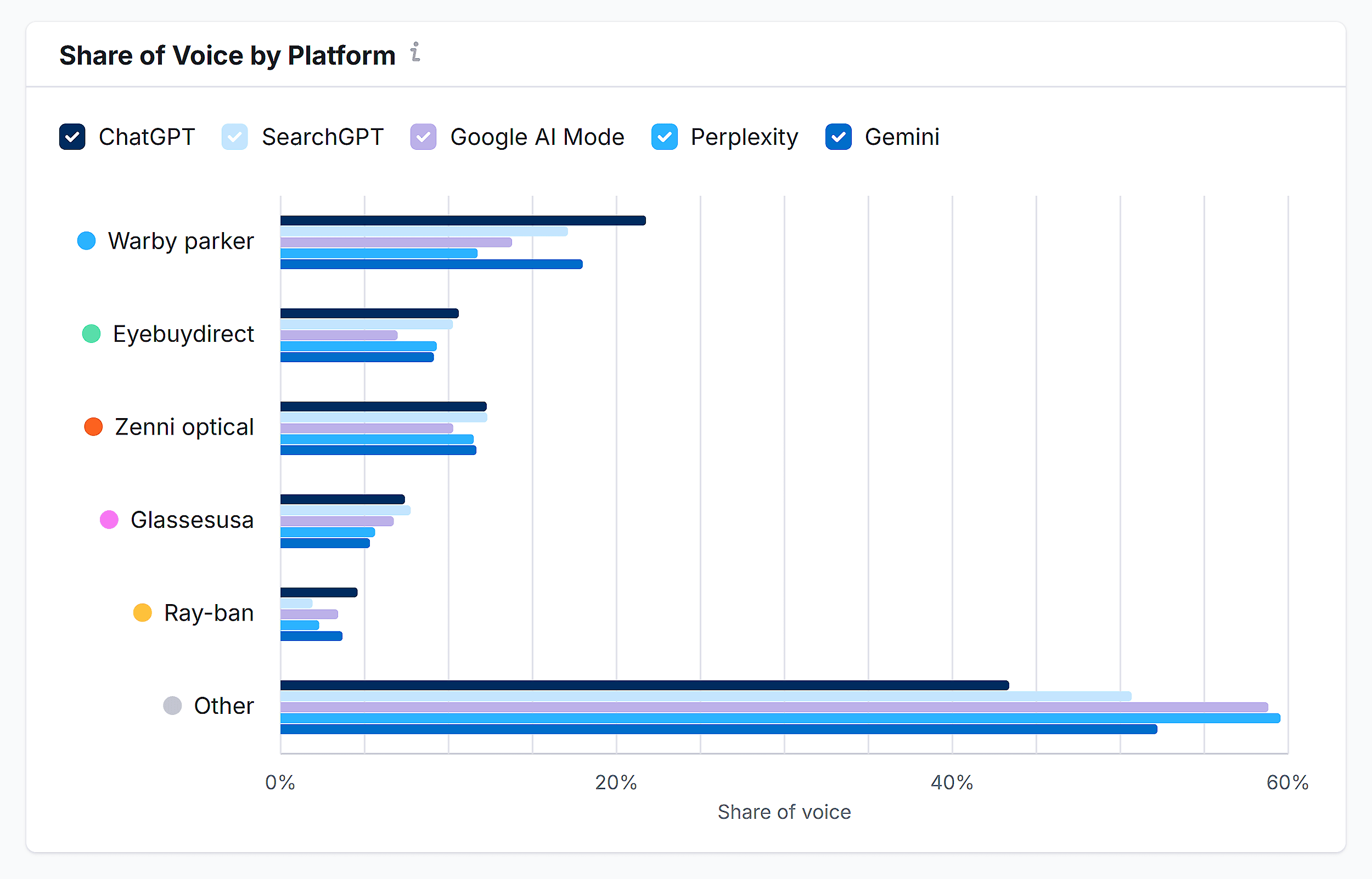 The tool shows how your brand stacks up against competitors across three key areas: AI visibility, market share, and overall sentiment.
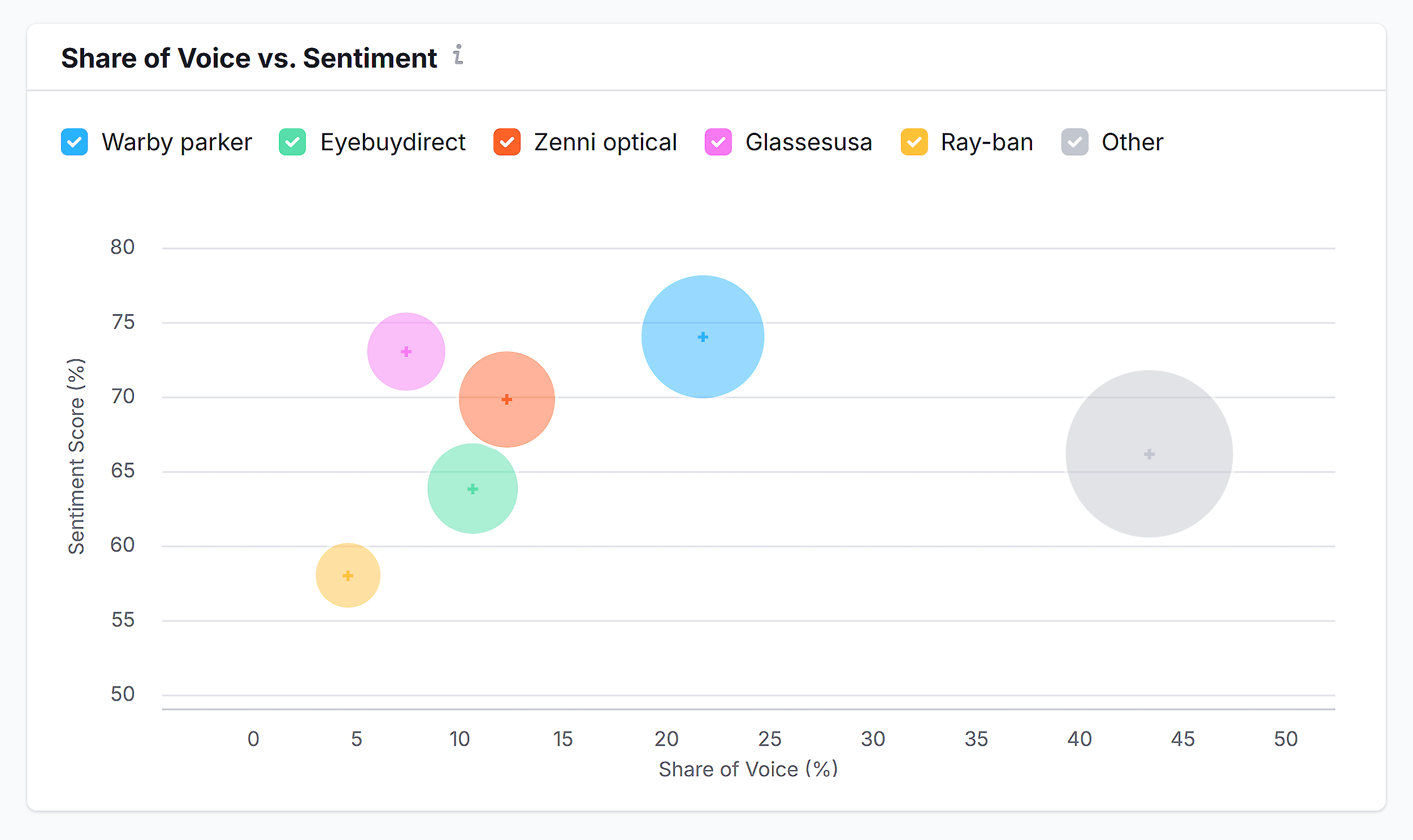
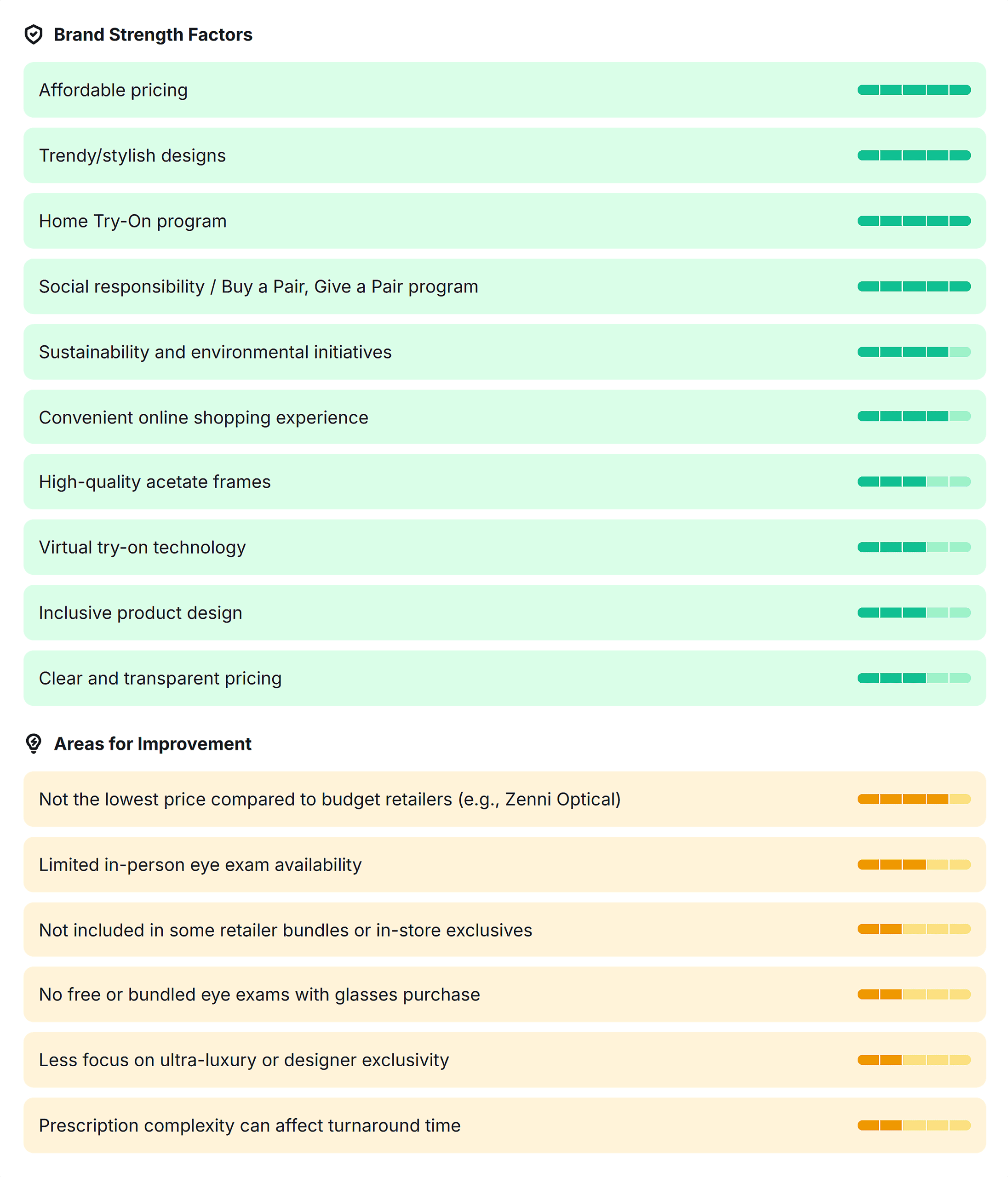
And it’ll show you where your brand strengths are and where you can improve:
Important Note: Want to see how visible your brand really is across AI platforms? Grab a free trial of Semrush One, which comes with both the AI Visibility Toolkit and Semrush Pro. You’ll be able to compare your performance against competitors across ChatGPT, Claude, and other major AI tools.
Keep Building Quality Backlinks
Just because mentions have become more important with GEO doesn’t mean you should drop traditional link building altogether. Backlinks still matter for SEO, and more often than not, they lead to the kind of authoritative mentions that AI systems genuinely value.
That said, it’s time to broaden your focus. Don’t just chase links anymore. Expand your view beyond them.
Aim to Build Co-Citations and Co-Occurrences
You’ll come across quite a few different explanations of co-citation and co-occurrence out there.
Honestly? The exact definitions matter far less than what they actually mean for your brand. I’ve seen one expert call something a co-citation that another expert refers to as a co-occurrence. So instead of getting tangled up in terminology, let’s focus on understanding what these are and why they’re worth your attention.
The easiest way to think about co-citations and co-occurrences is simply this: one thing gets mentioned right alongside another.
In the world of GEO, that typically means your brand or website appears on a third-party site, mentioned together with another brand, topic, or idea.
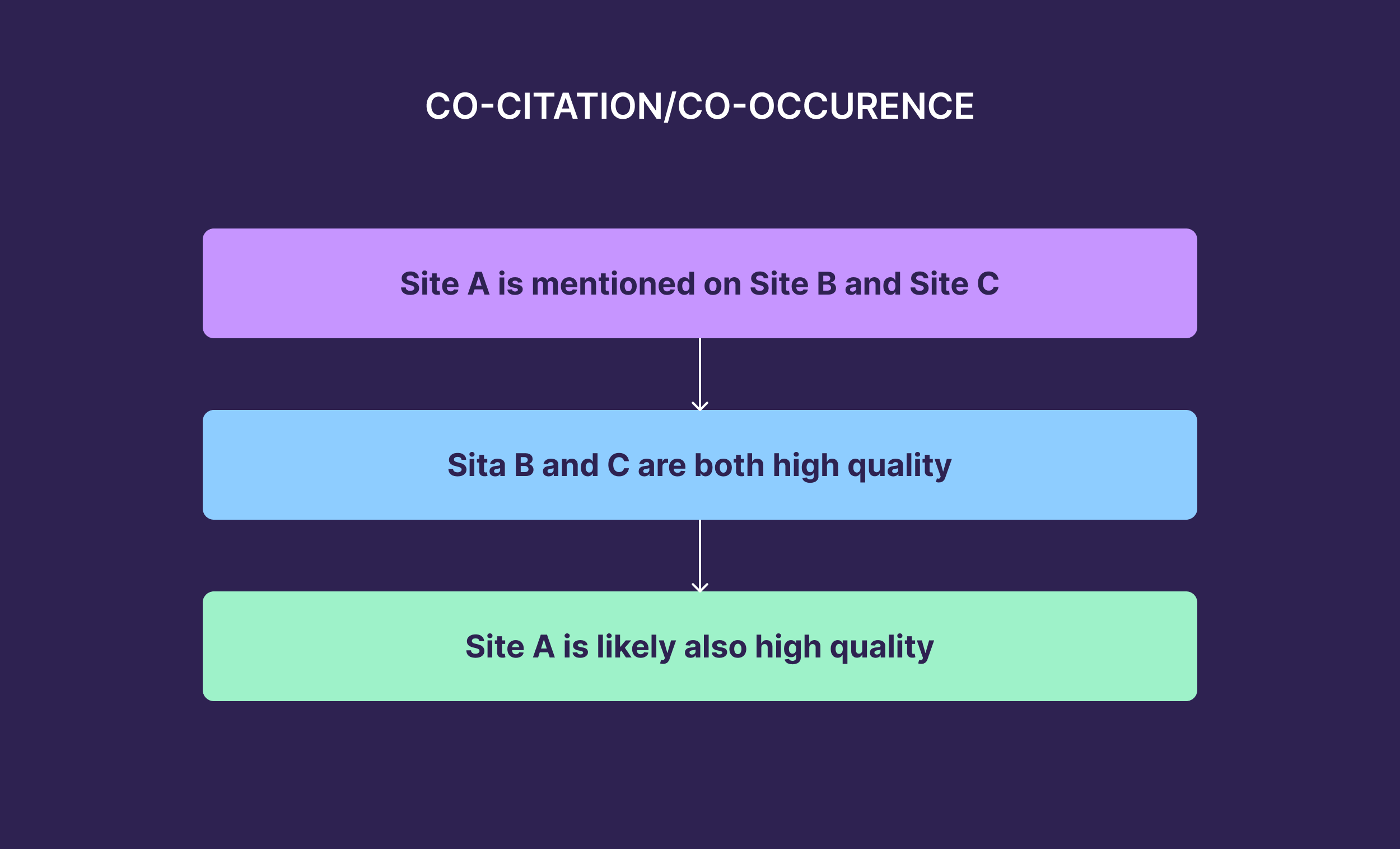
To sum it up:
-
When two or more brands or websites frequently appear side by side, AI systems become more likely to view them as connected — usually as competitors.
-
When a brand consistently shows up in conversations around a specific topic, concept, or industry, AI systems start associating that brand with those things — essentially, what you offer.
-
When lots of different websites mention the same brand, AI systems grow more inclined to see that brand as something worth referencing — in other words, probably trustworthy.
There’s certainly more nuance to all of this, but think of the above as a straightforward, high-level look at what’s happening under the hood.
How to Put This Into Action
If you want to build more citations, co-citations, and co-occurrences, here’s where to start:
Get mentioned alongside your competitors.
When publications write comparison articles or industry roundups, make sure your brand is on that list. These kinds of co-citations help AI systems understand exactly where you fit within your market.
Participate in industry research and surveys.
When analysts release reports about your sector, being included instantly boosts your credibility, and any backlinks you get along the way are just a bonus.
Show up in relevant online communities.
Answer questions on Reddit, jump into LinkedIn discussions, and take part in industry-specific forums. These everyday interactions create mentions in places where AI systems frequently look for authentic, community-driven insights.
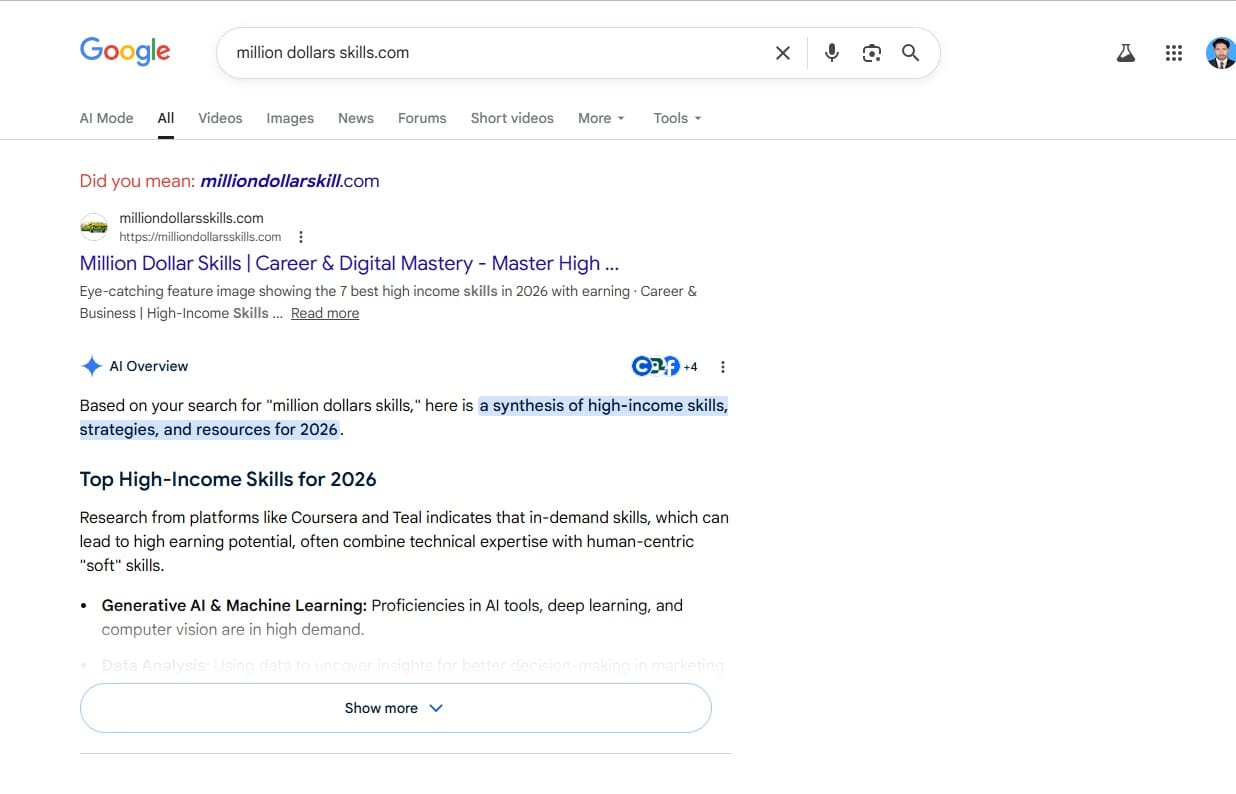
The more your brand shows up in relevant contexts across the internet, the higher the chances that AI systems will include you in their answers.
Step 3. Go Multi-Platform
Expanding beyond Google is something leading SEO experts have been recommending for years. But with the rise of AI, it’s no longer just good advice; it’s an absolute necessity.
Platforms like Reddit, YouTube, and other user-generated content sites now show up regularly in AI-generated responses.
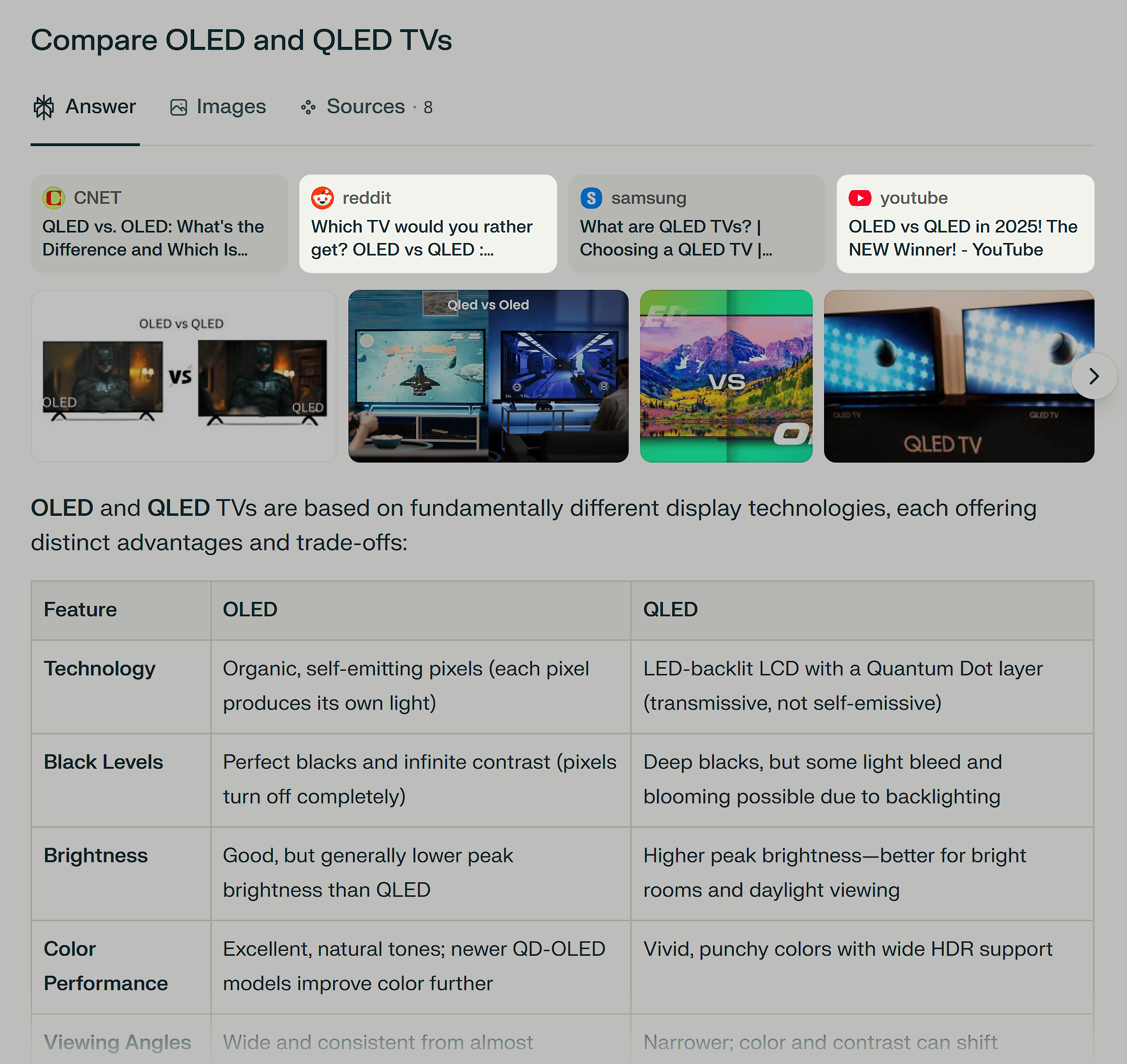
In fact, according to Semrush data from January 2026, Reddit and LinkedIn rank as the two most frequently cited domains across ChatGPT, Perplexity, and Google’s AI Mode.
This works in at least three key ways:
1. Reach your audience where they already hang out
Being active across multiple platforms lets you meet people on their turf where they already spend their time. That helps you build real engagement, strengthen brand awareness, and drive more conversions.
2. Appear in more places AI references
AI platforms don’t just pull from Google search results. They also tap into forums, social media, YouTube, and other sources that live outside traditional search engine results pages.
3. Lower your dependence on any single channel
A stronger, more distributed presence across multiple platforms means you’re less vulnerable to changes in one algorithm, shifts in one audience, or disruptions to one traffic source. Diversification isn’t just smart SEO, it’s smart business.
Here’s how to put this into practice:
YouTube
People come to YouTube to learn new skills, research products, and find solutions to their problems. That’s why product reviews, tool comparisons, and in-depth tutorials are all excellent candidates for YouTube content.
Podcasts
Podcast content and transcripts are starting to appear in AI results, especially within Gemini. Building a presence in podcasts is a solid opportunity to gain more visibility across AI platforms.
TikTok and Instagram Reels
These platforms give you access to younger audiences who are increasingly using them for search. Short-form videos that answer common questions in your industry can drive discovery, and AI platforms can sometimes cite them directly in their responses.
Reddit
AI platforms absolutely love citing Reddit for user-generated answers, especially Google’s AI Overviews and AI Mode. To grow your presence on Reddit, find the subreddits where your audience hangs out. When people ask questions related to your expertise, share genuinely helpful advice. Don’t pitch your business directly. Focus on being useful first.
LinkedIn
For B2B topics, LinkedIn can work much like Reddit. Publish thoughtful posts and join relevant discussions to build your voice within professional circles. Those signals can then be picked up by AI systems on the lookout for expert perspectives.
Step 4. Find Out What AI Platforms Are Citing in Your Niche
One of the quickest ways to figure out what content you should create is to study what AI platforms are already citing within your industry.
Start by testing whether and how your existing content shows up in AI tools right now.
Head over to ChatGPT, Claude, or Perplexity and ask the kinds of questions your content is meant to answer.
Those are exactly the kinds of places where you might want to start creating content or joining conversations.
As you run these tests for your brand, pay close attention to the sources AI platforms are citing:
-
Are your competitors coming up frequently?
-
Which platforms tend to get cited most often? (Reddit, YouTube, etc.)
-
What’s the overall sentiment around mentions of your brand and your competitors’ brands?
Then, try running different versions of the same question.
For instance, you could ask: “What’s the best email marketing software?”
Then try something like: “Which email marketing tool should I use for my small business?”
Notice how the answers shift and which sources keep appearing consistently across both versions.
The second prompt, on the other hand, pushed Mailchimp to the top and brought in three new names: Constant Contact, Brevo, and ActiveCampaign.
If you were MailerLite and trying to reach small business owners, you’d want to figure out why you’re not getting cited for that specific question.
Pro tip: Test the same prompts across different AI platforms, too. Each one has its own citation patterns, so comparing a few is a smart move.
You can automate this process with tools like Profound or Peec AI. These platforms run prompts at scale and help you understand how and where your brand appears. But they can get pricey.
That’s why I recommend spending some time running these prompts manually first.
By the way:
This isn’t just important for big brands or companies selling products. You can and should do this even if you run a blog, a local business website, or just a personal portfolio.
Take consultants and freelancers, for example. They often find that AI tools frequently cite marketplaces like Upwork and Dribbble. If you don’t have a profile on those platforms, you’ll likely struggle to get much AI visibility.
And if you own a local business, you’ll often notice that specific service pages and location-based pages show up in AI responses.
This gives you a clear sense of what kinds of content to prioritize for GEO. Now, it’s time to figure out which topics you should actually focus on in your content.
Step 5. Answer Your Audience’s Questions
The way people search using AI platforms tends to be much more conversational compared to traditional Google searches. That shift changes how you should plan your content.
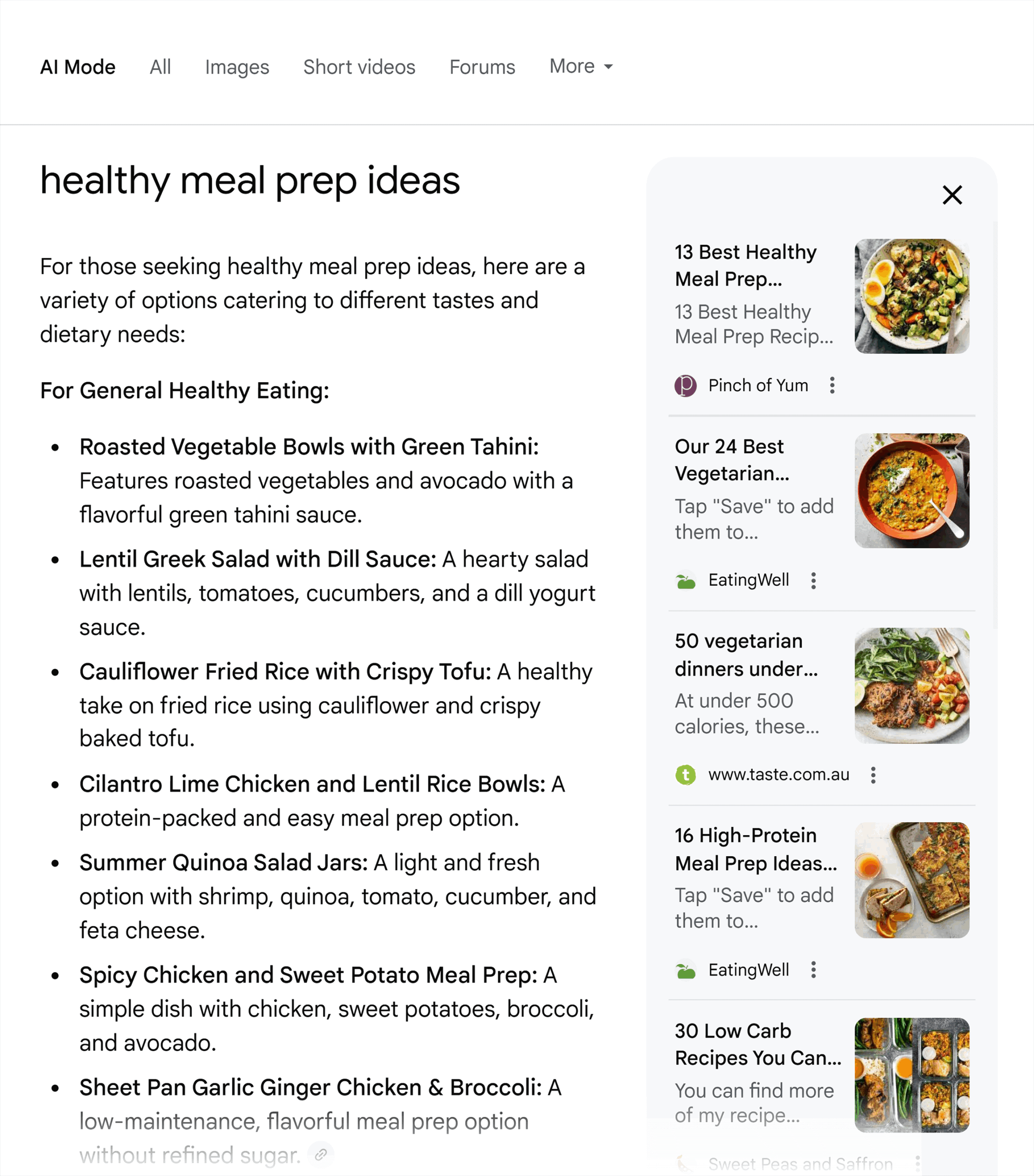
Traditional SEO taught you to go after specific keywords. You’d create a page built around “healthy meal prep ideas” and try to rank for that exact phrase.
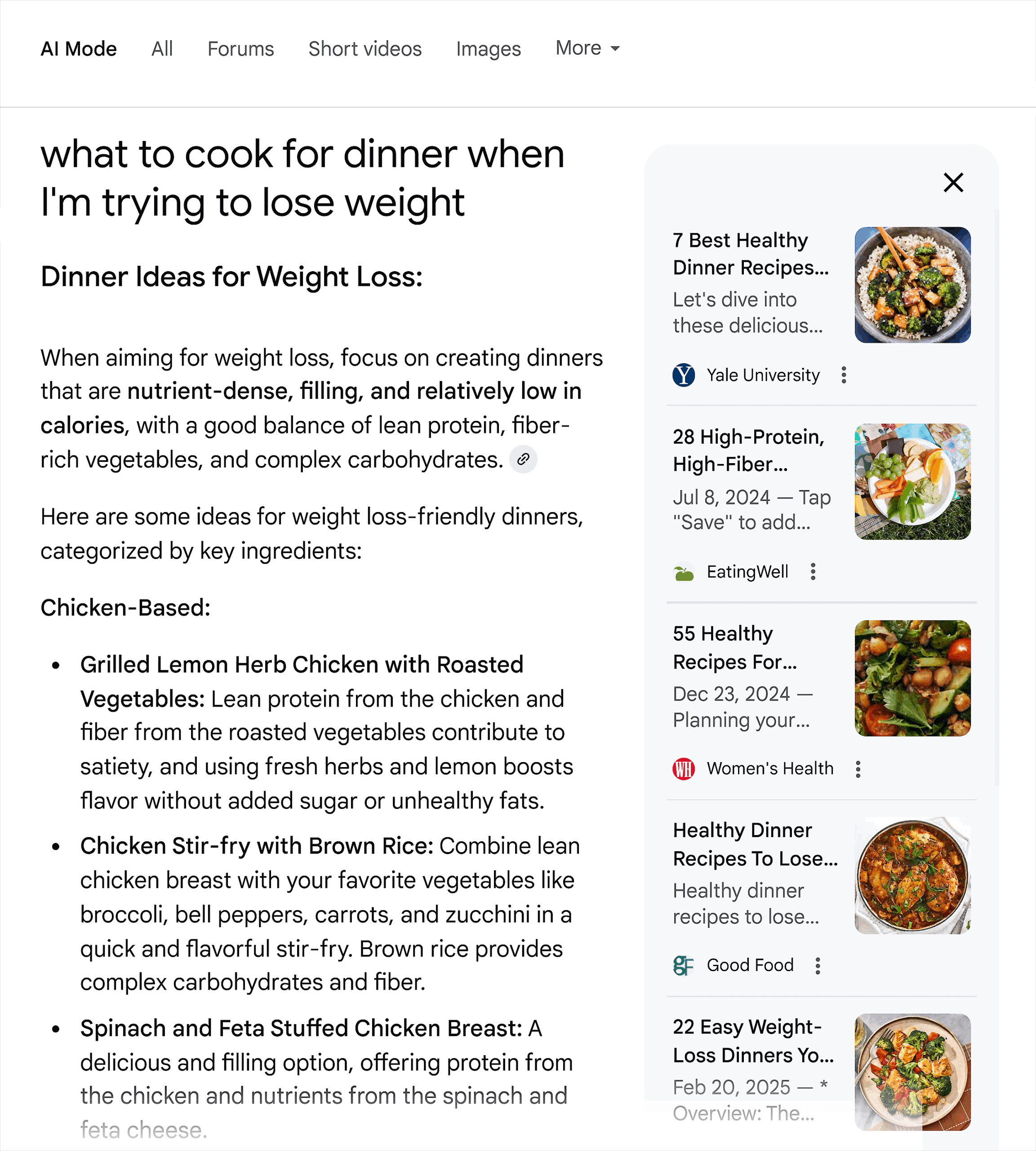
But what happens when people start asking things like, “What should I cook for dinner when I’m trying to lose weight?”
The answer might still involve healthy meal prep as a solution. But it’s a completely different kind of prompt, not a traditional search that leads to an answer, not a search engine results page.
When you run these questions through Google’s AI Mode, you get two totally different sets of sources and content types.
Take the query “healthy meal prep ideas,” which is still a perfectly valid and searchable term. The results there focus on listicles, single recipes, and YouTube videos. The format is categorical: bowls, wraps, sandwiches, and so on, each with specific recipes attached.
But for the question, “What should I cook for dinner when I’m trying to lose weight?” the sources that show up are mostly lists, forum discussions, or articles specifically focused on weight loss.
In this case, the answer format leans toward broad tips for healthy cooking — along with general cooking styles or meal categories — rather than handing out specific recipes.
As more people grow comfortable searching in everyday, conversational language, longer and more detailed queries will become increasingly common.
That’s exactly why this kind of intent analysis is so important.
These longer, more specific questions represent huge opportunities.
The truth is, most companies aren’t creating content that answers these detailed, real-world questions.
And here’s the thing: the more specific the question, the better your chances of showing up when AI systems go looking for credible answers.
You want to own the long-tail queries that tie directly to your product or expertise.
But let’s be realistic.
You can’t reasonably expect to create content for every single long-tail query out there. So how do you approach this in a way that’s actually efficient?
How to Choose the Questions to Answer
Start by listening to the actual questions your customers are already asking.
Look at your customer support tickets, listen to sales calls, and review user feedback. These real questions from real people often make the best content topics because they’re the same kinds of questions people will eventually ask AI tools.
Don’t have any customers yet? No problem at all.
Use community platforms to uncover these conversational queries. Reddit, Quora, and industry forums are absolute goldmines for discovering how people actually talk about problems in your space.
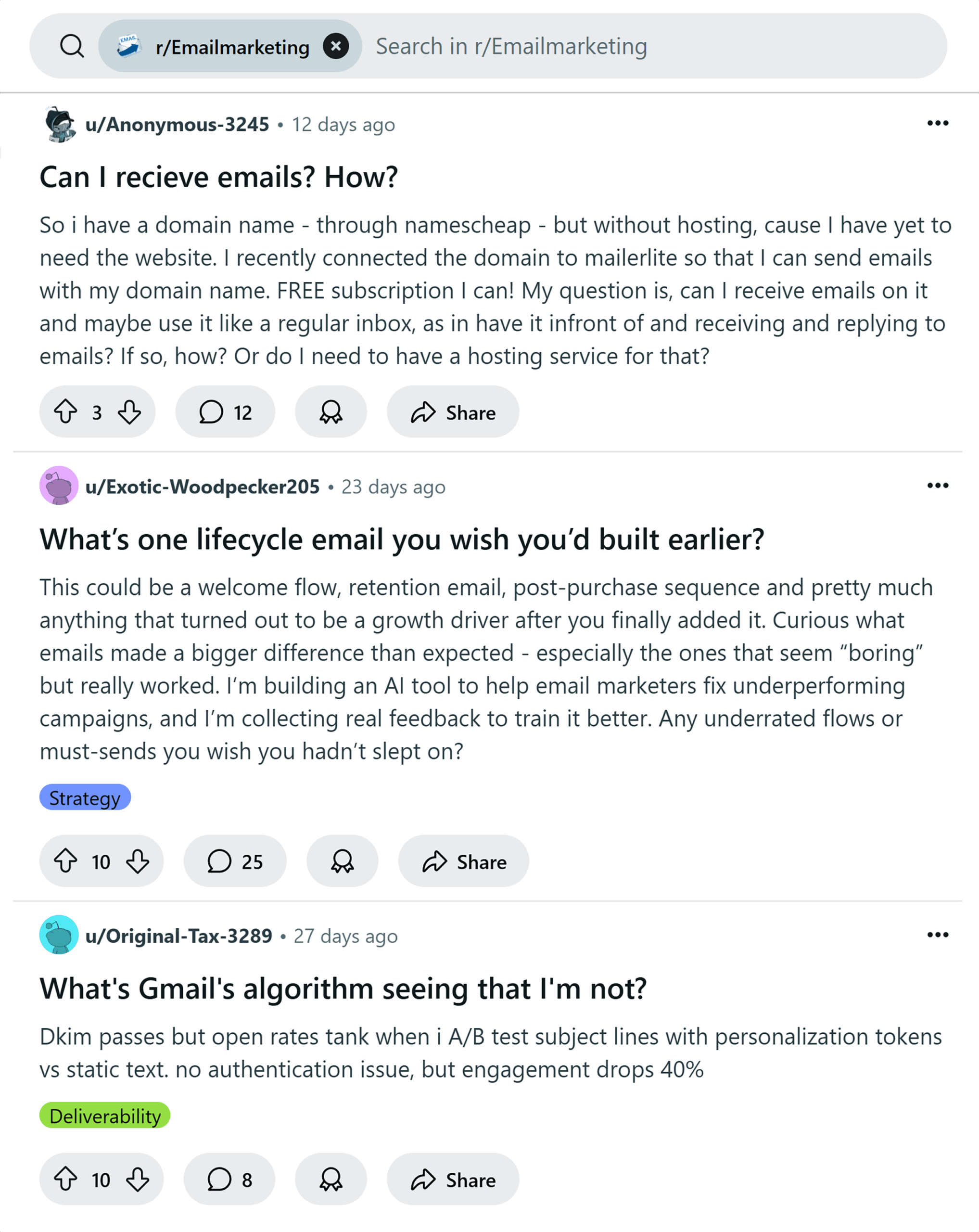
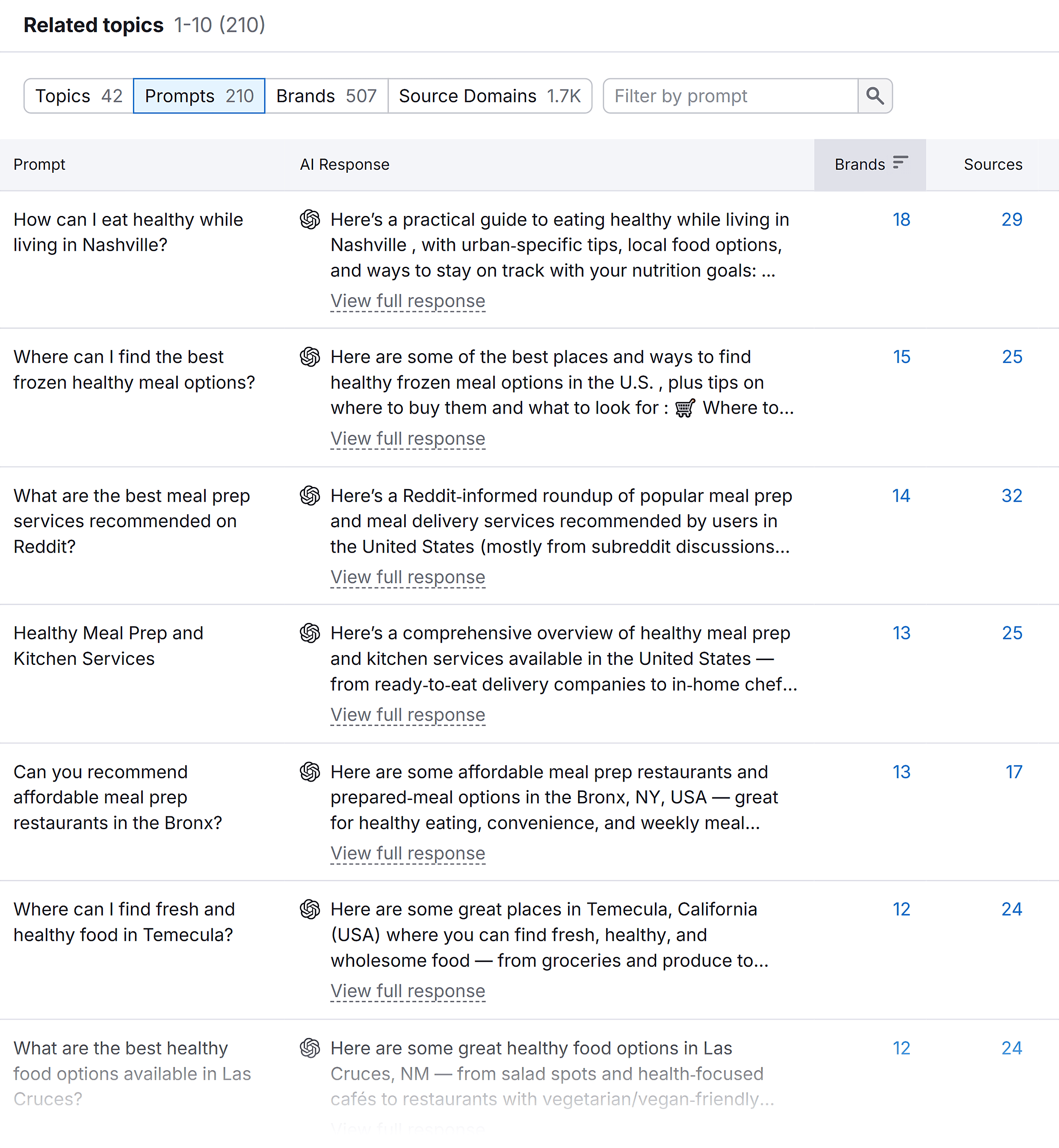
Type in a topic, say, “healthy meal prep,” and the tool will show you the exact prompts people are actually typing into AI platforms.
Pay special attention to prompts that are phrased as questions.
Step 6. Structure Your Content for Generative Engines
Here’s something important to understand: AI systems don’t read content as humans do. They break it into chunks and look at how those chunks relate to each other.
It’s a bit like featured snippets but even more granular, and it applies to way more than just simple questions.
So the bottom line? How you structure your content has a direct impact on whether AI systems can understand it and whether they’ll choose to cite it.
Important Note: A quick note: Much of what I’m about to share is really just solid writing advice. So while none of this is exactly “groundbreaking,” these techniques will become more and more important as you shift your focus toward GEO.
One Idea per Paragraph
Keep your paragraphs short and centered on a single main idea.
When you pack multiple concepts into one paragraph, you make it harder for AI systems to pull out the specific information they’re looking for.
Also, avoid hiding important points in the middle of long sentences or dense paragraphs. Put your key ideas up front — make them easy to spot and extract.
And guess what?
This approach also makes things easier for your human readers. So it’s a win-win all around.
Use Clear Headings
Use clear, descriptive headings and subheadings to organize your content in a logical way.
Whatever your heading promises, the content beneath it should deliver on that promise immediately.
Don’t wander off topic. AI systems rely on headings to understand what each section covers. If your content doesn’t match the heading, that section becomes much harder for them to extract and cite.
Here’s a quick test: look at the headings in this section. Now read the first sentence under each one.
Notice how they’re all clearly connected?
This is actually a common technique for ranking in featured snippets. You’d have an H2 with content that immediately answers the question that the heading poses.
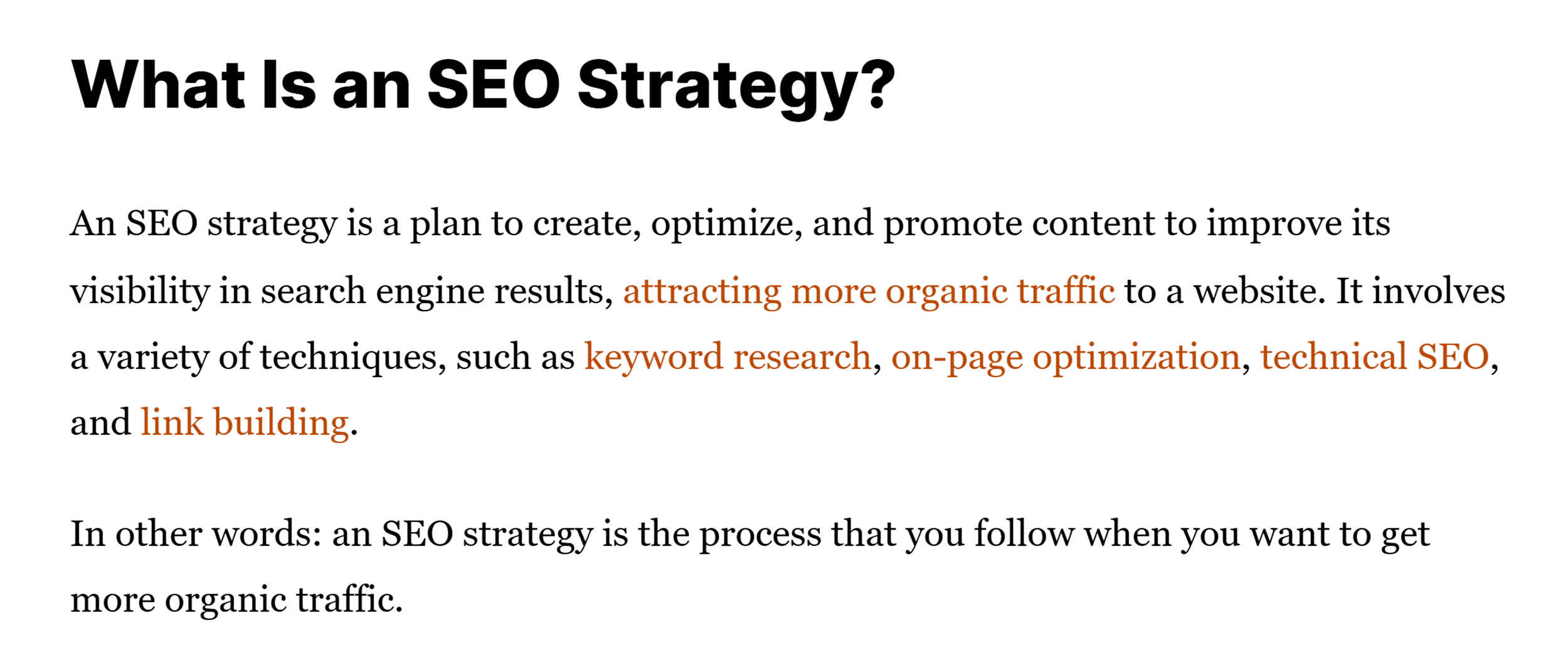
This is still a smart approach for traditional search. But when it comes to GEO, you need to carry this mindset throughout your entire piece.
That said, I wouldn’t recommend turning every single H2 into a question. That’ll start looking over-optimized very quickly.
Just make sure that whatever each heading promises, the content beneath it delivers — clearly and logically.
Break Up Complex Topics into Digestible Sections
If you’re walking readers through a complicated or multi-step process, use numbered steps and clear transitions between each part.
Doing this makes it easier for AI systems to pull out individual steps when someone asks for specific instructions. It also helps your human readers follow along more easily.
Also, write clear and concise summaries for complex topics. AI systems frequently look for these kinds of easy-to-digest explanations when they need to quickly pass information along to users.
Use Quotes, Statistics, and Clear Statements
Include quotes, data points, and straightforward statements that AI systems can easily pull out and use.
Why does this matter? Because pages that feature quotes or statistics have been shown to get roughly 30–40% better visibility in AI-generated answers.
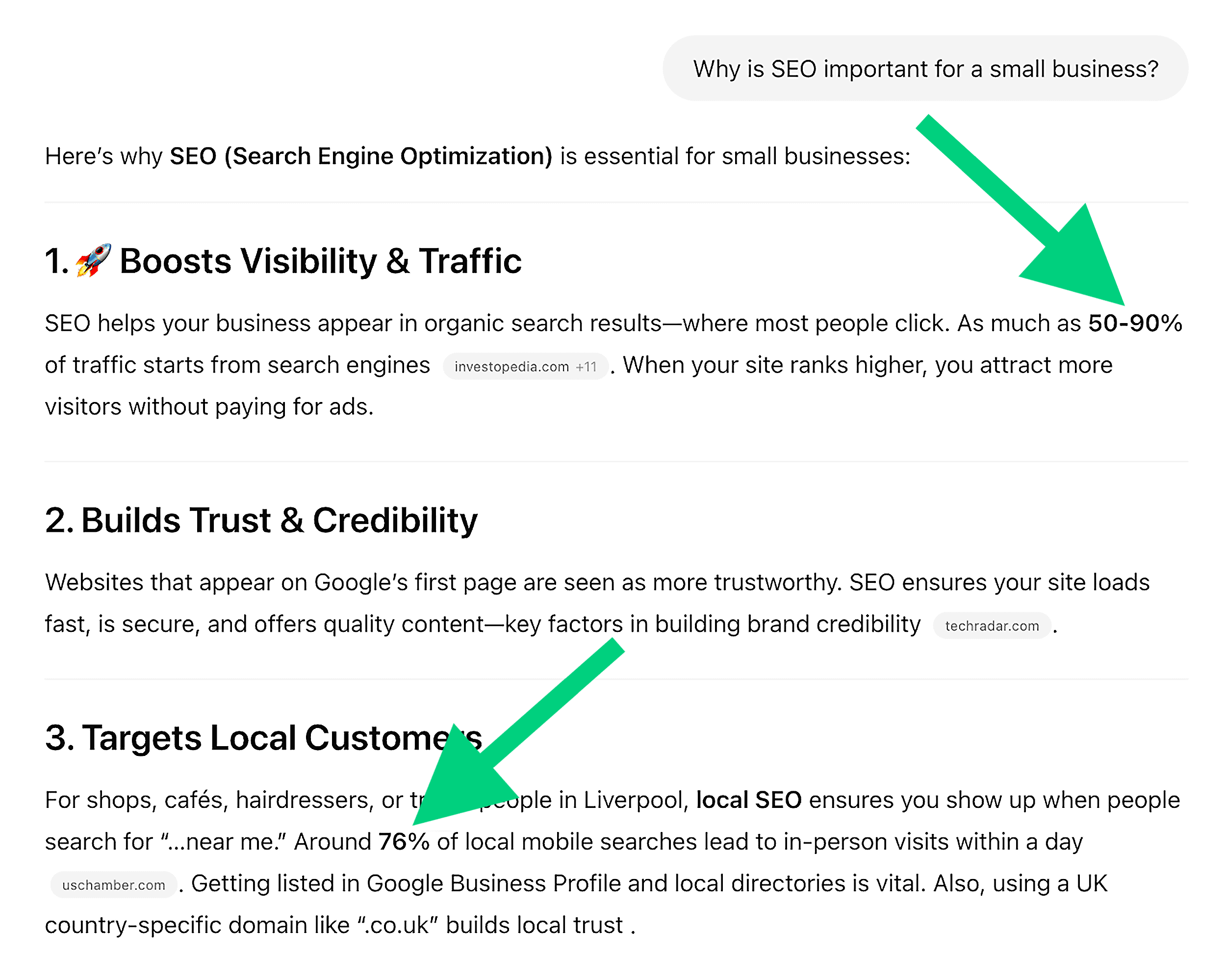
A quick note: don’t just overload your content with quotes and stats for the sake of it. Only include them when they actually add value and genuinely help your readers.
Use Schema Markup
Schema markup helps AI systems understand who you are, what your content covers, and how to interpret it correctly.
Without a schema, AI has to do a lot more guessing based on what it can see and the context around it.
With schema, AI gets much clearer signals about what your content represents and how key entities relate to one another.
That extra layer of context can make your content feel more reliable — and more likely to get cited
<script type=”application/ld+json”>
{
“@context”: “https://schema.org”,
“@type”: “FAQPage”,
“mainEntity”: [
{
“@type”: “Question”,
“name”: “Is AI marketing only for large enterprises with big budgets?”,
“acceptedAnswer”: {
“@type”: “Answer”,
“text”: “Not at all. While enterprise-grade solutions are expensive, many affordable tools exist for small businesses, such as ChatGPT Plus ($20/month) and ManyChat ($15/month). Google Ads Smart Bidding also has no extra fee. You can start implementing AI marketing for under $100 per month, often seeing dramatic ROI improvements.”
}
},
{
“@type”: “Question”,
“name”: “Will AI replace human marketers entirely?”,
“acceptedAnswer”: {
“@type”: “Answer”,
“text”: “No, but it will replace marketers who refuse to learn AI. Human skills like strategic thinking, emotional intelligence, and brand storytelling remain irreplaceable. The most successful marketers view AI as a superpowered assistant for repetitive tasks while they focus on high-level strategic decisions.”
}
},
{
“@type”: “Question”,
“name”: “How do I avoid my AI-generated content being penalized by Google?”,
“acceptedAnswer”: {
“@type”: “Answer”,
“text”: “Follow three rules: (1) Never publish raw AI output without human editing and fact-checking. (2) Add unique data and personal experience. (3) Use AI for drafts and outlines, but ensure the final content has a distinct human voice and genuine expertise to satisfy Google’s Helpful Content Update.”
}
},
{
“@type”: “Question”,
“name”: “What is the single fastest way to see ROI from AI in the first 30 days?”,
“acceptedAnswer”: {
“@type”: “Answer”,
“text”: “Implement AI-powered email send-time optimization on an existing list of at least 1,000 subscribers. Most marketers see a 10% to 25% lift in engagement immediately, which flows directly to the bottom line as incremental revenue.”
}
},
{
“@type”: “Question”,
“name”: “What data privacy regulations should I worry about when using AI marketing?”,
“acceptedAnswer”: {
“@type”: “Answer”,
“text”: “You must comply with GDPR and CCPA by obtaining explicit consent, providing opt-out options for AI profiling, and ensuring tools do not share PII. Avoid feeding raw PII like phone numbers into public generative AI models; use data anonymization instead.”
}
},
{
“@type”: “Question”,
“name”: “Can I use AI to improve my SEO rankings directly?”,
“acceptedAnswer”: {
“@type”: “Answer”,
“text”: “Yes, but indirectly. AI assists in efficient keyword research, generating optimized meta descriptions, and suggesting internal links. While AI helps with drafting, success still requires genuine human expertise, backlinks, and user engagement signals to satisfy Google’s ranking algorithms.”
}
}
]
}
</script>
Here are a few types of schema worth putting at the top of your list:
-
Organization schema: Helps establish who’s behind the site and gives AI systems clearer identity signals about your brand.
-
HowTo schema: Makes it easier to define the exact sequence of actions in a step-by-step process.
-
FAQ schema: dds structure to Q&A content, which AI platforms may find simpler to interpret and pull from.
-
Date schema: Helps AI systems evaluate when content was published (“datePublished”) and when it was last updated (“dateModified”).
Once you’ve implemented your schema, test it at validator.schema.org to make sure everything is working correctly.
Most CMS platforms, including WordPress, have plugins that can generate the markup for you automatically.
And if you look at this entire article, you’ll see that same principle in action.
Clear headings, short paragraphs, bullet points, bolded lead-ins, and visual breaks all make the content easier to scan and follow.
The goal is simple: make your content easy to read and navigate for both humans and machines. Well-structured content almost always performs better across every type of search and discovery.
Step 7. Track Your Visibility in LLMs
AI visibility isn’t something you check once and forget about.
Which brands get mentioned, which sources get cited, and how your brand is described can all shift significantly over time.
That means your monitoring needs to be ongoing.
Tracking your visibility in AI-generated responses helps you understand what’s working and where you need to focus your efforts.
But where do you even start? And what should you be tracking?
Manual Testing as a Starting Point
Start with manual testing. It’s the simplest way to see where you currently stand.
Ask the same questions across different AI platforms like ChatGPT, Claude, Perplexity, and Google (both AI Mode and AI Overviews). Take screenshots of the responses and make a note of which sources get cited.
Do this regularly, and you’ll start noticing patterns: which types of content get mentioned and how your visibility changes over time.
But let’s be honest.
You’re going to struggle to get a lot of meaningful data doing this manually. It’s not scalable. And so much of what an AI platform outputs depends on prior context, including:
-
Past conversations
-
Previous prompts within the same conversation
-
Project or chat settings
That makes it really hard to gather reliable data on your own.
Manual tracking is more of a “feel” test, best treated as a rough directional check, not a complete tracking system.
Use AI Tracking Tools for Generative Engine Optimization
You can start with a free AI visibility checker for quick, top-level insights just to see where your brand currently stands.
But for more comprehensive tracking, dedicated tools can automate the whole process.
Tools like Semrush Enterprise AIO help you track your brand’s visibility across multiple AI platforms, including ChatGPT, Claude, and Google’s AI Overviews.
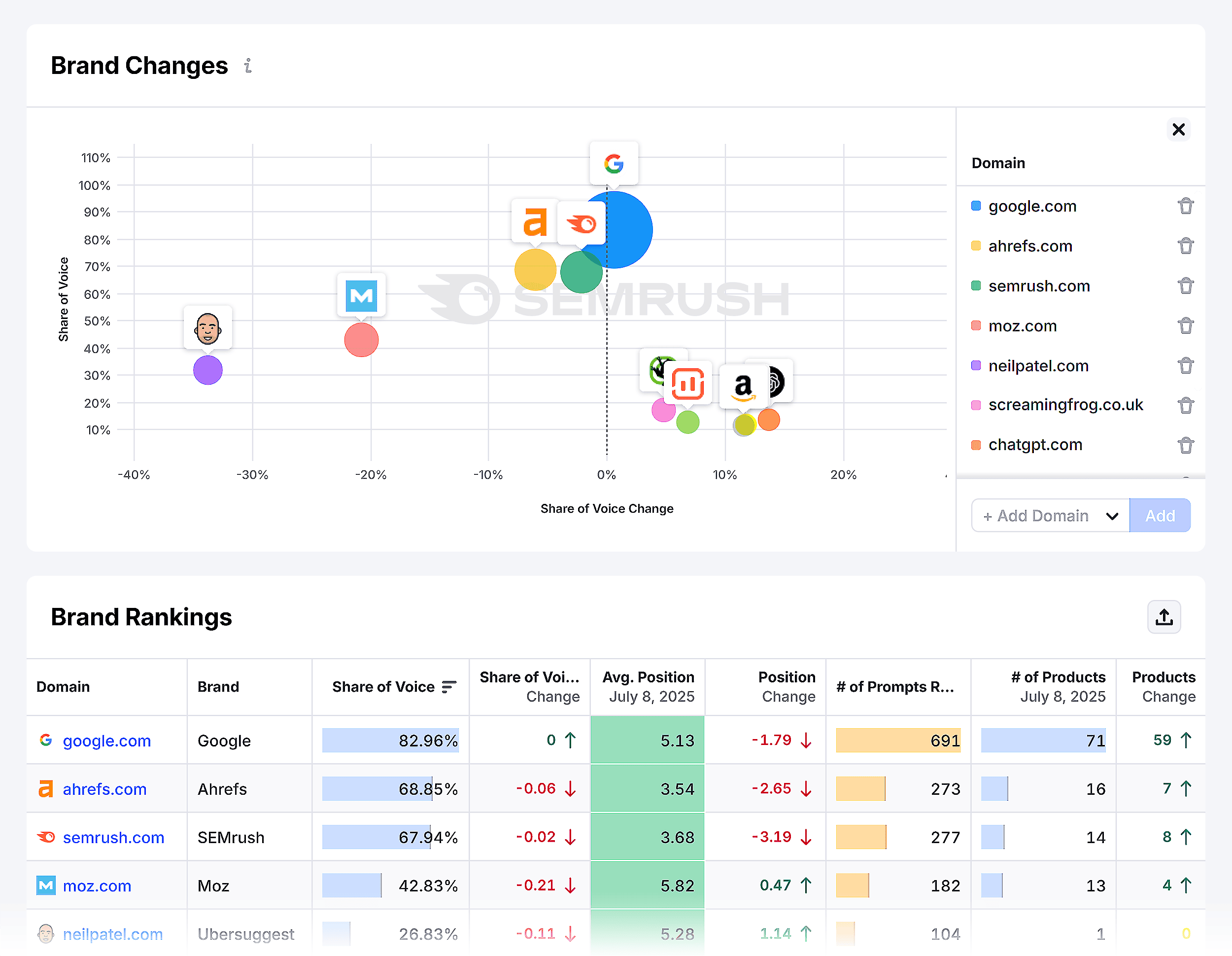
Competitive Rankings is my favorite feature. Instead of guessing why competitors might rank better in AI responses, you get actual data showing mention frequency and context.
Competitive Rankings is my personal favorite feature. Instead of guessing why your competitors might be showing up more often in AI responses, you get real data, including how frequently they’re mentioned and in what context.
Another option worth looking at is Ziptie.dev. It’s not the most polished tool out there yet, but they’re doing some genuinely interesting work — especially when it comes to surfacing unlinked mentions across AI outputs.
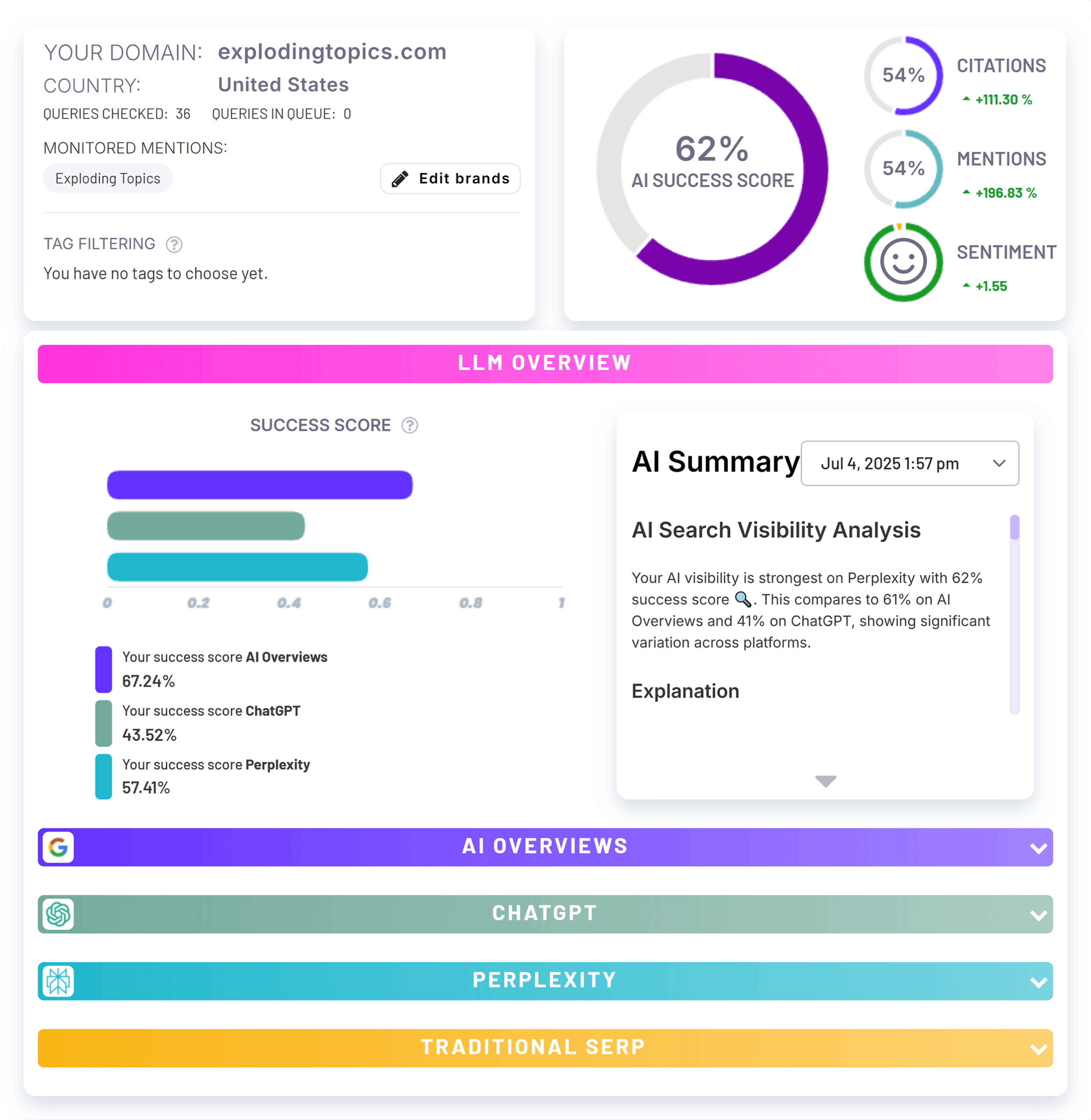
If you’re already using Semrush, the Position Tracking tool inside their SEO Toolkit lets you monitor your visibility across ChatGPT, Gemini, and Google AI Mode — right alongside your traditional rankings, all in one place.
It gives you an AI visibility score and shows how often your brand gets mentioned in responses for the prompts you’re tracking.
So as you make updates to your content and refine your strategy, you’ll be able to see whether your brand mentions are going up — and which specific pages are being cited.
Why You Need to Talk About GEO (Even to Your Boss or Clients)
You’ve gone through the steps. Now you need a way to explain it to others—without sounding like you’re throwing out everything you know.
Here’s the simple story GEO gives you:
-
Traditional SEO still works. Nothing you’ve built so far is wasted.
-
Your past investments in content and authority still count. They’re actually the foundation.
-
But the definition of visibility has changed. It’s no longer just about rankings. It’s about whether your brand gets named, cited, and trusted inside AI‑generated answers.
This makes it much easier to get buy‑in, defend your strategy, and keep moving forward—without having to tear down your entire approach and start from scratch.
You Need to Act Now – Before Your Visibility Fades
This space is moving fast. Every month brings new updates, new features, and new ways for AI to surface content.
But here’s what I’ve noticed: the brands that keep showing up in AI search aren’t chasing every shiny new trend.
They’re building something durable.
They focus on three things:
-
Solid content that answers real questions
-
Active presence where their audience hangs out (Reddit, LinkedIn, YouTube)
-
Trust signals that AI systems are designed to find and reference
So here’s your plan:
-
Start with the basics – Keep optimizing for strong traditional rankings and authority.
-
Layer on GEO – Add the extra layer of mentions, co‑citations, and structured content.
-
Track your AI visibility as you go – adjust based on what you learn.
Do that consistently, and you won’t just survive the shift. You’ll lead it.
Want to Stay Ahead in GEO?
If you found this guide helpful, there’s a lot more where that came from. For deeper insights, advanced strategies, and practical resources on GEO, AI search, and the future of digital visibility, head over to:
👉 https://milliondollarsskills.com/
Visit today and take your GEO knowledge to the next level.
Must read our Pillar Articles:
To truly understand the commercial impact of these technologies, you should explore our guide on [How to Use AI in Marketing to Skyrocket Your ROI in 2026]. It bridges the gap between technical implementation and actual revenue growth.
While visibility tracking is essential, having the right stack is what separates successful brands from the rest. Our team relies on a specific set of high-performance resources detailed in [My Top SEO Tools 2026 (Used by Our Team Daily)] to stay ahead of algorithm shifts.
Mastering GEO and AI search is becoming one of the most lucrative capabilities in the digital economy. If you are looking to monetize these types of advanced strategies, check out our breakdown of the [7 Best High Income Skills 2026: Earn $5,000+ Monthly].
Brand authority isn’t built on search engines alone; social proof plays a massive role in how AI entities perceive your authority. We’ve outlined the perfect cross-channel approach in [AI Social Media Marketing 2026: The Ultimate Strategy Guide].
If your goal is total market dominance, you need a strategy that covers every digital touchpoint. For a deep dive into building a resilient online presence, refer to [Social Media Marketing 2026: The Ultimate Strategy to Skyrocket Your Brand].
Frequently Asked Questions
1. Is GEO replacing SEO?
No, but it’s changing how we think about search visibility. Think of GEO as an evolution, not a replacement. Traditional SEO still drives traffic from Google, Bing, and other search engines. GEO adds a new layer on top—making sure your brand also gets cited inside AI-generated answers on platforms like ChatGPT, Gemini, and Perplexity. The smartest strategy right now is to do both well.
2. How is GEO different from traditional SEO?
Traditional SEO focuses on getting your page to rank #1 in search engine results. GEO focuses on getting your brand mentioned in an AI’s written answer. With SEO, you optimize for keywords, backlinks, and technical crawlers. With GEO, you optimize for mentions, co-citations, conversational queries, and structured content that AI systems can easily extract. Same foundation. Different finish line.
3. Do I need to stop using keywords for GEO?
Not at all. Keywords still matter—just not in the same way. AI platforms understand topics and entities, not just exact-match phrases. So instead of cramming “best coffee maker” into your page twenty times, write naturally about coffee makers, include comparisons, share real experiences, and answer specific questions people actually ask. That’s what AI looks for now.
4. Which AI platforms should I optimize for first?
Start with the ones driving real traffic today: ChatGPT (over 900 million weekly users), Google AI Overviews (appearing on billions of searches monthly), and Perplexity. Then keep an eye on Claude and Gemini, which are growing fast. You don’t need to master all of them at once. Test the same questions across each platform, notice which ones cite your industry most often, and focus there first.
5. Can small businesses benefit from GEO or just big brands?
Small businesses can absolutely win with GEO—sometimes even faster than big brands. Here’s why: AI platforms love specific, helpful, authentic answers. A massive corporation often publishes generic content. A local shop, freelancer, or niche blog can publish detailed, personal, experience-driven content that AI systems find uniquely valuable. Start by answering very specific customer questions that bigger competitors ignore.
6. How long does it take to see results from GEO?
It varies, but most brands start noticing changes within 4 to 8 weeks of consistent effort. Unlike traditional SEO, where you wait months for rankings, GEO visibility can shift faster because AI platforms constantly refresh their training data and real-time sources. The key is persistence. Keep publishing well-structured content, building genuine mentions, and tracking your AI visibility weekly with manual tests or tools like Semrush’s AI Visibility Toolkit.
7. Do backlinks still matter for GEO?
Yes, but the rules have expanded. Traditional backlinks still help with authority. But for GEO, unlinked mentions and co-citations matter just as much. When a reputable site mentions your brand alongside a key topic—even without a clickable link—AI systems notice that association. So keep building links, but also focus on getting mentioned in industry roundups, forum discussions, comparison articles, and expert interviews.
8. What type of content works best for GEO?
Content that answers real questions in a clear, structured way. That includes:
-
How-to guides with numbered steps
-
Comparison posts (Brand X vs Brand Y)
-
Personal case studies with real results
-
FAQ pages with direct answers
-
Listicles with clear explanations
Avoid fluff. AI platforms can spot vague, generic content instantly. Write like you’re explaining something to a smart friend who needs a straight answer.
9. Does GEO work for local businesses?
Absolutely. Local businesses have a huge GEO advantage. When someone asks ChatGPT or Google AI, “What’s the best pizza place near me?” or “Where can I get my car inspected on Sunday?”—the AI pulls from local directories, review sites, and location-specific content. Make sure your Google Business Profile is complete, encourage genuine reviews, and publish content that mentions your city, neighborhood, and local services naturally.
10. How do I track GEO performance?
You have two options. Manual tracking is free: ask the same questions across different AI platforms weekly, screenshot the answers, and note whether your brand appears. Automated tools save time: Semrush’s AI Visibility Toolkit, Ziptie.dev, and Profound can track mentions across multiple platforms at scale. Either way, track consistently. AI visibility changes fast, and what works this month might need adjustment next month.
11. Can AI-generated content rank in AI search results?
This is ironic—but usually no. Most AI platforms are trained to detect and deprioritize low-quality, mass-produced AI content. They prefer human-written or human-edited content that shows genuine expertise, personal experience, and original data. If you use AI to help with outlines or drafts, that’s fine. But always add your own voice, real examples, and fact-checked information before publishing.
12. Is GEO just a passing trend?
No. Search behavior has fundamentally changed. People under 45 now regularly use ChatGPT and AI Overviews for shopping research, troubleshooting, and learning. That number will only grow. GEO isn’t a trend—it’s the natural response to how discovery works in 2026 and beyond. The brands that treat it like a trend will fall behind. The brands that treat it like a core channel will stay visible.