
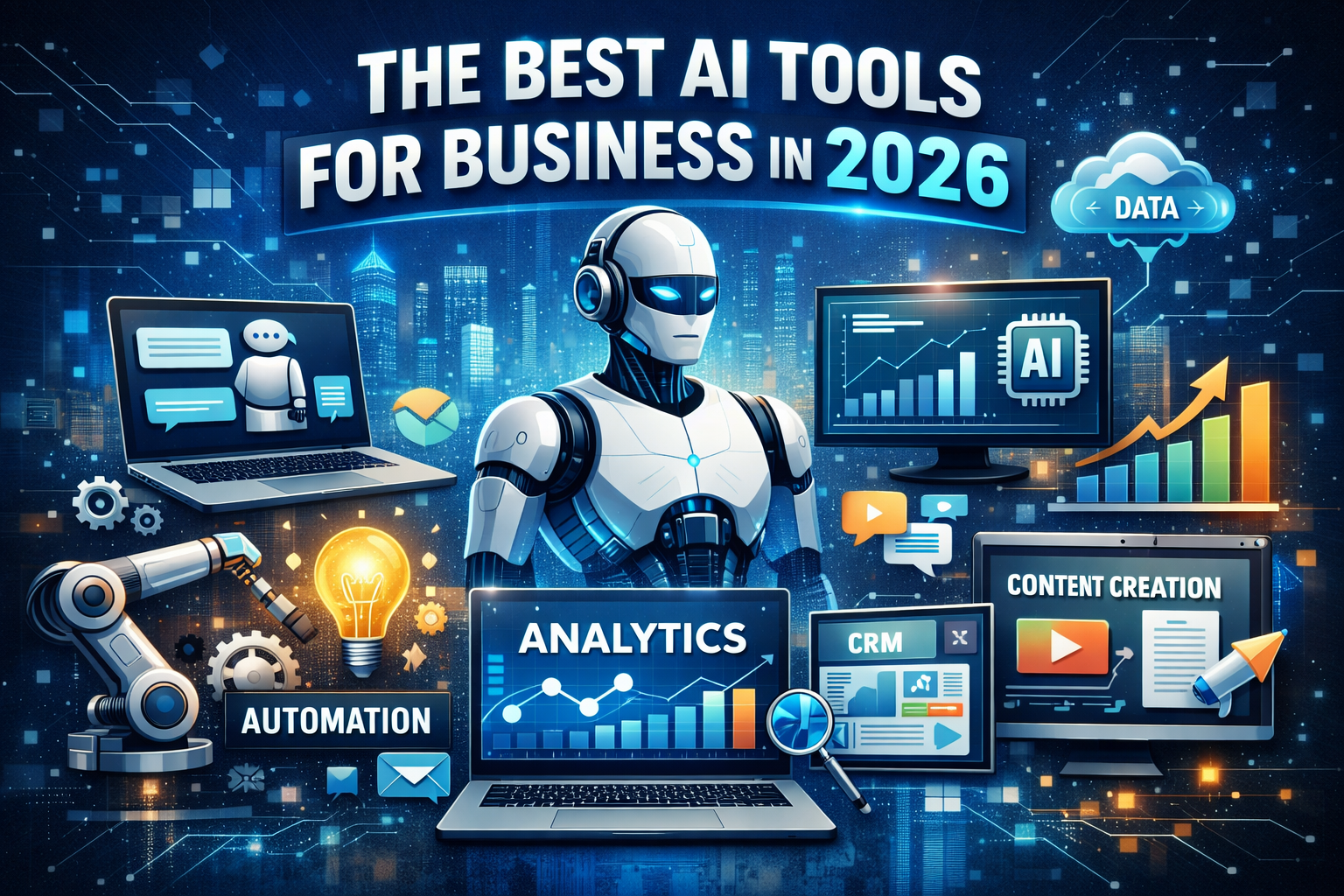
The Best AI Tools for Business in 2026: Ultimate Guide for Growth & Efficiency
The Best AI Tools for Business in 2026: Ultimate Guide for Growth & Efficiency
Artificial Intelligence (AI) has become a transformative force in the global business landscape, redefining how organizations operate, compete, and scale in 2026. No longer confined to experimental use cases or large technology firms, AI is now a critical component of everyday business operations across industries. From startups to multinational corporations, companies are increasingly adopting AI-powered tools to streamline workflows, enhance productivity, reduce operational costs, and deliver highly personalized customer experiences. As digital transformation accelerates, businesses that fail to integrate AI into their strategies risk losing their competitive advantage in an increasingly data-driven economy.
The widespread adoption of AI is driven by its ability to process vast amounts of data, generate actionable insights, and automate repetitive tasks with remarkable accuracy. This enables organizations to make faster and more informed decisions while minimizing human error and inefficiencies. Furthermore, AI empowers businesses to uncover new growth opportunities, optimize internal processes, and respond more effectively to changing market demands, making it an indispensable tool for long-term success.
What are the Best AI tools for business? Let’s discuss.
In this comprehensive article, we’ll dive deep into the top AI tools every business should consider in 2026, how they help different departments, and what strategic benefits they offer. Whether you’re a founder, manager, marketer, developer, or operations lead, this guide will help you pick the right AI stack for your needs.
Why AI Tools Are Critical for Modern Businesses in 2026
In 2026, AI tools will no longer be optional but essential for achieving operational excellence and sustainable growth. One of the primary advantages of AI is its ability to automate routine and time-consuming tasks, allowing employees to focus on strategic, creative, and high-value activities. This shift not only improves productivity but also enhances overall organizational performance and employee satisfaction.
Additionally, AI-driven analytics provide businesses with deep insights into customer behavior, market trends, and operational performance. By leveraging these insights, companies can make data-driven decisions that improve efficiency, increase profitability, and reduce risks. AI also plays a crucial role in enhancing customer engagement by enabling personalized interactions, faster response times, and improved service quality, all of which contribute to stronger customer relationships and brand loyalty.
1. ChatGPT (OpenAI) — The Most Versatile Business AI
ChatGPT continues to be one of the most powerful and widely used AI tools in 2026, offering unmatched versatility across multiple business functions. It enables organizations to generate high-quality content, automate customer support, conduct research, and streamline communication processes. Businesses use ChatGPT to create blog posts, marketing campaigns, emails, and reports while also leveraging its capabilities for brainstorming ideas and improving internal productivity. Its advanced natural language processing abilities allow it to produce human-like responses, making it an essential tool for enhancing efficiency and communication.

-
Crafting blog posts, emails, and marketing content
-
Answering customer service queries and support
-
Generating ideas for strategy and product development
-
Automating routine communications and workflows
With advanced capabilities in large-language models, ChatGPT can even help with basic coding and summarization tasks, making it a highly versatile addition to your AI stack.
2. Google Gemini — AI Integrated with Productivity Suites
Google Gemini is a highly effective AI solution designed for businesses that rely on Google Workspace. With seamless integration into Gmail, Google Docs, Google Sheets, and Google Drive, Gemini enhances productivity by enabling users to draft documents, analyze data, and automate workflows within a familiar environment. Its ability to process both text and visual inputs makes it a versatile tool for diverse business applications, allowing teams to work more efficiently without disrupting their existing processes.
-
Drafting and editing documents
-
Creating spreadsheet insights and automating data tasks
-
Answering queries based on business content
-
Providing creative suggestions for branding and communication
Its multimodal AI capabilities make it useful for both text-based tasks and visual input interpretation.
3. Microsoft 365 Copilot — AI for the Microsoft Ecosystem
Microsoft 365 Copilot brings advanced AI capabilities directly into widely used Microsoft applications such as Word, Excel, PowerPoint, Outlook, and Teams. This integration allows users to generate reports, analyze complex datasets, create presentations, and summarize meetings with ease. By embedding AI into everyday tools, Copilot reduces the learning curve and enables organizations to boost productivity without requiring significant changes to their workflows.
-
Drafting professional emails
-
Creating data summaries and analytics in Excel
-
Designing presentations with smart suggestions
-
Summarizing meeting transcripts and insights
Copilot increases productivity without requiring new platforms or interfaces, which makes adoption easier for many teams.
4. Notion AI — Intelligent Workspace & the Knowledge Hub
Notion AI is an intelligent workspace solution that helps businesses manage information, automate workflows, and improve collaboration. It allows teams to summarize documents, generate action items, organize knowledge bases, and streamline project management processes. This makes it particularly valuable for remote teams and organizations that need to maintain clarity and efficiency in their operations.
-
Summarize meetings and documents
-
Generate task lists and action items
-
Organize knowledge and internal documentation
-
Automate repetitive workflows
For teams with remote workers or complex projects, Notion AI helps maintain clarity and alignment while reducing administrative burden.
5. Jasper AI — Content & Marketing and the Copy Expert
Jasper AI is specifically designed for marketing teams and content creators, enabling businesses to produce high-quality, SEO-optimized content at scale. It supports the creation of blog articles, product descriptions, email campaigns, and advertisements while maintaining a consistent brand voice. With built-in SEO tools and customization features, Jasper AI helps businesses improve search engine rankings, drive organic traffic, and increase conversions.

-
SEO templates and analytics tools
-
Real-time customization of tone and structure
-
Integration with major SEO tools
In 2026, Jasper has become even more powerful by allowing AI-generated content that aligns with search intent and conversion goals.
6. Fireflies AI — The AI Meeting Assistant
Fireflies AI simplifies meeting management by automatically recording, transcribing, and summarizing conversations across platforms such as Zoom, Google Meet, and Microsoft Teams. This eliminates the need for manual note-taking and ensures that important information is accurately captured and easily accessible. As a result, teams can focus on meaningful discussions and decision-making rather than administrative tasks.
-
Generates searchable transcripts
-
Highlights key decisions and action items
-
Reduces time spent on manual note-taking
It is especially useful for knowledge workers who attend multiple remote meetings daily.
7. ClickUp AI — Project Management Redefined
ClickUp AI enhances project management by introducing automation and predictive insights into task tracking and workflow organization. It helps teams automate task creation, monitor progress, identify potential risks, and optimize resource allocation. This ensures that projects are completed efficiently and on time, even as business operations become more complex.
-
Automating task creation and updates
-
Predicting project risks or delays
-
Providing strategic insights for resource allocation
As businesses grow, managing timelines becomes more complex. ClickUp AI helps simplify oversight and keeps teams aligned.
8. Synthesia — AI Video Creation Platform
Synthesia is a leading AI video generation platform that enables businesses to create professional-quality videos without traditional production resources. With features such as AI avatars, voice cloning, and multilingual support, it is ideal for training, marketing, and internal communication. This allows organizations to scale video content production quickly and cost-effectively.

-
Voice cloning and multilingual support
-
Branded avatar creation
-
Internal training video creation
This tool helps businesses produce polished videos without expensive production teams.
9. HubSpot AI — CRM & Marketing Automation
HubSpot AI combines customer relationship management with intelligent automation to enhance marketing and sales processes. It helps businesses nurture leads, personalize communication, and optimize conversion strategies by analyzing customer behavior and recommending the most effective actions. This results in improved customer engagement and stronger business outcomes.
HubSpot is one of The Best AI Tools for Business in 2026.
-
Automate lead nurturing
-
Score leads based on behavior
-
Recommend next-best actions
-
Personalize outreach at scale
By combining AI with CRM data, HubSpot AI improves conversion rates and drives stronger customer relationships.
10. Replit AI — Developer-Focused Coding Assistant
Replit AI is a powerful tool for developers, offering features such as code generation, debugging, and real-time collaboration. It accelerates the software development process by reducing manual effort and providing intelligent suggestions, enabling teams to build and deploy applications more efficiently.
-
Generate code and debug faster
-
Collaborate on projects in real time
-
Learn and fix issues without manual review
Replit AI accelerates software deployment and improves development workflows across teams.
11. Tableau + Einstein GPT — AI-Driven Business Analytics
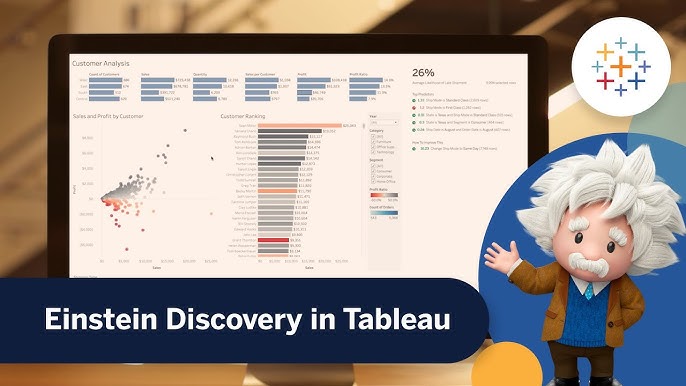
The integration of Tableau with Einstein GPT provides businesses with advanced analytics capabilities, including predictive insights, natural language queries, and data visualization. This combination allows organizations to analyze complex datasets, identify trends, and make informed strategic decisions based on accurate data.
-
Predictive analytics
-
Natural language queries
-
Data visualization and forecasting
This combination helps leaders interpret complex datasets and make strategic decisions.
Bonus Tools for The Best AI Tools for Business in 2026
Here are additional AI tools gaining traction across industries:
-
GrammarlyGO — Enhances writing quality inside emails and documents.
-
Zapier AI Agents — Automates workflows by connecting multiple apps.
-
UiPath — AI-driven Robotic Process Automation (RPA) for business workflows.
How to Choose the Right AI Tool for Your Business
Selecting the right AI tools requires a strategic approach that aligns with your business objectives and operational needs. Organizations should begin by identifying their primary goals, such as improving efficiency, enhancing customer experience, or increasing revenue. It is also important to choose tools that integrate seamlessly with existing systems to minimize disruption and ensure smooth implementation.
Businesses should consider starting with a small number of tools, measuring their impact, and gradually expanding their AI capabilities based on results. Providing proper training to employees is essential for maximizing the benefits of AI, while maintaining strong data security and compliance practices ensures safe and responsible usage.
Conclusion
In 2026, AI tools are fundamentally transforming the way businesses operate, enabling them to become more efficient, intelligent, and competitive. From versatile solutions like ChatGPT and Google Gemini to specialized platforms such as Synthesia and HubSpot AI, organizations have access to a wide range of tools designed to meet diverse business needs. Companies that adopt AI strategically can significantly improve productivity, reduce operational costs, and deliver superior customer experiences. As the role of AI continues to expand, investing in the right tools and implementing them effectively will be crucial for achieving long-term growth and success in the modern business environment.
Frequently Asked Questions (FAQs) About AI Tools for Business in 2026
1. Is it expensive for small businesses to use AI tools in 2026?
In 2026, implementing AI tools in a small business is generally affordable and highly flexible due to widespread pricing models such as freemium plans, subscription tiers, and pay-as-you-go options. While advanced enterprise solutions like Microsoft 365 Copilot or premium AI platforms may require monthly subscriptions, many businesses start with low-cost plans that deliver immediate value. When evaluating cost versus value, most companies find that the return on investment is significantly higher than the subscription fee because AI tools save time, reduce manual workload, and improve overall efficiency across daily operations.
2. Are AI tools safe for handling sensitive business data?
Yes, most modern AI tools are built with strong security frameworks and enterprise-level privacy protections to ensure that business data remains safe. Leading platforms such as Google Gemini and Microsoft 365 Copilot include advanced encryption, secure access controls, and dedicated data governance settings. In most cases, business data is not used to train public AI models, especially in enterprise environments. However, it is still essential for organizations to carefully review privacy policies, configure security settings correctly, and ensure compliance with relevant data protection regulations to maintain full control over sensitive information.
3. Do employees need technical skills to use AI tools effectively?
No, technical expertise is not required to use most AI tools in 2026. Modern AI platforms are designed to be user-friendly and operate using natural language processing, meaning employees can interact with them using simple, everyday English. Instead of coding or technical training, the main skill required is learning how to write clear and effective prompts to get the best results from the AI. With minimal onboarding, employees across all departments—including marketing, HR, sales, and operations—can quickly adapt and start using AI tools productively.
4. Will AI tools replace human employees in businesses?
AI tools are not designed to replace human employees but to enhance and support their work. In 2026, the dominant trend in business automation is “augmentation rather than replacement.” AI handles repetitive, time-consuming, and data-heavy tasks, while human employees focus on strategic thinking, creativity, decision-making, and relationship building. This collaboration between humans and AI leads to higher productivity, improved job satisfaction, and better business outcomes, while also creating new roles and opportunities in emerging AI-driven industries.
5. Which AI tool should a business start with first?
For most businesses, the best starting point is a general-purpose AI assistant such as ChatGPT or Google Gemini. These tools offer broad functionality that can be applied across multiple departments, including writing emails, generating marketing content, analyzing documents, and assisting with research. Starting with a versatile AI tool allows businesses to quickly experience tangible benefits, understand how AI fits into their workflow, and gradually expand into more specialized tools like automation platforms, analytics systems, or project management AI as their needs grow.





2 Comments