
Bypass AI Detectors Easily: How to Write Human-Like AI Content in 2026
Bypass AI Detectors Easily: How to Write Human-Like AI Content in 2026
Introduction
In 2026, content creation has evolved into a powerful blend of artificial intelligence and human creativity. AI writing tools are now widely used by bloggers, marketers, businesses, and freelancers to produce articles faster than ever before. However, one major challenge remains: making AI-generated content sound natural, engaging, and genuinely human.
Readers today are more sensitive than ever to robotic or overly generic writing. Search engines have also become smarter in evaluating content quality, prioritizing usefulness, readability, and authenticity over mechanical keyword stuffing or artificial phrasing. This means that simply generating AI text is no longer enough. Writers must learn how to refine, shape, and humanize AI-assisted content to make it meaningful, relatable, and SEO-effective.
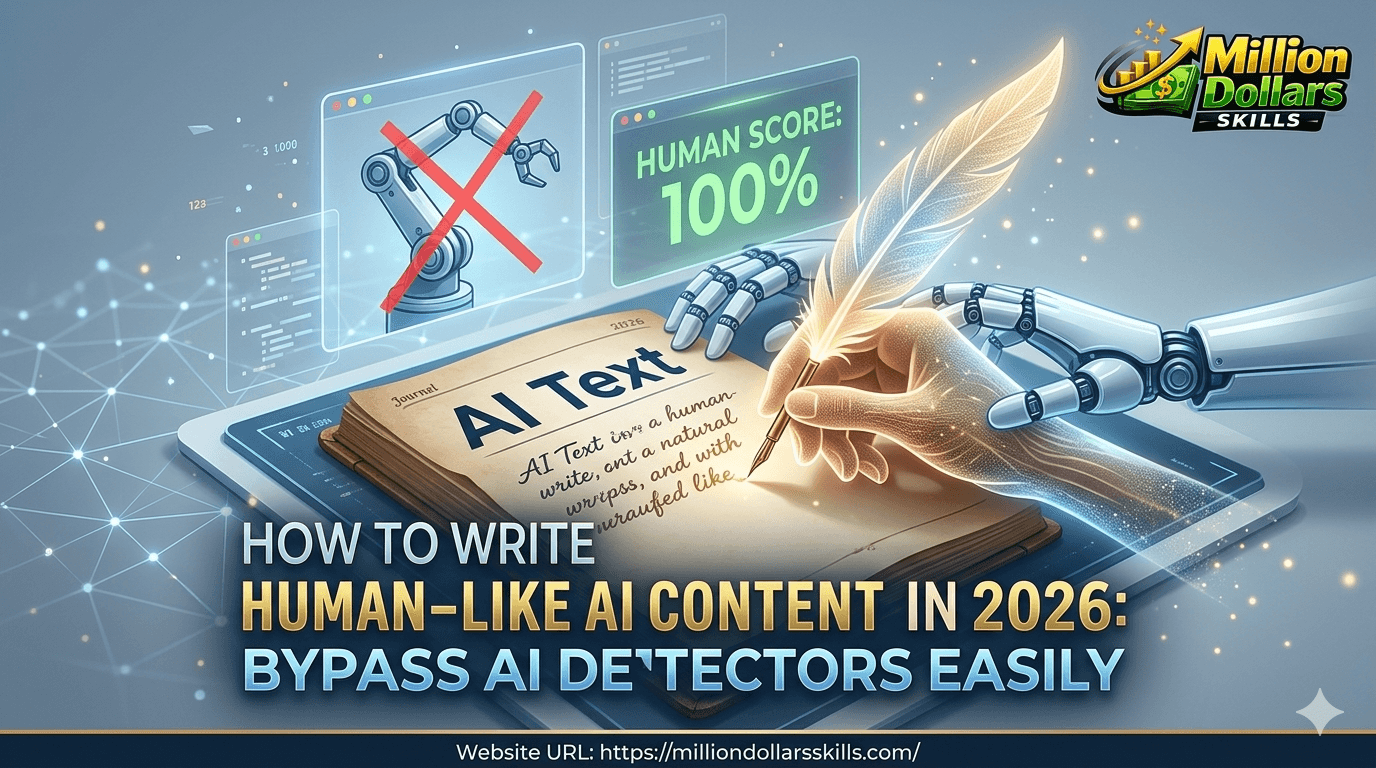
This article explores how to write human-like AI content in 2026 using ethical, practical, and professional techniques that improve readability, engagement, and search engine performance. Whether you are a blogger, digital marketer, or business owner, these strategies will help you produce content that feels authentic and connects deeply with your audience.
Understanding What “Human-Like” Content Really Means
Human-like content is not about pretending AI wasn’t used. Instead, it is about ensuring that the final output reflects natural human communication patterns. Real human writing is not perfect—it includes variation in tone, sentence structure, emotion, and flow.
In contrast, AI-generated drafts often sound overly structured, repetitive, or too formal. They may lack personality or fail to reflect real-world nuance. Human-like content bridges this gap by introducing clarity, warmth, and conversational flow while maintaining accuracy and purpose.
A human-like article typically includes:
- Natural transitions between ideas
- A conversational but professional tone
- Real-world examples or relatable explanations
- Varied sentence lengths for rhythm
- Clear intent and reader-focused structure
When these elements come together, the content feels less like machine output and more like a thoughtful explanation from a knowledgeable writer.
Why Humanized AI Content Matters for SEO in 2026
Search engines in 2026 are heavily focused on user experience. Algorithms are now designed to evaluate whether content is genuinely helpful, easy to understand, and satisfying to read. This means that robotic or low-quality AI text may struggle to rank well, even if it is technically optimized for keywords.
Humanized content performs better because it increases:
- Dwell time (how long readers stay on a page)
- Engagement (scrolling, clicking, reading fully)
- Trust signals (return visitors and shares)
- Comprehension (clear answers to user intent)
SEO is no longer just about keywords—it is about delivering value. When content feels natural and engaging, it automatically aligns with modern SEO requirements.
Step 1: Start with a Clear Intent and Structure
Before writing or generating content, define the purpose clearly. Ask yourself what the reader is trying to achieve. Are they looking for information, guidance, comparison, or solutions?
Once the intent is clear, build a simple structure:
- Introduction (set context and hook interest)
- Main body (detailed explanation and insights)
- Subsections (break down complex ideas)
- Conclusion (summary and final thoughts)
A well-structured article improves readability and ensures that both users and search engines can understand the content easily.
Step 2: Use AI as a Drafting Tool, Not a Final Writer
One of the most important practices in 2026 content creation is understanding the role of AI correctly. AI should be treated as an assistant, not the final author.
Let AI help you with:
- Generating outlines
- Expanding ideas
- Providing initial drafts
- Suggesting keyword variations
However, the human touch must refine everything. This includes rewriting awkward phrases, adjusting tone, and adding personality. Without this step, content often feels generic and disconnected from real human communication.
Step 3: Improve Readability Through Natural Language Flow
Human writing flows differently from machine-generated text. It is less predictable and more dynamic. To achieve this, focus on how sentences connect rather than just what they say.
Effective techniques include:
- Mixing short and long sentences
- Avoiding repetitive sentence starters
- Using transitions like “however,” “for example,” and “in practice.”
- Writing as if explaining to a real person
Instead of overly formal phrasing, aim for clarity and simplicity. Readers prefer content that feels effortless to follow.
Step 4: Add Depth With Realistic Examples and Context
One of the biggest differences between AI-generated and human-written content is context. Humans naturally include examples, comparisons, and explanations based on real-world understanding.
For instance, instead of saying “SEO is important,” a more human approach would explain why:
Businesses that consistently publish helpful, well-structured content tend to attract more organic traffic over time because search engines reward relevance and user satisfaction.
Adding this kind of depth makes the content more credible and engaging.
Step 5: Maintain a Balanced and Conversational Tone
A human-like article should not feel like a lecture. It should feel like a guided conversation where the reader is being helped, not instructed rigidly.
To achieve this:
- Use a professional but approachable tone
- Avoid unnecessary jargon
- Speak directly to the reader when appropriate
- Keep explanations grounded and practical
The goal is to sound knowledgeable without being overly complex.
Step 6: Focus on Value, Not Keyword Stuffing
Modern SEO is no longer about repeating keywords excessively. Instead, it focuses on semantic relevance—how well the content answers the topic as a whole.
Naturally include related terms, but prioritize clarity and usefulness. Search engines now understand context, so overusing keywords can actually harm performance.
A strong article should feel written for humans first, and optimized for search engines second.
Step 7: Edit and Refine Like a Professional Writer
Editing is where AI-generated content truly becomes human-like. After generating or drafting content, take time to refine it carefully.
During editing, focus on:
- Removing repetitive phrases
- Improving sentence clarity
- Adjusting tone consistency
- Fixing unnatural transitions
- Enhancing emotional flow where needed
This step transforms basic AI output into polished, high-quality writing.
The Importance of Original Thought in AI-Assisted Writing
Even with advanced AI tools, originality remains essential. Readers value perspectives, insights, and interpretations that feel fresh and meaningful. AI can provide structure and efficiency, but originality comes from human thinking.
Adding opinions, analysis, or personal interpretation (when appropriate) helps differentiate your content from generic outputs found online.
Common Mistakes to Avoid in AI Content Writing
Many writers rely too heavily on AI, which leads to predictable issues such as:
- Overly repetitive sentence structures
- Lack of emotional tone
- Generic explanations without depth
- Weak transitions between paragraphs
- Excessive formal or mechanical language
Avoiding these mistakes is crucial for producing high-quality content that performs well in search rankings.
Conclusion
In conclusion, writing human-like AI-assisted content in 2026 is all about balance, intention, and refinement. AI tools have made content creation faster and more accessible, but the responsibility of shaping that content into something meaningful still belongs to the writer. The most effective approach is to treat AI as a supportive assistant that provides structure and ideas, while you bring in clarity, personality, and real-world understanding.
When content is carefully edited to sound natural, it becomes easier for readers to connect with it. This connection is what ultimately drives better engagement, longer reading time, and stronger trust. Search engines have also become more focused on user satisfaction, which means well-written, helpful, and naturally flowing content is more likely to perform well in rankings compared to content that feels mechanical or repetitive.
It is also important to remember that good writing is not about perfection, but about communication. Human-like content reflects variation, simplicity, and thoughtful expression. By improving sentence flow, adding meaningful context, and removing unnecessary complexity, you can transform basic AI drafts into high-quality articles that feel authentic and professional.
As digital content continues to evolve, the ability to combine AI efficiency with human creativity will become an essential skill. Those who learn to refine AI-generated text thoughtfully will consistently produce content that stands out, builds authority, and provides real value to readers.
Ultimately, success in content writing does not come from avoiding AI, but from using it wisely and shaping it into something genuinely useful and human-centered.
Frequently Asked Questions (FAQs)
1. What is human-like AI content in simple terms?
Human-like AI content is writing that may be assisted by AI but is refined to sound natural, clear, and easy to read. It avoids robotic phrasing and instead follows a smooth, conversational style that feels like it was written by an experienced human writer.
2. Why is humanizing AI-generated content important for SEO?
Humanizing AI content is important because search engines prioritize helpful and readable content. When writing feels natural and engaging, users stay longer on the page, interact more, and trust the information. These signals help improve SEO rankings over time.
3. Can AI-written articles rank on Google without editing?
AI-written articles can rank, but only if they are high-quality and provide real value. In most cases, editing is necessary to improve clarity, remove repetition, and make the content more useful for readers. Well-edited content always performs better in search results.
4. How do I make AI content sound more natural and human?
To make AI content sound more natural, focus on improving sentence flow, using simple and clear language, and adding real explanations or examples. Varying sentence length and maintaining a conversational tone also help make the writing feel more authentic.
5. Does Google allow AI-generated content in SEO?
Yes, Google allows AI-generated content as long as it is helpful, original, and created for users rather than search engines. The focus should always be on quality, relevance, and user experience rather than on how the content was produced.
6. What are the key SEO benefits of humanized content?
Humanized content improves SEO by increasing user engagement, reducing bounce rates, and encouraging longer reading time. It also helps search engines better understand the content because it is structured, clear, and written in a natural language style.
7. What mistakes should I avoid when writing AI-assisted content?
Common mistakes include overusing keywords, keeping sentences too robotic, ignoring readability, and failing to edit AI output. Avoiding these issues ensures the content remains natural, useful, and SEO-friendly.
8. Is humanized content better for long-term website growth?
Yes, humanized content is much better for long-term growth. It builds trust with readers, improves search engine visibility, and keeps users coming back. Over time, this leads to stronger authority and consistent organic traffic.