
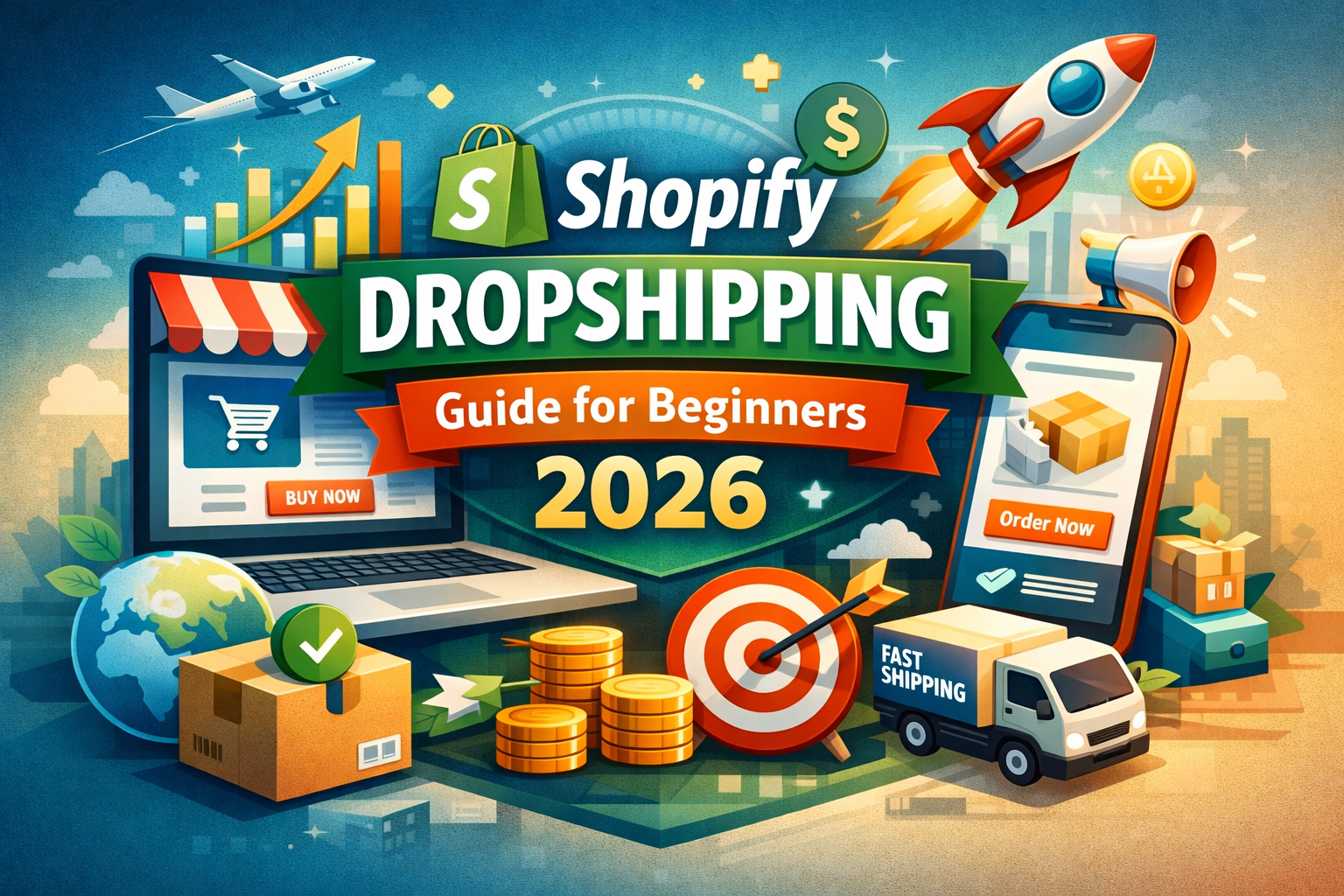
Shopify Dropshipping Guide 2026: Step-by-Step Store Setup
Shopify Dropshipping Guide 2026: Step-by-Step Store Setup
Dropshipping is no longer a beginner trend—it’s a proven eCommerce business model that continues to evolve every year. In 2026, Shopify dropshipping remains one of the most beginner-friendly ways to start an online store without holding inventory. If you want to launch a global brand, earn passive income, or scale a sustainable online business, this 2026 Shopify dropshipping guide will take you from basics to advanced strategies in a clear, step-by-step manner.
Shopify dropshipping remains one of the most beginner-friendly and low-risk ways to start an eCommerce business without holding inventory. If you’re a beginner looking to build an online store, earn passive income, or launch a global brand, this Shopify dropshipping guide for beginners (2026) will walk you through everything you need—from basics to advanced strategies—in a simple, practical, and human way.
What Is Shopify Dropshipping?
Shopify dropshipping is a business model where you sell products online without keeping stock. When a customer orders from your store, the product is shipped directly from a third-party supplier to them. Shopify dropshipping is an eCommerce business model where you sell products online without keeping them in stock. Instead, when a customer places an order on your Shopify store, the product is shipped directly from a third-party supplier to the customer.
How It Works (Simple Breakdown)
-
You create a Shopify store
-
You list products from a supplier
-
A customer places an order
-
You forward the order to the supplier
-
The supplier ships the product
-
You keep the profit margin
This model eliminates the need for:
-
Warehousing
-
Bulk inventory investment
-
Shipping logistics
Why Shopify Dropshipping Is Still Profitable in 2026
Many beginners ask, “Is dropshipping still worth it in 2026?”
The short answer: Yes—if done correctly.
Key Reasons It Works in 2026
-
Global e-commerce sales are growing every year
-
Shopify continuously upgrades tools and automation
-
AI-powered marketing reduces ad costs
-
Faster shipping options improve customer trust
-
Social commerce (Instagram, TikTok, Facebook) drives impulse buying
The difference between success and failure today lies in branding, niche selection, and smart marketing—not luck.
Advantages of Shopify Dropshipping for Beginners
1. Low Startup Cost
You don’t need thousands of dollars to start. A Shopify subscription and basic marketing budget are enough.
2. Beginner-Friendly Platform
Shopify is designed for non-technical users. No coding knowledge is required.
3. Location Independence
Run your business from anywhere in the world with just a laptop and internet.
4. Scalable Business Model
You can test products quickly and scale winning items without increasing workload.
Step 1: Choose a Profitable Dropshipping Niche
Choosing the right niche is the foundation of success.
What Makes a Good Niche in 2026?
-
Problem-solving products
-
Passion-based audiences
-
Repeat purchase potential
-
Not oversaturated
Best Dropshipping Niches for 2026
-
Home improvement & smart gadgets
-
Health & fitness accessories
-
Pet products
-
Beauty & skincare tools
-
Travel & lifestyle items
💡 Pro Tip: Avoid general stores. Focus on one niche, one audience.
Step 2: Create Your Shopify Store (Beginner Setup)
1. Sign Up on Shopify
-
Choose a brandable store name
-
Select a clean, professional theme
-
Optimize for mobile users
2. Essential Pages to Add
-
Home page
-
Product pages
-
About Us
-
Contact Us
-
Privacy Policy
-
Refund & Shipping Policy
These pages increase trust, SEO, and ad approval rates.
Step 3: Find Reliable Dropshipping Suppliers
Your supplier is your business partner. Poor suppliers = refunds + bad reviews.
Best Dropshipping Supplier Platforms (2026)
-
AliExpress (improved shipping options)
-
CJ Dropshipping
-
Zendrop
-
Spocket
-
Local suppliers (highly recommended)
What to Look for in a Supplier
-
Fast processing time
-
Product quality consistency
-
Real customer reviews
-
Branding options
Step 4: Add Winning Products to Your Store
Don’t add hundreds of random products. Quality beats quantity.
Product Selection Criteria
-
Solves a clear problem
-
Lightweight (low shipping cost)
-
Not easily available locally
-
Has emotional or practical value
Optimizing Product Pages for SEO
-
Keyword-rich product titles
-
Benefit-focused descriptions
-
High-quality images
-
Clear pricing & offers
-
Strong call-to-action (CTA)
Step 5: Pricing Strategy for Maximum Profit
Pricing isn’t guesswork—it’s strategy.
Beginner-Friendly Pricing Formula
Product Cost + Shipping + Ads + Profit Margin
Smart Pricing Tips
-
Avoid being the cheapest
-
Offer bundle deals
-
Use psychological pricing ($29.99)
-
Highlight discounts ethically
Step 6: Marketing Your Shopify Dropshipping Store
Marketing is where most beginners fail—not the product.
Best Traffic Sources in 2026
1. Facebook & Instagram Ads
-
Ideal for scalable sales
-
Requires testing & optimization
-
Works best with video creatives
2. TikTok Organic & Paid
-
High virality potential
-
Low competition for new stores
-
Great for product demonstrations
3. SEO & Content Marketing
-
Free long-term traffic
-
Builds brand authority
-
Perfect for beginners with a low budget
4. Influencer Marketing
-
Builds instant trust
-
Better conversion rates
-
Works well in niche markets
Step 7: Order Fulfillment & Customer Support
Customer experience decides whether your store survives.
Best Practices
-
Send order confirmation emails
-
Provide tracking numbers
-
Be transparent about shipping times
-
Respond to customer queries quickly
Happy customers = repeat sales + free marketing.
Common Mistakes Beginners Must Avoid
❌ Choosing products without research
❌ Running ads without proper testing
❌ Ignoring store branding
❌ Using copied product descriptions
❌ Poor customer communication
Avoid these, and you’re already ahead of 80% beginners.
How Much Can You Earn with Shopify Dropshipping?
Earnings vary based on effort, niche, and marketing strategy.
Realistic Income Timeline in Shopify dropshipping
-
Month 1–2: Learning & testing
-
Month 3–4: First consistent sales
-
Month 6+: Scaling & profit optimization
Many beginners earn $500–$3,000/month, while advanced sellers scale to five or six figures annually.
Is Shopify Dropshipping Legal and Safe?
Yes, Shopify dropshipping is completely legal.
However, you must:
-
Follow platform policies
-
Avoid copyrighted products
-
Be honest with customers
-
Maintain refund policies
Transparency builds long-term trust.
Future of Shopify Dropshipping Beyond 2026
Dropshipping is shifting from “quick money” to real brand building.
Key Trends to Watch in Shopify Dropshipping
-
AI-powered store automation
-
Faster local fulfillment
-
Personalized shopping experiences
-
Sustainable product demand
-
Social commerce dominance
Those who adapt will win.
Final Thoughts: Is Shopify Dropshipping Worth Starting in 2026?
Absolutely—Shopify dropshipping remains a highly profitable business model in 2026, provided you treat it as a long-term brand rather than a “get-rich-quick” scheme. While the competition has increased, the barrier to entry is lower thanks to advanced AI automation tools and streamlined global logistics.
To succeed in the current market, you must shift your focus from generic products to high-demand problem-solving niches. Consistency, continuous learning, and rapid adaptation to consumer trends are the ultimate keys to scalable success. If you stay committed to building a customer-centric store, Shopify dropshipping can evolve from a side hustle into a sustainable, long-term income stream and a valuable online asset. The opportunity is there; the only question is whether you are ready to execute with precision.
To learn more about the most profitable businesses, click here.
Frequently Asked Questions (FAQs)
Q1: How much money do I need to start?
- Around $100–$500 for a Shopify subscription, domain, and test ads.
Q2: Can I dropship outside the US or Europe?
- Yes. Location independence is a core advantage.
Q3: How long does shipping take in 2026?
- Fast shipping from suppliers like Zendrop: 7–12 days
- Local suppliers: 3–5 days
Q4: Do I need to register an LLC immediately?
- Not at the start. Register once sales are consistent for legal protection.
Q5: How do I handle returns?
- Replace or refund immediately without asking for the item back to keep customers happy.
Q6: Will AI replace dropshipping research?
- No. AI speeds up tasks like writing descriptions, creating ads, and market analysis—but your business decisions remain critical.


One Comment