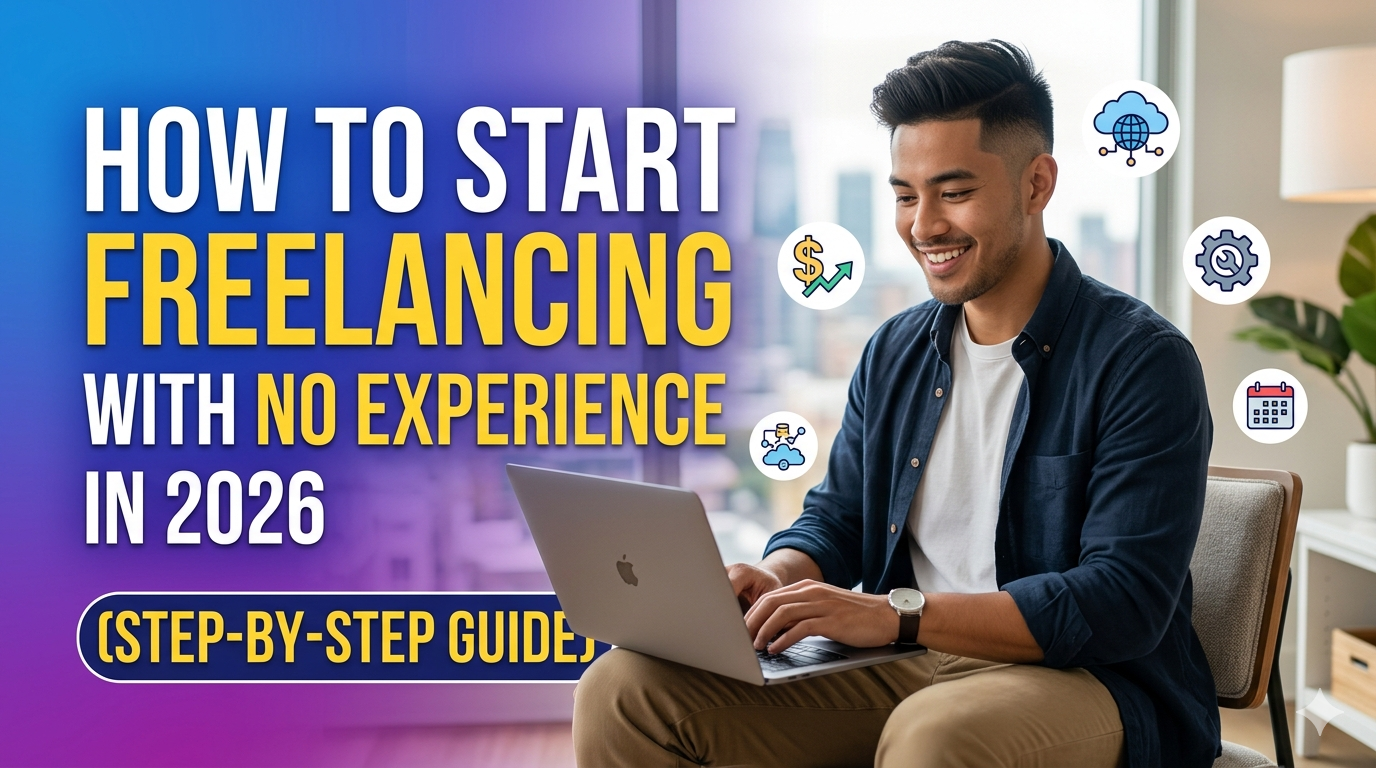
How to Start Freelancing with No Experience in 2026 (Step-by-Step Guide)
How to Start Freelancing with No Experience in 2026: Step-by-Step Guide
Introduction: Why 2026 Is the Best Year to Start Freelancing
Let me ask you something.
Have you ever sat at your desk, staring at the clock, wondering if this is really what the rest of your life looks like? I have. Too many times. The commute. The cubicle. The constant feeling that your time belongs to someone else. But here’s what I’ve learned. It doesn’t have to be that way. The world of work has changed dramatically. In 2026, freelancing is no longer just an alternative to a traditional job—it has become a viable career path offering financial freedom, location independence, and a chance to earn in dollars from the comfort of your home.
Unlike the corporate grind of the past, where climbing the ladder required degrees, office presence, and years of experience, today’s digital economy is merit-based. What matters most is your ability to solve problems, deliver results, and communicate effectively with clients globally.
For beginners, this may sound intimidating: how can someone with zero experience land clients and earn money online? The good news is that in 2026, the barriers to entry are lower than ever. Companies and entrepreneurs are actively looking for motivated freelancers who can learn quickly and provide tangible solutions. By following a structured approach, even a complete novice can go from knowing nothing about freelancing to earning their first dollar in a few weeks. This guide walks you through each step, providing a detailed roadmap to help you start, grow, and scale your freelancing career effectively.
The World Has Changed
In 2026, freelancing isn’t some risky experiment anymore.
It’s not just for “tech people” or “creative types.” It’s not a backup plan for when nothing else works. Freelancing has become a real career path. A path that offers:
-
Financial freedom (without winning the lottery)
-
Location independence (work from anywhere)
-
The ability to earn in dollars while living where costs are lower
Unlike the old corporate grind, where you needed a degree, years of experience, and face time in an office just to get noticed, today’s digital economy is different.
It’s merit-based. What matters now is simple:
-
Can you solve problems?
-
Can you deliver results?
-
Can you communicate clearly with clients?
Not where you went to school. Not who you know. Not how many years you’ve suffered through entry-level jobs. Just your ability to help someone get what they want.
Why This Feels Intimidating (And Why It Shouldn’t)
I know what you’re thinking.
“This sounds great, but I have zero experience. How am I supposed to compete with people who’ve been doing this for years?” I had the exact same thought when I started.
It stopped me for months. I kept waiting. Kept preparing. Kept feeling like I wasn’t ready. Then one day, I realized something. The people hiring freelancers don’t care about my lack of experience. They care about their problem. They need something done. They need help. If I could show them I could solve their problem – even a small one – they would pay me.
And they did.
The Good News About 2026
Here’s what makes right now different.
The barriers to entry have never been lower.
| Barrier | Past | 2026 |
|---|---|---|
| Degree required? | Often yes | Rarely |
| Years of experience? | 3-5 years minimum | Show me what you can do |
| Physical office? | Required | Work from anywhere |
| Connections needed? | Network matters most | Platforms connect you |
| Startup cost | High | Just a laptop and internet |
Companies and entrepreneurs in 2026 are actively looking for motivated freelancers. They don’t care if you’re new. They care if you can learn quickly and deliver tangible solutions.
That’s where you come in.
What This Guide Will Do For You
I’ve put together a complete roadmap.
Not vague advice. Not “just believe in yourself” motivation. A step-by-step system that takes you from knowing nothing about freelancing to earning your first dollar. And then to scale that into a real income.
Here’s what you’ll learn:
-
Exactly what freelancing is and why it matters in 2026
-
Which skills are actually in demand (not outdated lists)
-
How to find your first client with zero experience
-
How to price yourself without underselling
-
How to scale from 500to5,000 per month
No fluff. No fake screenshots. Just what actually works right now.
What Freelancing Really Means in 2026
Before we go further, let’s get clear on something.
Freelancing is essentially offering your skills to clients without being a full-time employee. You get paid per project, per task, or per hour. Not a fixed salary from one company.
Here’s what that means in real life:
| Traditional Job | Freelancing |
|---|---|
| One boss | Many clients |
| Fixed salary | Variable income (you control it) |
| Set hours | Flexible hours |
| Office required | Work from anywhere |
| Ask for permission | Be your own boss |
| Limited earning potential | Unlimited (based on skill and effort) |
In 2026, freelancing has expanded far beyond simple tasks like writing or data entry.
High-demand skills now include:
-
AI services (prompting, editing, automation)
-
Digital marketing and SEO
-
Social media management
-
Graphic design and branding
-
Website development (no-code options available)
-
Video editing for short-form content
And platforms like Fiverr, Upwork, Freelancer, and PeoplePerHour have made it easier than ever for beginners to connect with clients globally. You don’t need to know someone. You don’t need a fancy referral. You just need to create a profile and start.
The Truth About Freelancing
Let me be honest with you.
Freelancing isn’t easy money. Anyone promising you “get rich quick” is lying. It takes effort. It takes patience. It takes sending proposals that get ignored and getting back up to send more.
But here’s what else is true.
For many people, freelancing isn’t just a side hustle anymore. It’s a legitimate path to:
-
Financial independence (no more living paycheck to paycheck)
-
Professional growth (you learn faster because you have to)
-
A fully remote lifestyle (work from a beach, a coffee shop, or your living room)
I’ve seen students build thriving freelancing careers while still in university.
I’ve seen stay-at-home parents earn more than their previous full-time salaries.
I’ve seen people with no degree and no “connections” out-earn their friends with master’s degrees.
It’s possible. And it’s more possible in 2026 than ever before.
Your First Step
Here’s what I need you to do.
Stop reading for a moment. Open a new tab.
Write down one skill you already have or want to learn. Just one.
That’s your starting point.
Not a perfect plan. Not a complete strategy. Just one skill.
The rest comes later.
Because the only way to start freelancing is to start.
Not next week. Not when you feel ready.
Now.
Ready? Let’s go. 🚀
What is Freelancing and Why It Matters
Freelancing is essentially offering your skills, services, or expertise to clients without being a full-time employee. You are paid per project, per task, or per hour instead of receiving a fixed salary. Unlike traditional employment, freelancing provides flexibility, allowing you to choose your clients, set your rates, and determine your working hours.
In 2026, freelancing has expanded far beyond simple tasks like writing or data entry. High-demand skills now include AI services, digital marketing, social media management, graphic design, and website development. Platforms like Fiverr, Upwork, Freelancer, and PeoplePerHour have made it easier than ever for beginners to connect with clients globally. For many, freelancing is not just a side hustle—it is a legitimate path to financial independence, professional growth, and a fully remote lifestyle.
Why Freelancing is Ideal for Beginners in 2026
Freelancing has never been more beginner-friendly. Technological advancements, particularly in AI and automation, have leveled the playing field. Beginners no longer need years of experience to compete with seasoned professionals. AI tools can guide you, automate mundane tasks, and help you deliver high-quality work efficiently. Additionally, the global demand for remote workers is skyrocketing. Companies in the USA, UK, and other high-paying markets are constantly searching for freelancers who can deliver results, often paying significantly more than local rates in other countries.
Another reason freelancing is perfect for beginners is its low startup cost. All you need is a laptop, an internet connection, and basic skills, which can be learned online for free or at a minimal cost. Freelancing also allows for a flexible schedule, making it ideal for students, stay-at-home parents, or anyone looking to transition from a traditional career. Unlike conventional jobs, your income potential grows with your skills and reputation rather than being capped by a salary structure.
Step 1: Choose a Beginner-Friendly Skill
The first step in freelancing is selecting a skill that is both easy to learn and in demand. You don’t need to master every area—pick one skill and focus on becoming proficient enough to offer real value to clients.
Top Freelancing Skills for Beginners in 2026:
- Content Writing: Blogs, articles, SEO content, social media posts
- Graphic Design: Canva, Photoshop, Illustrator for logos, social posts, branding
- Social Media Management: Scheduling posts, content strategy, analytics
- Data Entry: Spreadsheets, CRM entry, report generation
- Virtual Assistant: Email management, scheduling, customer support
- Video Editing: Short-form videos, YouTube content, TikTok/Instagram reels
- AI Content Creation: Using AI tools responsibly to create marketing content
- SEO (Search Engine Optimization): Keyword research, on-page optimization, link building
Pro Tip: Pick a skill that is:
- In demand in high-paying markets (USA, UK, Canada)
- Learnable within 2–4 weeks of consistent effort
- Something you genuinely enjoy or can commit to learning
Focusing on one skill prevents overwhelm and allows you to build a strong foundation before expanding into other areas.
Step 2: Learn the Basics Quickly and Start Freelancing with No Experience
You don’t need a formal degree to succeed. The key is practical learning. Begin by mastering the basics and practicing regularly.
Recommended Free Resources for 2026:
- YouTube tutorials: Step-by-step demonstrations for almost any skill
- Coursera or Udemy free courses: Beginner-friendly structured courses
- ChatGPT: Instant guidance, content drafting, or skill explanations
- Blogs and guides: Free advice and case studies from industry experts
Action Plan: Dedicate 1–2 hours daily for 10–15 days to learn your chosen skill. The goal is not perfection but competency—enough to start taking small projects and building confidence.
Step 3: Build a Portfolio, Even Without Clients
A portfolio is your primary tool for showcasing your skills. Many beginners make the mistake of waiting for clients to create a portfolio, but the truth is, you can build one independently.
Portfolio Ideas: Start Freelancing with No Experience
- Writers: Write 2–3 sample blog posts, articles, or web content
- Designers: Create logos, banners, or social media templates
- Social Media Managers: Design mock social media campaigns or content calendars
- Virtual Assistants: Demonstrate your organizational skills with spreadsheets or workflow systems
Platforms to Showcase Work:
- Google Drive (accessible and easy to share)
- Behance (for designers)
- Personal blog or website (ideal for writers and digital marketers)
Even a small, well-organized portfolio can impress clients and give you the confidence to pitch professionally.
Step 4: Create Optimized Freelance Profiles
Your freelance profile acts as your digital storefront. A well-optimized profile increases visibility and credibility, especially for beginners.
Best Platforms for Beginners:
- Fiverr: Beginner-friendly, no upfront investment
- Upwork: Higher-paying clients, but requires proposal submission
Tips for Profile Optimization:
- Upload a professional profile photo
- Write a clear, benefit-oriented bio
- Include keywords relevant to your skill
- Upload your portfolio
Example Bio:
“I help businesses grow their online presence with high-quality SEO content that drives traffic and engagement. My content is original, research-driven, and designed to rank on Google.”
A compelling profile can often convert viewers into clients even before you submit proposals.
Step 5: Create Your First Gig (Fiverr Strategy)
On Fiverr, your gig is your product. Beginners must ensure their gigs stand out by providing clear value and an appealing presentation.
Gig Optimization Tips:
- Use a descriptive, keyword-rich title
- Include a high-quality thumbnail image
- Write a detailed description explaining the deliverables
- Add relevant tags to improve search visibility
Example Gig Title:
“I will write SEO-optimized blog posts that rank on Google and drive traffic.”
The goal is to make it easy for clients to understand exactly what they get and why they should choose you over others.
Step 6: Start Applying for Jobs (Upwork Strategy)
For platforms like Upwork, proposals are the key to landing clients. Beginners often fail because they send generic messages. A personalized, concise, and value-focused proposal is essential.
Winning Proposal Formula:
- Start by addressing the client’s problem
- Offer a practical solution
- Show confidence and professionalism
- Keep the proposal concise and easy to read
Example Proposal:
“Hi, I noticed your project requires an SEO writer. I can create engaging, optimized content that ranks on Google and drives traffic. I have sample articles ready to share, and I can start immediately.”
Step 7: Get Your First Client
The first client is often the toughest milestone. Use strategies designed for beginners:
- Offer competitive rates initially
- Deliver extra value to exceed expectations
- Respond quickly to client messages
- Maintain a professional attitude at all times
Tip: Even a small $5–$10 project is worth it initially—it builds your portfolio, reviews, and confidence, which are critical for future success.
Step 8: Deliver High-Quality Work
Freelancing success depends on reputation and quality. Meeting client expectations consistently will lead to repeat business and positive reviews.
Tips for Delivering Exceptional Work:
- Follow instructions carefully
- Meet deadlines without compromise
- Communicate regularly with clients
- Add small bonuses like extra revisions or suggestions
Satisfied clients are more likely to return with larger projects and refer you to others, accelerating your growth.
Step 9: Scale Your Freelancing Income
Once you have 2–3 clients, it’s time to increase rates, specialize, and optimize workflows.
Scaling Strategies:
- Gradually raise your pricing
- Focus on a profitable niche where demand is high
- Build long-term client relationships
- Leverage AI tools to automate repetitive tasks
By improving efficiency and reputation, you can significantly increase your monthly earnings.
Step 10: Avoid Common Beginner Mistakes
Many freelancers fail due to preventable mistakes:
- ❌ Copying someone else’s profile
- ❌ Not mastering the skill
- ❌ Giving up too early
- ❌ Poor communication with clients
- ❌ Using incorrect grammar or an unprofessional presentation
Consistency is key—follow your plan for at least 30–60 days to see measurable results.
How Much Can You Earn from Freelancing?
Your earnings depend on your skill, consistency, and client base:
- Beginner: $50–$200/month
- Intermediate: $300–$1,000/month
- Advanced: $2,000+/month
Targeting international clients from the USA or UK can multiply your earnings, as rates in these markets are substantially higher.
Best Tools for Freelancers in 2026
- ChatGPT: For content creation, idea generation, and workflow automation
- Canva: Graphic design for beginners and professionals
- Grammarly: Improve writing quality and professionalism
- Trello: Task management and project tracking
- Google Docs: Collaboration and portfolio management
These tools help you save time, increase quality, and stay competitive.
Final Thoughts
Let me be straight with you.
When I started freelancing, I had nothing. No degree. No experience. No portfolio. No clients. No clue what I was doing. Just a laptop, an internet connection, and a desperate need for change. And you know what?
That was enough.
Starting freelancing in 2026 with no experience is not only possible—it is one of the smartest career moves you can make. You don’t need degrees, expensive software, or years of experience. With focus, consistency, and a step-by-step strategy, you can start earning, build a solid portfolio, and grow your online income steadily.
What I Wish Someone Had Told Me
Looking back, I wasted so much time worrying about things that didn’t matter.
I thought I needed a perfect portfolio. I didn’t.
I thought I needed years of experience. I didn’t.
I thought I needed to know someone who knew someone. I didn’t.
What I actually needed was someone to tell me this:
“Stop preparing. Start doing. You’ll figure it out along the way.”
That’s what I’m telling you now.
The Truth About Starting Freelancing in 2026
Here’s the reality.
Starting freelancing with no experience is not only possible. It’s one of the smartest career moves you can make right now.
Think about it.
| Old Path | New Path |
|---|---|
| 4 years of college | 4 weeks to learn a skill |
| Thousands in student debt | Zero cost to start |
| Wait for permission | Create your own opportunities |
| One employer | Many clients |
| Limited income ceiling | Unlimited potential |
| Commute to an office | Work from anywhere |
You don’t need degrees that take years and cost thousands.
You don’t need expensive software with monthly subscriptions.
You don’t need years of experience that you can’t get without someone giving you a chance.
You need focus. Consistency. And a step-by-step strategy.
That’s it.
What You Actually Need to Succeed
Let me break this down simply.
| What You Don’t Need | What You Do Need |
|---|---|
| A college degree | One marketable skill |
| Years of experience | Willingness to learn |
| Expensive software | Free tools (Canva, Google Docs, CapCut) |
| Perfect English | Clear communication |
| A fancy website | A simple profile on one platform |
| Connections | Consistency and patience |
See the difference?
The barriers are lower than ever. The opportunities are bigger than ever.
The only missing piece is you taking action.
Your Simple Action Plan
Forget the 10-step complicated systems. Here’s what actually works.
Step 1: Choose ONE skill
Not three. Not five. One.
Pick something from this guide that interests you. Virtual assistance. AI content editing. Social media management. Graphic design. Whatever clicks.
Just pick one.
Step 2: Learn the basics
Spend 2-3 weeks learning. Watch YouTube videos. Read free guides. Practice every day.
Don’t get stuck in tutorial hell. Learn enough to be dangerous. Then start.
Step 3: Build a simple portfolio
Create 3-5 samples of your work.
-
Writers: write 3 blog posts
-
Designers: create 5 logos for fake companies
-
Video editors: edit 2 trending videos
-
VAs: create templates for email responses and schedules
Put them in a Google Drive folder. Link them in your proposals.
Step 4: Create your profile
Pick one platform. Fiverr or Upwork. Not both.
Create a complete profile. Real photo. Clear headline. Short bio. Link your samples.
Step 5: Start applying or creating gigs
-
On Upwork: Send 10-15 personalized proposals daily
-
On Fiverr: Create 3-5 optimized gigs
Step 6: Deliver great work
When you get your first client – and you will – over-deliver. Reply fast. Submit early. Ask for feedback.
Step 7: Get reviews, raise prices, repeat
Every 2-3 months, raise your rates slightly. Keep learning. Keep improving.
That’s it. That’s the whole strategy.
What Success Looks Like
Let me paint a picture for you.
Thirty days from now, you could have:
-
Your first client
-
Your first payment
-
Your first 5-star review
Ninety days from now, you could have:
-
5-10 completed projects
-
Regular clients who come back
-
500−1,500 in earnings
One year from now, you could have:
-
A full-time freelance income
-
The freedom to work from anywhere
-
Skills that are in high demand
-
A career you built with your own hands
This isn’t a dream. This is what thousands of freelancers have done.
And you can too.
The Only Thing Standing in Your Way
Let me be brutally honest.
The only thing stopping you is hesitation.
Not a lack of skill. Not a lack of experience. Not a lack of opportunities.
Hesitation.
The voice in your head that says, “You’re not ready yet.” The urge to watch one more tutorial. The feeling that you need to prepare more before you start.
I’ve been there. I know how it feels.
But here’s what I learned.
You will never feel ready.
The secret is that nobody feels ready. They just start anyway.
Your First Client Is Waiting
Somewhere out there, right now, a client is posting a job.
They need help. They have a problem. They’re willing to pay someone to solve it.
They don’t care if you have a degree. They don’t care if you have years of experience. They don’t care if your English is perfect.
They care if you can help them.
That client is waiting for you.
But they can’t hire you if you don’t apply.
One Last Thing Before You Go
I’ve given you the roadmap. The strategies. The step-by-step plan.
Now it’s up to you.
Will you start today? Or will you be in the same place one year from now, still reading guides, still wishing things were different?
The digital economy rewards action, not hesitation.
Not perfection. Not preparation. Not planning.
Action.
Your laptop is your office. Your skills are your currency. The global market is your playground.
The best time to start was yesterday. The second-best time is now.
So here’s my challenge.
Close this guide. Open a new tab. Create a profile on one platform. Send one proposal or create one gig.
Today.
Not tomorrow. Not next week.
Today.
Because the only way to start freelancing is to start.
And your future self is counting on you.
Now go make it happen. 🚀
Frequently Asked Questions (FAQs) – How to Start Freelancing with No Experience in 2026
1. Can I really start freelancing with no experience in 2026?
Yes. Let me say this clearly.
You don’t need years of experience to start freelancing. You need one skill, basic knowledge, and the willingness to learn.
Here’s what actually matters:
| What You Need | Why It Matters |
|---|---|
| One marketable skill | You can learn this in 2-4 weeks |
| Basic communication | Clear English is enough |
| Internet and a laptop | That’s your entire office |
| Consistency | Show up every day |
Not a degree. Not years of experience. Not perfect English.
Thousands of beginners start from zero every single month. You can too.
2. Which freelancing skill is easiest for beginners to learn?
Here’s my honest ranking based on learning curve and demand:
| Skill | Learning Time | Difficulty | Demand |
|---|---|---|---|
| Virtual Assistance | 1-2 weeks | Very Low | High |
| AI Content Editing | 2-3 weeks | Low | Very High |
| Social Media Management | 2-3 weeks | Low | High |
| Data Entry | 1 week | Very Low | Medium |
| Basic Graphic Design (Canva) | 3-4 weeks | Low-Medium | High |
| Content Writing | 3-4 weeks | Medium | High |
| Video Editing | 6-8 weeks | Medium-High | Very High |
For fastest results: Start with virtual assistance or AI content editing.
For long-term growth: Invest time in video editing or SEO.
Pick one. Just one. Focus for 90 days.
3. How long does it take to get my first client?
Here’s a realistic timeline based on consistent daily effort (2-3 hours/day):
| Platform | Time to First Client | What It Takes |
|---|---|---|
| Fiverr | 1-4 weeks | 3-5 optimized gigs, patience |
| Upwork | 2-6 weeks | 10-15 personalized proposals daily |
The first client is always the hardest. Once you have one review, the second comes much faster. Once you have five reviews, clients start finding you.
Don’t quit before you get that first win.
4. Do I need a portfolio before I start?
You need samples. Not paid client work.
Here’s how to build a portfolio without clients:
| Your Skill | Create These Samples |
|---|---|
| Writer | 3-5 blog posts on topics you enjoy |
| Designer | 5 logos for fake companies |
| Video Editor | 2 edited videos using trending content |
| Virtual Assistant | Email templates, sample schedules |
| Social Media Manager | 7-day content calendar for a fake brand |
Put these in a Google Drive folder. Link them in your proposals.
Clients want to see what you can do. They don’t care if you were paid for it.
5. Which platform should I start with: Fiverr or Upwork?
Here’s my honest breakdown:
| Platform | Best For | Pros | Cons |
|---|---|---|---|
| Fiverr | Absolute beginners | Free to start, clients come to you | 20% commission, slower start |
| Upwork | Higher income goals | Better rates, long-term clients | Costs Connects ($0.15 each), more competition |
My advice:
-
Choose Fiverr if you have $0 and want to set up a “store” and wait
-
Choose Upwork if you have a few dollars for Connects and enjoy hunting for opportunities
You can succeed on both. Start with one. Master it. Then add the second.
6. How much can a beginner earn in their first few months?
Let me give you honest numbers based on real freelancers:
| Timeframe | Part-Time (10-15 hrs/week) | Full-Time (30-40 hrs/week) |
|---|---|---|
| First month | 50–200 | 200–500 |
| Month 2-3 | 200–500 | 500–1,500 |
| Month 4-6 | 500–1,500 | 1,500–3,000 |
| Month 7-12 | 1,000–3,000 | 3,000–6,000 |
Some people earn faster. Some take longer. The key is consistency, not speed.
7. Do I need a degree to start freelancing?
No. Let me be loud about this.
About 95% of clients don’t care about your degree. They care about:
-
Can you solve their problem?
-
Can you deliver on time?
-
Can you communicate clearly?
Your portfolio and reviews are your new degree. Build them. That’s all you need.
8. What if my English isn’t perfect?
You need clear communication. Not perfect English.
Here’s what works:
-
Use tools like Grammarly (free) to check your writing
-
Keep sentences short and simple
-
Be honest about your skill level
-
Focus on delivering value, not fancy words
I’ve seen freelancers with basic English earn excellent incomes because they were reliable, fast, and solved problems.
Clear > Perfect.
9. How do I write a proposal that gets noticed?
Here’s the formula that works:
| Section | What to Write |
|---|---|
| Opening | Address the client by name. Mention their specific project. |
| Problem | Show you understand what they need. |
| Solution | Explain how you can help. Be specific. |
| Proof | Mention your samples or relevant experience. |
| Call to Action | Ask to discuss further or offer a small sample. |
Example:
“Hi [Client Name], I saw you need help with [specific problem]. I can [specific solution]. I’ve attached samples of similar work. Can we discuss this further?”
Keep it short. Keep it personal. No copy-paste.
10. What should I charge as a beginner?
Here’s a simple pricing guide:
| Experience Level | Hourly Rate | Per Small Project |
|---|---|---|
| First 3 projects | 10–15 | 20–50 |
| After 5 good reviews | 15–25 | 50–150 |
| After 10+ reviews | 25–40 | 150–500 |
| Established (6+ months) | 40–75+ | 500–2,000+ |
Start lower to get your first reviews. Raise prices every 2-3 months.
Don’t work for $5/hour. You’re not helping anyone by undervaluing yourself.
11. How do I get my first client with zero reviews?
Here’s the strategy that works:
| Step | Action |
|---|---|
| 1 | Complete your profile 100% (photo, bio, samples) |
| 2 | Start with lower rates to attract the first client |
| 3 | Apply to newer jobs (posted in last hour) on Upwork |
| 4 | On Fiverr, share your gig on social media |
| 5 | Offer a small bonus (extra revision, faster delivery) |
| 6 | Deliver exceptional work, ask for a review |
The first client is the hardest. Once you have one review, the second comes faster.
12. What’s the biggest mistake beginners make?
Trying to do everything at once.
They open accounts on five platforms. They try to learn three different skills. They watch tutorials for everything.
Then they burn out in two weeks.
Don’t be that person.
Pick ONE platform. Pick ONE skill. Focus for 90 days.
That’s not a limitation. That’s a winning strategy.
13. Can I freelance while working a full-time job?
Yes. This is how most people start.
Here’s a realistic schedule:
| Day | Time | Task |
|---|---|---|
| Monday-Friday | 1-2 hours after work | Learn skills, send proposals |
| Saturday | 3-4 hours | Complete projects, build portfolio |
| Sunday | 2-3 hours | Plan next week, apply to jobs |
That’s 10-15 hours per week. Within 3-6 months, you can replace a significant portion of your income.
No rush. Build at your own pace.
14. How do I deal with rejection?
Expect it. Accept it. Learn from it.
Every successful freelancer has been rejected more times than they can count.
| Rejection | What It Means | What To Do |
|---|---|---|
| No reply | They didn’t see your proposal | Improve subject line, send more |
| “Not selected” | Someone else was a better fit | Ask for feedback, move on |
| Lowball offer | They don’t value your skill | Politely decline |
| No response after follow-up | Move on | Not every client is your client |
Don’t take rejection personally. Each no moves you closer to a yes.
15. What tools do I need to start?
Here’s your starter toolkit (all free):
| Tool | Purpose |
|---|---|
| Google Docs | Writing and collaboration |
| Canva | Graphic design |
| CapCut | Video editing |
| Grammarly | Writing improvement |
| Trello | Task management |
| Gmail | Communication |
| PayPal or Wise | Receiving payments |
Don’t buy expensive software before you make your first dollar. Free tools are enough to start.
16. How do I avoid scams on freelancing platforms?
Follow these rules:
| Rule | Why |
|---|---|
| Never pay to get a job | Legitimate clients pay you, not the other way |
| Stay on platform payments | Don’t accept checks or wire transfers |
| Research the client | Check their profile, reviews, history |
| Trust your gut | If it feels wrong, walk away |
| No bank details | Never share banking information |
Stick to trusted platforms (Fiverr, Upwork, Freelancer). They have protection systems in place.
17. Can I earn in dollars if I live outside the USA/UK?
Yes. That’s the whole point.
Freelancing allows you to work with clients anywhere in the world. You can live in Pakistan, India, Philippines, Nigeria, or anywhere else and earn in dollars.
Here’s what you need:
-
A PayPal, Wise, or Payoneer account
-
Basic English communication
-
Reliable internet
Millions of freelancers do this every day. You can too.
18. How do I know which skill is right for me?
Ask yourself three questions:
| Question | What It Reveals |
|---|---|
| What am I naturally good at? | Writing? Organizing? Designing? Solving problems? |
| What does the market need? | Check Upwork, Fiverr for trending skills |
| What can I stick with for 90 days? | Interest matters as much as demand |
The intersection of these three answers is your ideal skill.
Don’t overthink. Pick one. Start. You can always switch.
19. How long until I can quit my job?
Here’s a realistic timeline with consistent part-time effort:
| Phase | Timeframe | Income | Action |
|---|---|---|---|
| Learning | Month 1 | $0-200 | Focus on skill development |
| First clients | Month 2-3 | $200-800 | Building portfolio |
| Consistent income | Month 4-6 | $800-2,000 | Regular clients |
| Job replacement | Month 7-12 | $2,000-5,000+ | Can consider quitting |
Most people replace their full-time income within 6-12 months.
Some faster. Some slower. The key is to keep going.
20. What’s the one piece of advice you’d give someone starting today?
Start before you’re ready.
You’ll never feel ready. Your profile will never feel perfect. Your portfolio will never feel complete.
That’s fine.
Start anyway. Send imperfect proposals. Make mistakes. Learn from them. Improve slowly.
The perfect time to start was yesterday. The next best time is now.
Close this guide. Open your freelancing platform. Take one small action today.
That’s how freelancing careers are built. One small action at a time.
Now go start. 🚀


2 Comments