

Fort Stewart 2026: Inside the East Coast’s Largest Base
Fort Stewart 2026: Inside the East Coast’s Largest Base
Fort Stewart isn’t just a military base; it is the heartbeat of America’s rapid deployment strategy. Spanning over 288,000 acres across coastal Georgia, it stands as the largest U.S. Army installation east of the Mississippi. As we move through 2026, Fort Stewart has evolved into a high-tech training hub for the legendary 3rd Infantry Division.
At Million Dollar Skills, we analyze infrastructure and strategic growth. This guide explores why Fort Stewart remains a cornerstone of global readiness and what life looks like on base in 2026.
Aapke Fort Stewart 2026 article ke liye ye aik highly optimized aur scannable Table of Contents hai. Is structure se Google ko aapke article ke different sections ko “Rich Snippets” mein dikhane mein madad miley gi.
Table of Contents
-
Introduction: The Strategic Shield of 2026
-
The Massive Footprint: Geography and Scope
-
A Journey Through Time: The History of Fort Stewart
-
From Camp Stewart (1940) to the Cold War
-
The Legend of the 3rd Infantry Division (Victory Division)
-
-
Strategic Readiness: The Power Projection Platform
-
18-Hour Rapid Deployment Capabilities
-
Joint-Force Training & Live-Fire Ranges
-
-
Inside the Garrison: Infrastructure and Life on Base
-
2026 Housing Renovations and Quality of Life
-
Economic Impact on Hinesville and Savannah
-
-
Major Units Stationed: The Heroes of Fort Stewart
-
Community and Education: Beyond the Uniform
-
Fort Stewart Quick Facts & Stats (2026)
-
Conclusion: The Future of U.S. Army Readiness
-
Frequently Asked Questions (FAQs)
1. The Strategic Shield: Why Fort Stewart Matters in 2026
In an era of global uncertainty, Fort Stewart’s “Power Projection Platform” is more critical than ever.
-
18-Hour Readiness: The base maintains a strict “wheels up” timeline, allowing troops to deploy anywhere globally in under a day via the nearby Hunter Army Airfield.
-
Multi-Domain Training: With seven major drop zones and advanced tank ranges, it is one of the few places where joint-force, live-fire exercises can happen year-round.
2. A Legacy of Valor: From Camp Stewart to Modern Warfare
Named after Revolutionary War hero Brigadier General Daniel Stewart, the base has a storied history:
-
WWII Origins: Once a training ground for anti-aircraft artillery, it even housed POWs during the 1940s.
-
The Ranger Connection: In 1974, Fort Stewart made history as the site for the first activation of Army Rangers since World War II.
-
The “Victory Division”: Since 1996, it has been the permanent home of the 3rd Infantry Division, famous for its role in Operation Iraqi Freedom.
3. Life on Base: Infrastructure & 2026 Updates
Living at Fort Stewart in 2026 comes with its own set of challenges and rewards. After intense scrutiny in 2023 regarding housing, the U.S. Army has fast-tracked major improvements.
-
Housing Evolution: Under the guidance of Army Secretary Dan Driscoll, a multi-billion-dollar renovation project is currently addressing mold and plumbing issues in barracks.
-
Economic Engine: With over 21,000 active-duty soldiers and a massive civilian workforce, the base is the primary economic driver for Hinesville and Savannah.
Fort Stewart Quick Facts & Stats (2026)
| Category | Details |
| Total Area | ~288,000 Acres (6 Counties) |
| Primary Unit | 3rd Infantry Division (Mechanized) |
| Housing Value | $7.5 Billion Infrastructure |
| Global Role | Premier Power Projection Platform |
| Key Nearby Town | Hinesville, Georgia (40 miles from Savannah) |
4. Community & Education: Building the Future
Fort Stewart isn’t just about tanks and tactical gear; it’s a thriving community.
-
DoDEA Schools: The base provides top-tier elementary education, while the Youth ChalleNGe Academy continues to help at-risk youth gain high school diplomas through intensive 22-week programs.
-
Recreation: From fishing at Holbrook Pond to golfing at Taylors Creek, the base offers a high quality of life for military families.
Historical Roots of Fort Stewart
Establishment as Camp Stewart (1940–1945)
Originally designated Camp Stewart in November 1940, this facility was named in honor of Brigadier General Daniel Stewart, a Revolutionary War hero from Liberty County who fought alongside Francis Marion
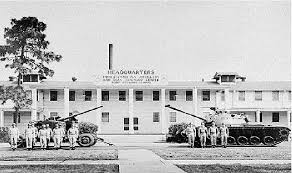
In its early days, the site spanned 5,000 acres before expanding to nearly 280,000 acres to support training ranges and impact zones for anti‑aircraft artillery. During World War II, Camp Stewart also housed German and Italian POWs, who supported base operations and local farming efforts At its peak, over 55,000 soldiers were stationed there in preparation for the Normandy invasion
Post‑War Inactivation and Korean War Reopening
Following the end of the war, Camp Stewart was largely deactivated in late 1945 and used as a separation and demobilization center It remained mostly idle until the Korean War prompted its reopening in August 1950, updating facilities to support National Guard training
Becoming Fort Stewart and the Cold War Era
On March 21, 1956, the camp was renamed Fort Stewart and became a permanent Army base instead of just a temporary training area. A 1959 reclassification made it an Armor and Artillery Firing Center
During the Cuban Missile Crisis of 1962, Fort Stewart’s population surged from 3,500 to over 30,000 personnel, as the 1st Armored Division staged there. Soon after, President John F. Kennedy visited the base and reviewed troops on post
Vietnam and Ranger Activation
By 1966, Fort Stewart had become a central aviation training facility, including helicopter pilot gunnery training. Hunter Army Airfield, which was given to the Army in 1967, was home to the first attack helicopter school from 1967 to 1972, where Vietnamese pilots also received training.
In July 1974, the 1st Battalion, 75th Infantry Regiment (Rangers) parachuted in, marking the first activation of Army Rangers since WWII. In October, the 24th Infantry Division, also known as the “Victory Division,” moved its headquarters here, leading to major improvements in the area’s infrastructure.
Modern Era and 3rd Infantry Division (1996–Today)
On April 25, 1996, Fort Stewart U.S. Army Base became the home of the legendary 3rd Infantry Division, setting the stage for its current role in rapid deployment, live-fire training, and global readiness The base won the Army Community of Excellence Award several times, including in 2004, 2005, 2006, 2009, 2012, 2015, 2019, and also received a Bronze award in 2018.
Mission, Facilities, and Training Capabilities
Mission and Strategic Role
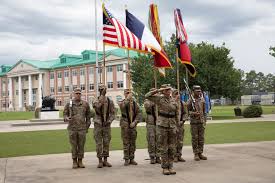
Fort Stewart, together with Hunter Army Airfield, constitutes the Army’s Premier Power Projection Platform on the East Coast. Their mission covers training, equipping, and deploying both active and reserve units, maintaining readiness with an 18‑hour “wheels up” timeline for global deployment
Training Facilities
Fort Stewart hosts seven major airborne drop zones, numerous field-artillery, tank, armored vehicle, helicopter gunnery ranges, and small-arms live-fire fields that support year‑round joint-force training This infrastructure serves Army units and allied forces needing realistic, large-scale training environments.
Community & Demographics
- Active duty soldiers: over 21,000
- Family members: ~19,000
- Civilians and contractors: ~4,300
- Retirees: ~18,200 within 50 miles
The garrison comprises 3,268 family housing units, 334 unaccompanied housing units, and 6,177 barracks spaces, totaling over 4 million square feet of facility space valued at around $7.5 billion
Units Stationed at Fort Stewart
3rd Infantry Division
The 3rd ID (Mechanized) is the fort’s principal tenant, known for participation in Operation Iraqi Freedom, the invasion of Baghdad airport in 2003, and multiple deployments worldwide The 3–69 Armor Battalion, part of the division, has a storied history and was among the first conventional units into Iraq in 2003
Armor and Engineer Units
The 64th Armor Regiment, descended from the first all‑African American tank battalion of WWII, now serves with distinction within the 3rd Infantry Division and has deployed through multiple operations including Desert Storm and Operation Iraqi Freedom
The 92nd Engineer Battalion, headquartered at Fort Stewart, supports global operations with robust engineer capability, from construction to route clearance and disaster relief
Quality of Life and Community Facilities
Housing and Infrastructure
Families and service members live either on-post in Balfour Beatty–managed housing or off-post near Hinesville. The base offers comprehensive support services, including commissaries, exchanges, recreation centers, and MWR programs
However, in 2022–2023, Fort Stewart faced scrutiny over substandard living conditions, including mold, plumbing failures, and health hazards. A 2025 visit from U.S. Army Secretary Dan Driscoll highlighted ongoing problems, leading to a renewed focus on making improvements.
Education & Schools
Elementary schools on Fort Stewart are run by the Department of Defense Education Activity (DoDEA). Secondary students attend local county schools in Liberty, Bryan, or Long County The Fort Stewart Youth ChalleNGe Academy, founded in 1993, helps at-risk youth earn high school diplomas and recover credits over intensive 22‑week sessions.
Surrounding Region & Recreation
Hinesville, the nearest town, lies about 40 miles southwest of Savannah, providing a close-knit community with scenic access to the Atlantic coast, outdoor recreation, and historic sites
Outdoor enthusiasts can explore fishing at Holbrook Pond, golfing at Taylors Creek, or visit historical museums like the Midway Museum. Savannah’s rich architectural heritage, parks, and dining offer further cultural and leisure opportunities
Recent Events & Media Highlights
On June 25, 2025, Army Secretary Dan Driscoll visited Fort Stewart as part of a broader quality-of-life tour, spotlighting long-standing housing and food-access challenges identified in a 2023 GAO report
More recently, on August 6, 2025, Fort Stewart U.S. Army Base entered a partial lockdown due to an active shooter scenario. Though details remain emerging, authorities confirmed casualties had occurred, and personnel were instructed to shelter in place. The incident spurred heightened security across the base and surrounding services
Why Fort Stewart Stands Out
- Massive Training Footprint – With nearly 300,000 acres and state-of‑the‑art training assets, the post enables complex, multi-domain exercises.
- Strategic Deployment Link – Proximity to Hunter Army Airfield and major East Coast ports enables fast worldwide deployment.
- Historic Legacy – From its WWII origins and Cuban Missile Crisis role to modern Rapid Deployment missions, Fort Stewart has played key roles in national defense.
- Diverse Military Units – Home to elite divisions like the 3rd Infantry, Ranger, Armor, and Engineer units.
- Community Importance – A major employer and community anchor for coastal Georgia with significant economic impact.
- Commitment to Excellence – Recognized repeatedly as an Army Community of Excellence, underscoring its leadership focus on soldier readiness and quality of life
Conclusion
Fort Stewart stands as a cornerstone of America’s military strength on the East Coast. Its expansive terrain, comprehensive training infrastructure, and critical units like the 3rd Infantry Division position it as a force multiplier ready for global action. While the base continues to evolve amid infrastructure challenges, its historic legacy and mission readiness remain unwavering.
For those seeking deeper insights—whether about units, deployment cycles, training schedules, housing changes, or community initiatives—feel free to ask.
Frequently Asked Questions.
Q1: Can civilians visit Fort Stewart in 2026? Access is strictly controlled. However, certain areas like the 3rd Infantry Division Museum are often open to the public with proper vetting and a valid ID.
Q2: What is the relationship between Fort Stewart and Hunter Army Airfield? They work as a combined garrison. Fort Stewart provides the massive training ground, while Hunter Army Airfield provides the runway for global deployments.
Q3: How has the housing situation improved at Fort Stewart? Following the 2023-2025 quality-of-life tours, the Army has increased funding for Balfour Beatty–managed housing, focusing on eradicating health hazards like mold.