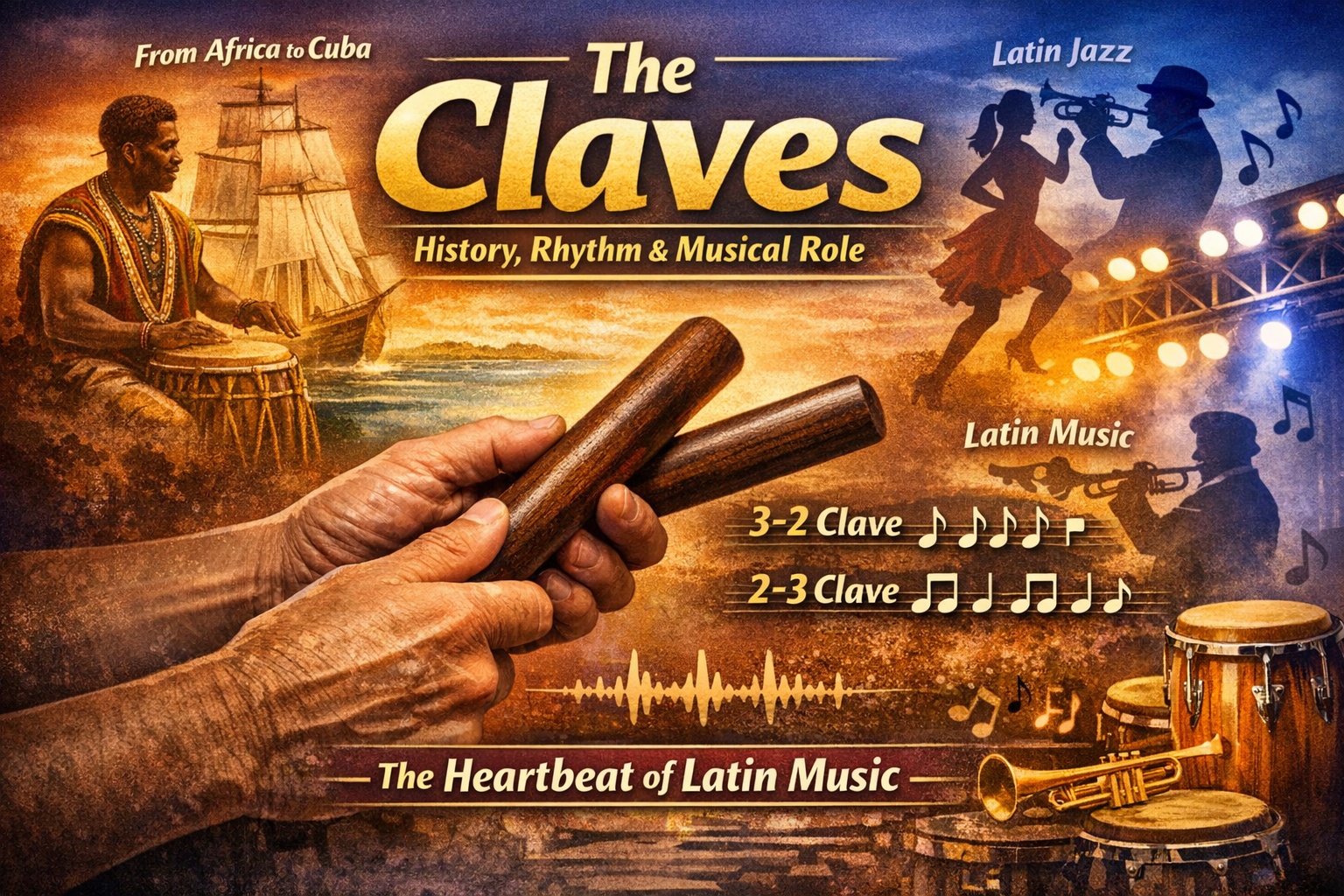
Claves Instrument: History, Rhythm & Musical Role
Claves Instrument: History, Rhythm & Musical Role
In the vibrant tapestry of global music, few instruments possess the power to command an entire orchestra with just two wooden sticks. These are the Claves. To the uninitiated, Claves Instrument may look like simple percussion tools, but to a seasoned musician, they represent the “Clave”—the mathematical and spiritual foundation of Latin music.
Whether you are a professional percussionist or a curious listener, understanding the claves instrument is essential to grasping the “heartbeat” of genres like Salsa, Mambo, and Latin Jazz. In this comprehensive 2026 guide, we dive deep into the history, construction, rhythmic patterns, and the undeniable cultural impact of this legendary instrument.
1. What Are Claves? Understanding the Instrument and the Concept
Before we explore the history, we must distinguish between the two meanings of “Clave.”
-
The Clave Instrument: A pair of thick, resonant wooden dowels (usually 20-30cm long).
-
The Rhythm: A specific five-stroke rhythmic pattern that acts as a “key” (the literal translation of clave from Spanish) to unlock the structure of the song.
The Mechanics of Sound
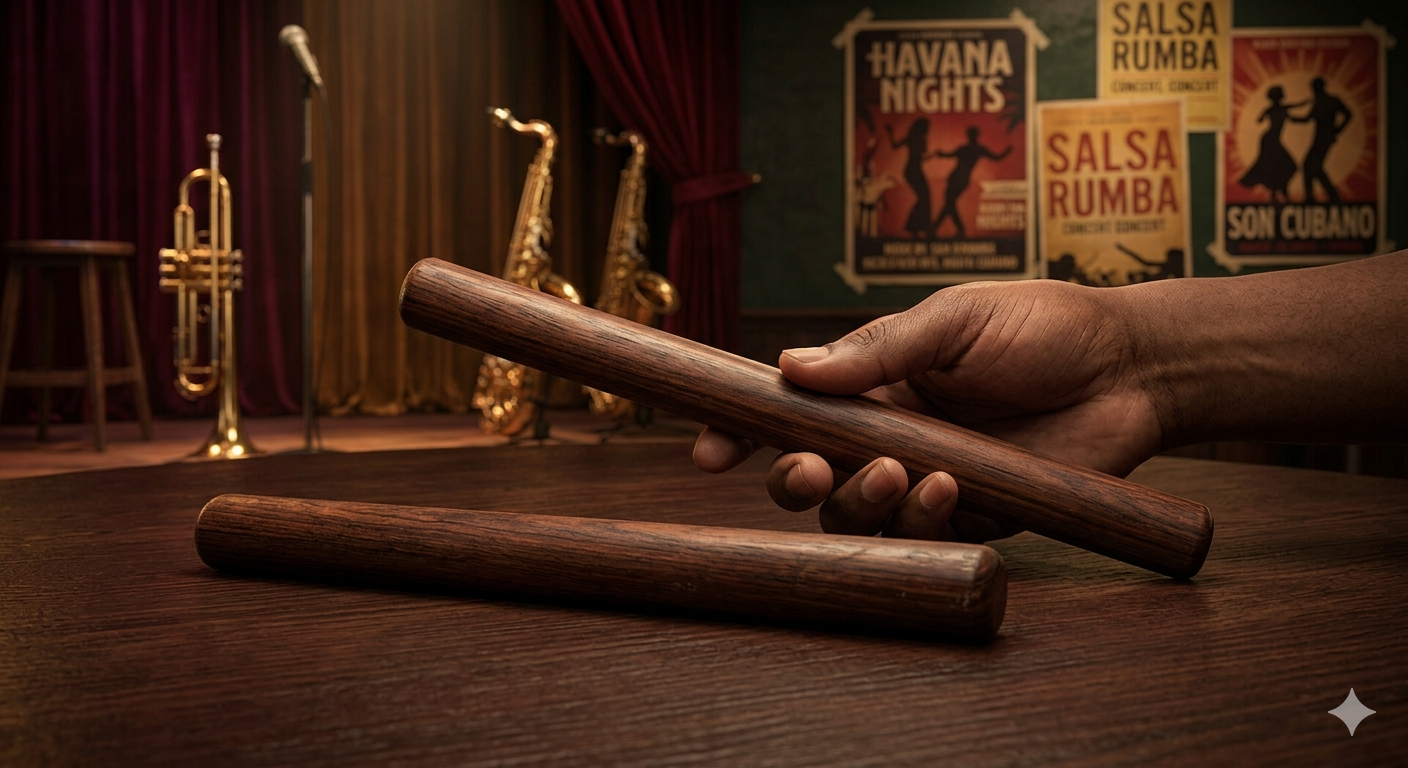
Unlike a drum that uses a skin or a cymbal that uses metal, claves rely entirely on the density of the wood. One stick acts as the “Claves Instrument” (Striker) and the other as the “Hembra” (Resonator). By cupping the resonator stick in the palm to create a hollow air chamber, the player produces a sharp, piercing “click” that can cut through the loudest brass sections.
2. The Historical Genesis: From West Africa to Cuban Docks
The story of the claves is a story of survival and cultural fusion. Their roots lie deep in West African traditions, specifically from the Yoruba and Congolese peoples.
The Transatlantic Journey
During the era of the slave trade, African rhythms traveled to the Caribbean. In the shipyards of Havana, Cuba, enslaved workers used wooden pegs (called clavijas) for ship construction to keep rhythm during their brief moments of rest. These shippegs eventually evolved into the refined musical instruments we see today.
The Spanish Influence
While the rhythm was African, the context became Cuban. Over centuries, these rhythms blended with Spanish guitar melodies and European song structures, giving birth to Son Cubano, the grandfather of modern Salsa.
3. The Science of Construction: Why Wood Matters
Not all wooden sticks are claves. To achieve that signature “piercing” tone, the material must be incredibly dense.
| Feature | Description |
| Traditional Materials | Rosewood, African Ebony, Grenadilla, or Cocuswood. |
| Modern Alternatives | Fiberglass, Carbon Fiber, and High-density Plastics (for durability). |
| Design Variants | Some modern claves feature a hollowed-out center in the resonator for extra volume. |
4. The “Key” to Everything: Understanding Clave Rhythms
If the bass is the foundation and the vocals are the decor, the Clave rhythm is the blueprint of the house. In Afro-Cuban music, if a singer or pianist plays “off-clave” (out of sync with the rhythm), the music feels physically “wrong” to the dancers and listeners.
The 3-2 vs. 2-3 Pattern
The Clave is a two-measure pattern.
-
3-2 Clave: Three beats in the first bar, two in the second. This is often used in upbeat, driving Salsa tracks.
-
2-3 Clave: Two beats in the first bar, three in the second. This creates a more “laid-back” or romantic feel.
Son Clave vs. Rumba Clave
-
Son Clave: The standard rhythm used in most commercial Latin music.
-
Rumba Clave: Features a slight delay on the third beat of the “three-side,” giving it a more complex, syncopated African feel.
5. Beyond the Sticks: Genres Powered by the Clave
The influence of this instrument is not limited to Cuba. It has migrated into almost every corner of modern music.
-
Salsa & Mambo: The claves dictate when the horn section enters and when the lead singer begins their “montuno” (call and response).
-
Latin Jazz: Pioneers like Dizzy Gillespie and Chano Pozo integrated the clave into American Jazz, creating a sophisticated hybrid that changed music history.
-
Bo Diddley Beat: Did you know the famous “Bo Diddley” rhythm in Rock ‘n’ Roll is actually a variation of the Son Clave?
-
Modern Pop: From Ed Sheeran to Drake, the syncopated “three-against-two” feel derived from the clave is the backbone of modern Reggaeton and global Pop hits.
6. How to Play Claves Like a Professional
Playing the claves seems simple, but the technique is subtle.
-
The Grip: Never grip the sticks tightly. If you choke the wood, the sound will be “dead.”
-
The Chamber: Curve your non-dominant hand into a “C” shape. Let the resonator stick rest on your fingertips and the heel of your thumb.
-
The Strike: Aim for the center of the resonator. Use a flick of the wrist, not the whole arm.
-
The Listening: A great clave player doesn’t just play; they listen to the tumbao (bass) and the cascara (timbales) to lock in the groove.
7. The Cultural Symbolism: The Heartbeat of a People
For the Caribbean diaspora, the sound of the claves is more than just music—it is a symbol of resilience. It represents the ability of a culture to take the simplest materials (two sticks) and create a complex, world-class art form.
In many Santería ceremonies and folk gatherings, the clave is seen as a spiritual guide. It is the “anchor” that keeps the community together during the chaotic energy of the dance.
8. Claves Instrument in the Digital Age (2026 Perspective)
In today’s home studios, many producers use Clave samples or VST instruments. While digital precision is great, nothing beats the “human feel” of a live recording. The slight micro-timing variations of a human hand striking wood are what give Latin music its “swing.”
9. Conclusion: Why the Claves Will Never Fade
As we look at the music landscape of 2026, the claves remain as relevant as ever. In an era of electronic synthesizers and AI-generated beats, the organic, raw sound of wood-on-wood provides a necessary human connection.
The claves remind us that at the core of every great song is a simple, steady pulse. They are the “Key,” the “Heartbeat,” and the “Soul” of the Latin world.
Master Your Musical Journey with Modern Skills
Just as the masters of the Clave spent years perfecting their rhythm, you can master the high-income skills of the digital era to build a legendary career. The world is changing, and so are the tools for success.
Click here to explore how “Million Dollar Skills” can transform your professional life.
If you want to know the Expert of theseClaves Instrument, Click Her.
Beside the Claves Instrument you musst learn these 5 Ever Green Skills.
SEO FAQ: Frequently Asked Questions
Q1: Can I use any two sticks as claves?
Technically, yes, but for a professional sound, you need hardwoods like Rosewood. Softwoods like pine will produce a dull thud rather than a resonant click.
Q2: Is the clave rhythm used in American music?
Absolutely. You can hear the clave’s influence in Jazz, Funk, and even the “trap” beats of modern Hip-Hop.
Q3: What is the difference between Clave and Woodblocks?
A woodblock is a single piece of hollowed wood played with a mallet. Claves are two solid sticks struck together, offering a much sharper and more portable rhythmic guide.